Sword of Ianna is a sequel/demake of Blade of Darkness created by the Spanish Retroworks. The premise is that the player controls Jarkum, a descendant of the barbarian Tukaram from Blade of Darkness, who is called by the goddess Ianna to retrieve her sword and defeat another great evil.
What it shares in common with its inspiration is a similar difficulty level in that it tries to replicate the perilous, thin-margined combat of Blade of Darkness in a 2D platformer. Simple enemies can be dispatched quickly but if you don't respect them they can also inflict a lot of punishment on you and leave you handicapped going forward if you can't secure enough healing items. There's also a lot of running, jumping, and climbing involved as Jarkum has to navigate environments inspired by the original game, solving simple puzzles such as finding levers to open gates while avoiding traps. The combat uses the old method of pushing the action button to draw your sword, then holding the button and pushing a joystick direction to execute certain attacks. When not in combat, you can run and climb up or down ledges. The game does feature frequent checkpoints, so dying doesn't cost much of a penalty in terms of time lost. Like many modern games, even the more difficult ones still want you to succeed and progress all the way through to the end.
The game was released for the MSX, ZX Spectrum, and Amstrad CPC computers, the three most popular PCs in Spain in the 80s and represents each system quite well, although the MSX version is probably the most well-rounded of the three. If a game like it had been released back then, it would have been heralded as a classic, with well-drawn graphics featuring large, well-animated characters and moody environments - orc fortresses, musty tombs, and temples of evil based on the original Blade of Darkness settings. The enemies from Blade of Darkness, such as the orcs, dual-sword-wielding skeletons, and golems, also make returns in 2D form. And it has a memorable soundtrack that emphasizes a sense of danger and mystery. One doesn't need to have played Blade of Darkness to get Sword of Ianna, but it adds a little extra layer of appreciation to what the developers present.
In recent years, it's become popular for Dark Souls fans to dig through older game catalogs and try to retroactively label certain titles as "the Dark Souls of its time!" In most cases, they're just fixating on classic "Nintendo hard" games because games tended to be more difficult in the past compared to how designers now want to make sure everyone can see all the expensive work they put into their games, but with Blade of Darkness (aka Severance: Blade of Darkness, aka Blade: The Edge of Darkness) there's actually something to it.
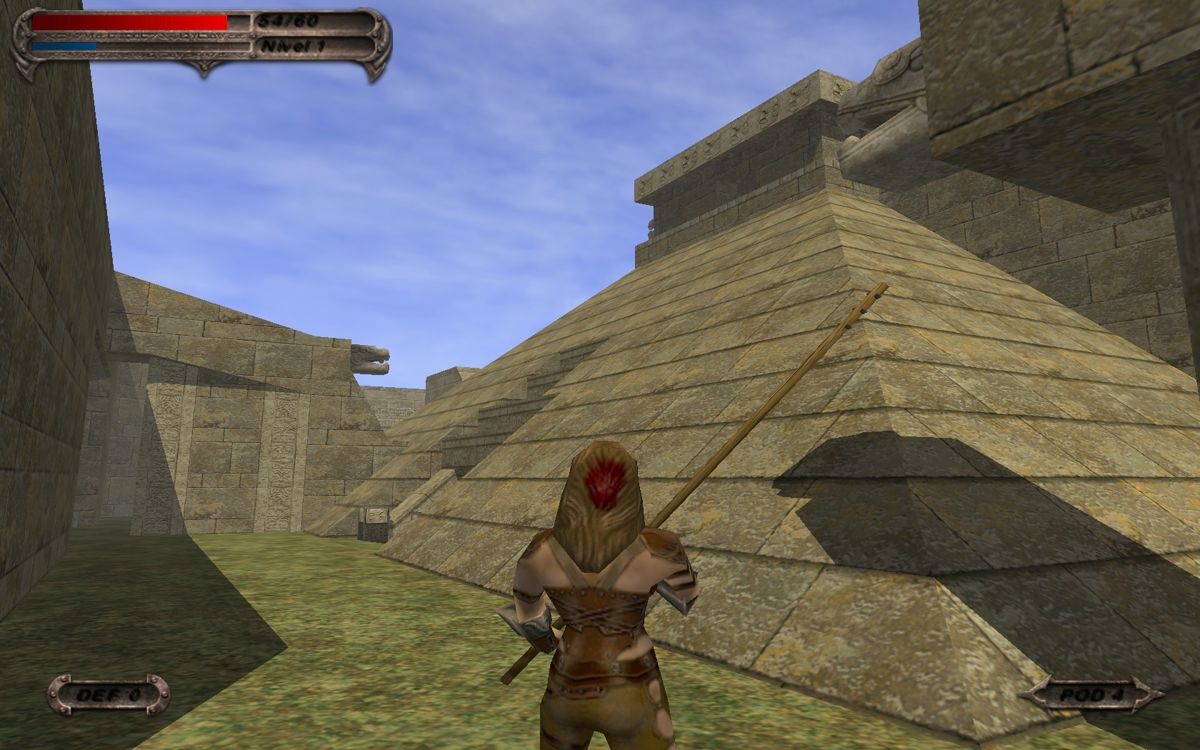
Created by Rebel Act Studios of Spain, Blade of Darkness gives players a choice of controlling a knight, a dwarf, an amazon, or a barbarian, each with their own particular style, advantages, and disadvantages; e.g., the knight is the classic well-balanced type, while the amazon is relatively weak but nimble and has exceptional reach because she specializes in polearm weapons. Fans eager to get their Conan on with the barbarian should take caution that he's arguably the hardest character in the game to master because of his almost nonexistent defense (what you get for never wearing shirts), large stature, and ponderous movement. The amazon is arguably the most traditional sword and sorcery protagonist in the sense that she's the one whose quest begins with her raiding tombs for treasure instead of following duty.
Having chosen a hero, the player starts with a unique opening level designed to introduce that particular character before the game dovetails into a broader story that attempts to mix a classic sword and sorcery mood with an epic quest that includes elements of Tolkienesque fantasy (elves, dwarves, orcs, etc.) and Zoroastrian concepts like Ahura Mazda's creation of the universe. Basically, the story involves having to find special objects (mystical runes and gems) that will allow the hero to obtain the only weapon (the Sword of Ianna) that can vanquish the root of all evil, but the way this plays out is the player's lone hero trudging through foreboding, highly deadly ruins of temples and castles, battling one to four foes at a time in very intense, gory combat.
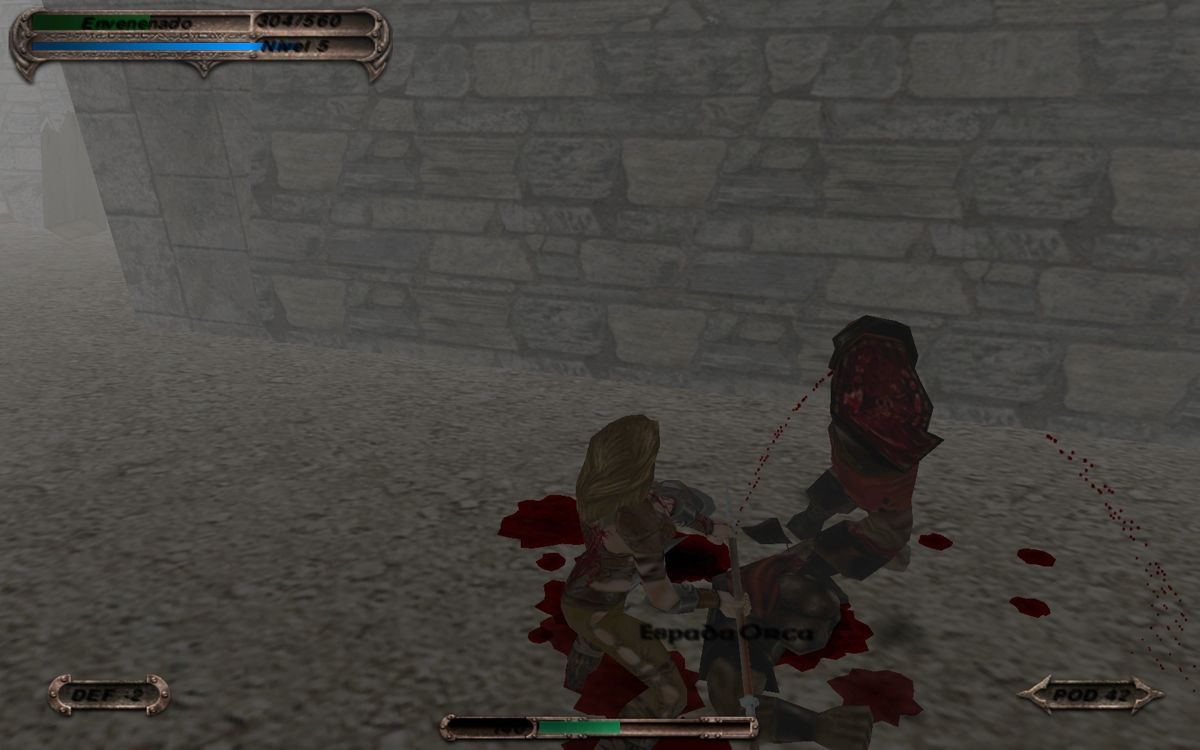
The combat system is unusual even today in how it creates a sense of weight in the characters. Positioning and timing are critical in determining your ability to get through an enemy's defense (e.g., if you don't want to bounce off their shield, best to try attacking their right side most often), and when contact is made the results can often be devastating. Even the lowest level enemies in the game can annihilate the hero in a few hits if the player isn't fully concentrating. Characters can dodge, but for the most part the dodge won't save you if you're caught in the wrong spot at the wrong time and it usually won't take you all the way out of danger. Best to learn the bad guys' patterns and move out of the way before they're well into their attack combos. The player can't just mash buttons because there's a stamina meter (a real Dark Souls connection there) to watch and if you try to do too much too fast, the character will be left heaving for breath while opponents hack away at them.
The reason the game is sometimes called Severance is because the bodies of the characters react according to where weapons hit them. Cut through an enemy's arm and the arm will fall to the ground and can even be picked up and used as a weapon if you're feeling like a sicko. There's a great rush when you hit a perfect combination and don't just kill an enemy but literally make hash of them like they're King Harold, watching their heads fly off, torsos bifurcated, legs lopped at the knees, etc. And it's pretty humbling when the enemies do that to you.
The intensity of the combat greatly advances the game's atmosphere. When even one enemy can kill or at least cripple you based on a wrong move, creeping through shadowy temples, not knowing what's around the next corner while ominous music plays and your healing supplies dwindle can make the game feel more like a survival horror experience than a rollicking swashbuckling adventure. Many areas are so dark that it's not a bad idea to bring a lit torch with you.
The are some areas in which the game oversteps itself a bit. The camera can get pretty jittery and even out of control, especially in tight spaces, and the physics, although quite advanced for their time, can sometimes act goofy. It's funny when you try to run down stairs so fast that the character takes to the air and starts falling/floating forward in space. Controls can take some work to learn, especially the more complex combos, and it's very frustrating when button presses are either not registered or the game interprets one button press as a double-tap, especially in a tense fight where mistakes need to be minimized.
A quality game but a bit more demanding than most.