Showing posts with label open world. Show all posts

Thursday, March 7, 2024

Kingdom Come: Deliverance (2018)


No sorcery in this one, just sword, but a lot of classic S&S does have a strong historical element. And even as history-minded as this game is, it does brush up against a sense of weirdness in a couple of spots. 

Kingdom Come: Deliverance was Kickstarted in 2014, released in 2018. The player takes control of Henry of Skalitz, the son of a blacksmith living in a Bohemian village in 1403. The king, Wenceslaus IV, is a bit of a disappointment compared to his father, Charles IV, who presided over a golden age for the country. In response to Wenceslaus's frivolous ways, his half-brother Sigismund leads an invasion of the country to presumably sort things out. What this means for humble citizens like Henry is that his village, a valuable silver-mining center, is sacked by Cuman mercenaries who take liberties with the locals in the process, including killing Henry's parents. Just before the invasion, Henry's father had forged an exceptional sword for the local lord, Sir Divish, and in the early portion of the game the sword is stolen by the villains, so Henry's quest becomes to recover the sword while taking revenge for his parents and village. Henry will become a knight in Sir Divish's service and will travel across a region that includes the towns of Sasau and Rattay.
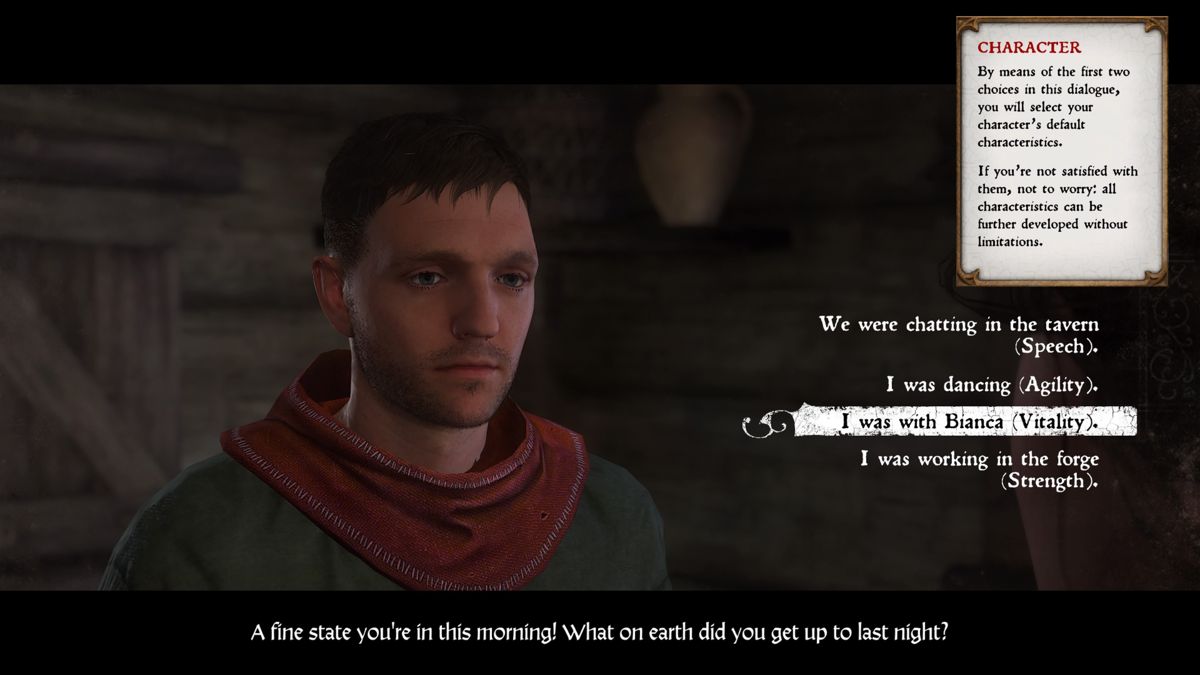

The game is a first-person RPG, built on the CryEngine, with very good graphics that emphasize realism over art direction and mood. Henry has basic needs for sleep and sustenance that have to be monitored, although they aren't too difficult to maintain. Injuries have to be looked after. Not bathing or taking care of your clothes and armor will draw insults from other characters. The fighting system involves having to practice to level up strength and skills so Henry will have more endurance and ability to parry, strike, and counter attacks. The combat system is interesting but disappointingly falls down in major battles where Henry is part of larger forces clashing. It simply becomes a mess of men flailing at each other and the most effective technique is probably to just run behind the enemy shield wall and start backstabbing people while your fellows keep them occupied in front. Not exactly the blood and thunder one would hope for in such situations.

KCD had to be crowdfunded because historical games, especially ones in as obscure a setting as medieval Bohemia that require a hefty budget, terrify game publishers that would greatly prefer to stick to tried-and-true settings like Tolkienesque/D&D-flavored fantasy or space marine-centric sci-fi. As much as possible, KCD is based on real places and events, peppers its story with several actual historical figures, and generally tries to present its setting with as much accuracy as a video game could reasonably allow. A writer like Harold Lamb might have found it interesting. Accessing the game menus will allow the player to read brief encyclopedia entries on medieval society, enough that playing the game will give players an elementary-level foundation of Bohemian history. The game also is generally even-handed in how it depicts its setting, eschewing Monty Python-like images of cruel nobles mercilessly beating idiotic peasants covered in mud and excrement. Instead there's a range of personalities shown, with nuanced examples of people all along the social strata. Some lords are entitled brats but others are serious-minded and dedicated to their duties on behalf of subjects, while peasants might be hardworking, lazy, or opportunistic depending on their minds and circumstances.
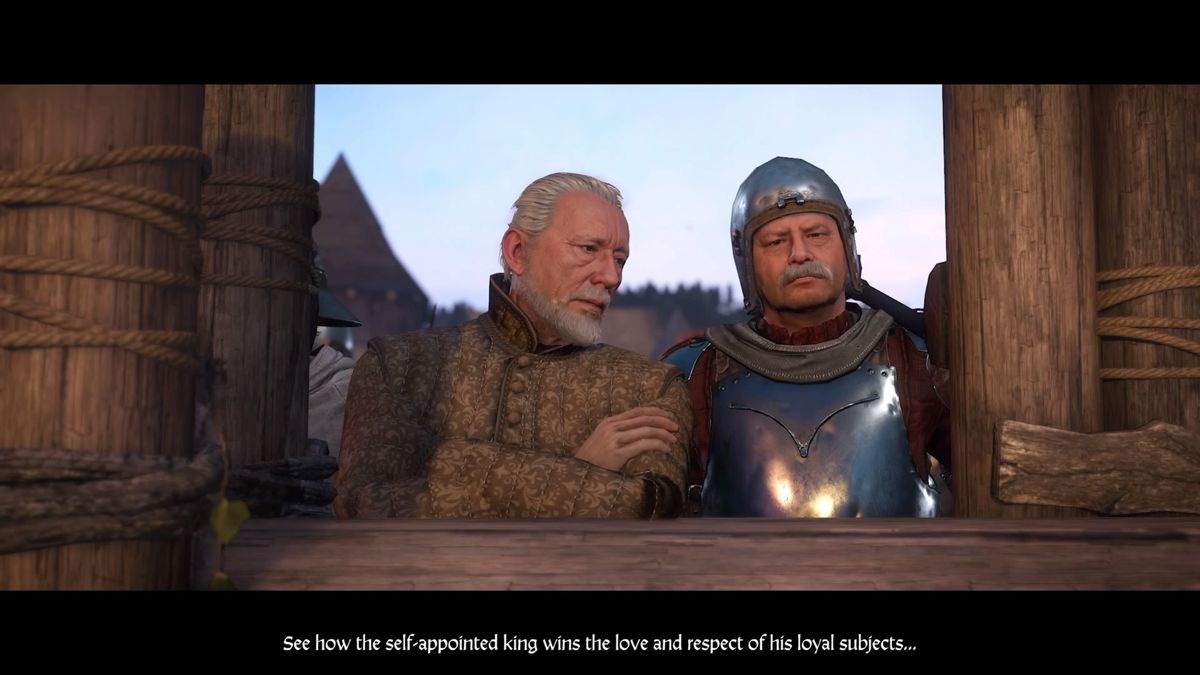

The story is linear but the player is free to define Henry however they like. He can be a selfless do-gooder or a complete psychopath or likely somewhere in between. He can specialize in fighting (and particular weapons) or have a silver tongue or be a stealthy type. The game is open enough to different playstyles that there are usually multiple valid ways to overcome situations. Come across a bandit camp and don't think you're strong enough to simply walk in and massacre everyone? Perhaps try waiting until midnight and then sneak into the camp so you can take out watchmen silently in the dark and then murder the others in their beds. Or slip poison into their food and let it do its work.

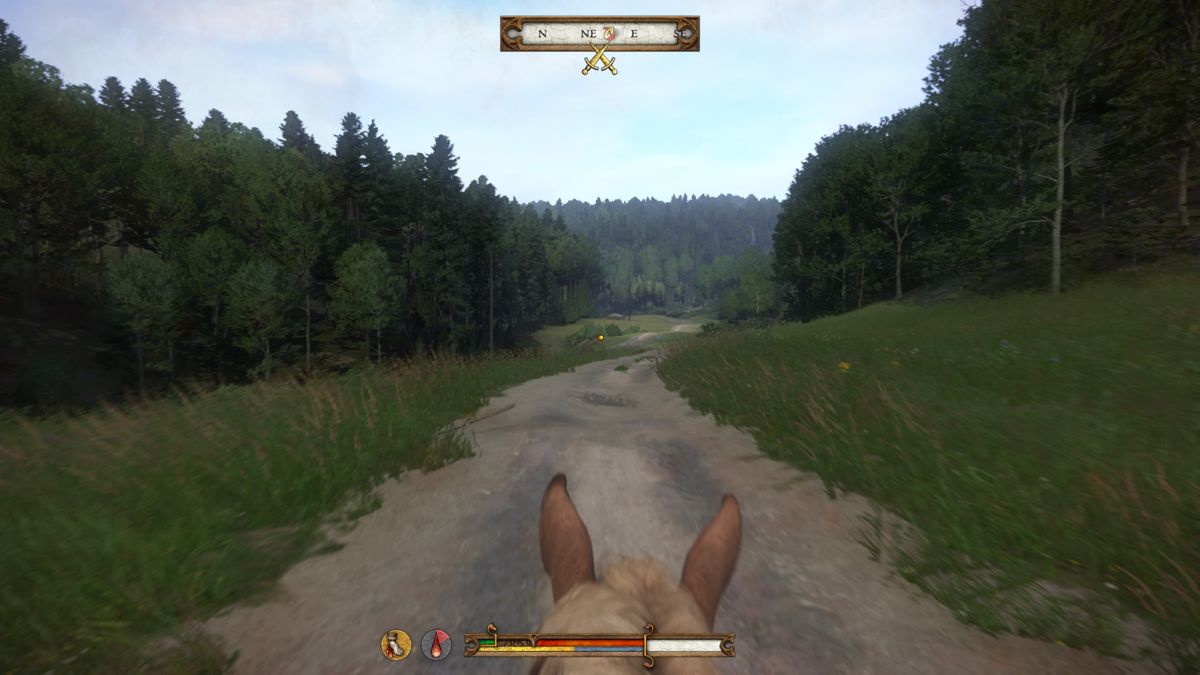
Even at his strongest, Henry isn't a cartoon hero. Travel on the roads can be very tense, especially in the earlygoing, as Henry can run into highwaymen, stray bands of Cuman raiders, or be baited into traps by people claiming to be in distress. Henry's odds of winning a fight drop significantly with each extra man added on the other side - one-on-one isn't too bad; one-on-two is doable; against three, four, or especially five, though, and he might be in real peril and simply trying to escape or even surrendering might be the best play.

As mentioned above, the game does touch briefly on more fantastic aspects in two notable sections. First, there's a sidequest that can only be completed if Henry is able to access a cabinet of forbidden books in the Sasau monastery's library. The particular book he needs is Lovecraft's Necronomicon, although somewhat disappointingly, the presentation of the book is a bit drier than might be anticipated. Nothing about its authorship by Abdul Alhazred, and even looking over its pages makes it seem like nothing more than just another book, albeit slightly more esoteric than some. But at least it's something, and the lighter touch in how it's presented is probably more in the spirit of classic S&S than the overkill most games go for.

The other episode is a somewhat more standard one in which Henry is tasked with uncovering witchcraft in one of the villages. His investigations will take him to a secluded woodland spot where some of the women are trying to commune with Satan by using psychedelic drugs, and, after confronting them, when they smear the drug on Henry's face he starts hallucinating, seeing men with the heads of beasts. 

KCD ends on a bit of a cliffhanger, but the sequel has yet to appear despite the game turning out to be an unexpectedly big hit. Considering how actual history went and the allegiances of the main characters in this game, it doesn't look good for Henry and his friends having a triumphant ending, but perhaps he will slip through the cracks and land on his feet somehow.


Tuesday, September 19, 2023

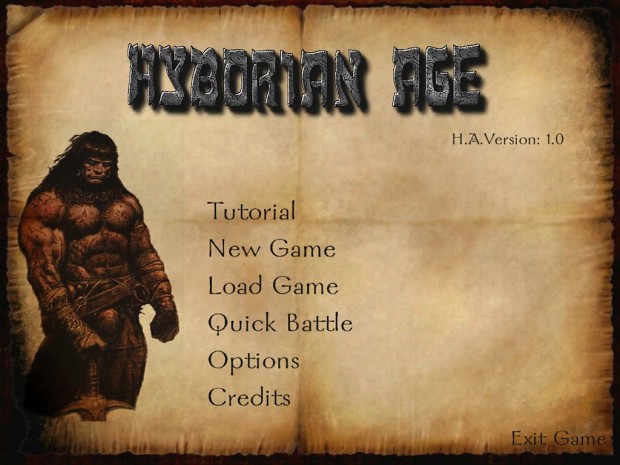
MODS: Mount & Blade: The Hyborian Age (2018)


In 2008 the Turkish developer TaleWorlds released Mount & Blade, a medieval combat sandbox game. The game is set in an alternate version of Europe and Asia Minor called Calradia. You create a character whose background and starting abilities you can set, but whatever you settle on the game will start you in the same place: as a lone adventurer who needs to learn how to fight better, take jobs to earn money, and use that money to gradually upgrade your equipment and hire mercenaries who can help you take even bigger jobs. You can pledge yourself as a vassal to one of the Calradian lords who are always fighting each other, be totally independent as a mercenary captain, or even just run around entirely on your own. You can even just be a dull trader of goods, stocking up cheaply from one town and hauling somewhere else where prices are high, if you don't feel like fighting. There is no ultimate object and you just make whatever fun and story you feel like making. It's similar to the classic Pirates! game by Sid Meier, except you're controlling a landbound horseman instead of a ship captain. One thing you can't do is, unlike Conan, you can't become so big that you seize a crown for yourself.

Like Pirates, it's a very compulsively playable game, one of those "Oh man, it's 3 a.m.!" games where you lose track of things because it's so easy to run just one more mission, visit one more town, fight one more battle, over and over. Although it's quite Howardian, it's not a sword and sorcery game because there isn't any sorcery in it...but it is a very moddable game and some fans have introduced fantasy elements on their own. There's a mod that allows you to fight the War of the Ring from Lord of the Rings, there are mods like Prophecy of Pendor that are set in original fantasy universes, and there's a mod called the Hyborian Age that attempts to rework the game's map and factions to resemble those found in Howard's Conan stories.


As it is, the Hyborian Age mod doesn't really change the game very much. It's still fundamentally the same game, but there's an option to make your new character a sorcerer/sorceress who begins with a spellbook and the ability to throw some fireballs. Otherwise, character progression is mostly similar.

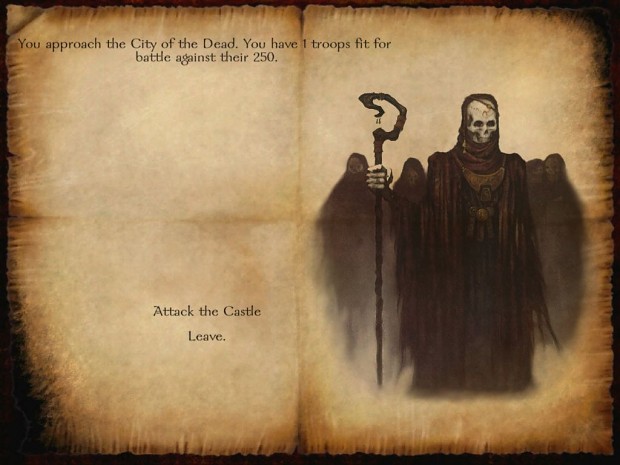
The map as said renames the areas to better match Howard's stories, with places like Cimmeria, Nemedia, and Shem represented, although one could quibble a bit with the arrangement; e.g., the game's version of Cimmeria is probably a bit too far north and snowy compared to how Howard described it. The most dramatic change might be that the southern regions are peppered with undead armies instead of regular bandits.


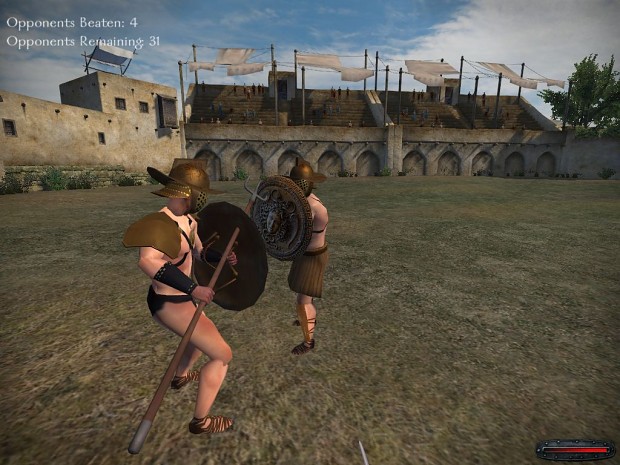
The arena/tournaments also use more of a classical gladiator vibe than the base game and there are some changes to how equipment looks. 


It's a nice bit of work and could serve players who really want some Conan flavor in an already relatively Howardian game, although not necessarily a must-play considering the age of the mod and the base game itself at this point, and there seem to be later attempts to do Hyborian Age-inspired mods for the Warband expansion and also Mount & Blade II: Bannerlord. Mount & Blade is a good game regardless of how it's modded and it got better as it was expanded on.

Friday, February 3, 2023

The Witcher 3: The Wild Hunt (2015)


The Witcher 3 is one of the most celebrated games of the modern era. It iterates on the gameplay style of the Witcher 2 by adjusting the combat system and shifting to a massive open world peppered with an exceptional amount of uniquely crafted content, much of it with full voice acting.

CD Projekt Red clearly wanted to finally get its video game version of Geralt more aligned with the literary version, so the story in its early phases sees Geralt summoned to an audience with the emperor of Nilfgaard, the Germanic empire that invaded the northlands at the end of the previous game. Geralt is soon reunited with Yennefer of Vengerberg, his canonical love interest, who's been serving the emperor as an advisor, and the emperor tasks Geralt with tracking down Ciri, Geralt and Yennefer's adopted daughter because the emperor is her biological father and wants her with him. Ciri, as the long-lost daughter of the queen of Cintra and the descendant of a crossbred elf-human line with incredible powers (sort of the Witcher universe's version of Dune's Kwisatz Haderach), is an important person, both politically and genetically, so she spends a lot of time evading people who want to take advantage of her, and in this game she's on the run from the Wild Hunt, a group of extremely ill-tempered elves from another dimension who like to snatch people and press them into serving their ghostly hunting party. Geralt is revealed to have been in their clutches before he was freed and rendered an amnesiac, explaining how he got into the state he was in as the original game began. 

So off Geralt goes to track down leads on Ciri, reuniting with old friends and enemies, and generally having a variety of new adventures. Occasionally, when Geralt finds where Ciri has been, the game will switch to a flashback in which the player gets to control Ciri and enjoy her ability to teleport around the playfield, zipping behind enemies and backstabbing them.

As with many open world games, the overarching story isn't very compelling, little more than a thread to keep players moving into fresh, unexplored areas. What's more notable is what goes on as the player wanders around that world, running into monsters or bandits that need killing, visiting towns and picking up contracts for witcher's work, or just stumbling across strange happenings that need sorting out. When the game is at its best, there is no game that better conveys the sense of being a wandering swordsman simply getting into adventures. The life of a sword-and-sorcery protagonist who's more interested in making some money or satiating some curiosity about strange local rumors instead of saving the whole world. The major subquests, such as the one about the Bloody Baron, often feel like they could pass as well-drawn short stories or novellas in an extra volume of Geralt's adventures. Even the main storyline, to its credit, is really just about Geralt trying to reconnect with his daughter; Ciri might be of world-shaking importance but Geralt is "but a witcher."

The game is a triumph of presentation. The graphics are beautiful, with various environments convincingly rendered with crisp art direction. The music brings a classically Slavic flavor that has never really been popularized outside Eastern Europe. Most notably, the game has a very large amount of unique writing that makes even the most disposable content feel special. Wiping out a generic group of highwaymen will usually yield at least a letter or journal that explains who they were and why they were there, completely unlike any other generic bandit group who have their own brief stories. And the game handles a variety of tones. Much of it is grim and horror-tinged, but there are times it goes for humor or well-earned sentimentality. It brings back the Grimm fairy tale and Arthurian influences that Sapowski worked into his original stories.

Where the game is less triumphant is in most other aspects; i.e., the gameplay. Although it improves on the combat system in The Witcher 2, adding a nice side-hopping move to the full dodge-roll from the previous game, the combat is still rather unsatisfying in many ways. Geralt has a maddening tendency to auto-target the wrong enemies and in more hectic fights the player could end up fighting the controls as much as the characters in the game. Geralt's context-sensitive moves can be hard to predict - sometimes he'll perform a simple quick stab, but many times he winds up with a slow-developing pirouette. And the combat is often formulaic. Many situations come down to dodging or parrying a strike, hitting exactly two counterattacks before the enemy gets its guard up, and then repeating until the fight ends.

The controls for horseback-riding and swimming under water are also frustrating. The player has to keep Geralt facing forward at all times for them to work correctly, lest they start reversing over and over until the player resets the camera behind Geralt and gives the game a moment to settle down. With Geralt's limited air supply, you can literally drown while trying to get the swimming sorted out.

As an RPG, the game feels like it has an identity crisis, similar to its predecessor. Most of the game's design is in line with standard action games and the inclusion of classic RPG mechanics like gathering experience and leveling up feels at odds. Why is Geralt, such an experienced witcher, clowning around much of the game at a low level? Even late in the game, it's possible to encounter random bandits who can slaughter you in a single blow because they're 10 levels ahead of you, so powerful that it's possible you won't even be capable of hurting them no matter how well you've mastered the controls. And the game doesn't even gate off areas with monsters at significantly higher levels. The whole world is open to you right away and it's possible to run afoul of such monsters at any time, leading to pathetic scenes of Geralt fleeing like a wimp from routine drowners or ghouls.

As a major AAA release, The Witcher 3 is also predictably conservative in how it handles exploration and quest design. It insists on holding the player's hand at all times. Although it's possible to switch off HUD elements like the minimap, you'll still need to refer to the map to get anywhere because the game never bothers to use detailed directions when describing objectives. A character might tell you to visit someone in a particular city but they won't give you an address or note landmarks - you have to use your GPS/quest markers to find out where they live. Contrast with a game like Morrowind, where an early quest involves locating Caius Cosades and the player has to work out on their own where he lives based on information provided. Interesting locations in the game world are marked with question marks until the player gets near them, taking some of the fun out of simply wandering the world, wondering what's beyond the next hill or in those ruins off in the distance. Now you just check to see where the markers are and head over, never needing to bother with empty, unmarked spaces.

As a very large game, some pacing issues do occur at times. The game's second major phase, where Geralt visits the island country of Skellige (a nation of pseudo-Celts who follow Norse religion), often demands that Geralt circulate high mountains or sail from island to island. Although it's quite visually stimulating, the relative slowness of the travel can become wearisome and unlocking fast travel options becomes a priority.

Ultimately, the game and the series as a whole exemplify games that succeed based on their storytelling and general ambiance over their actual game design. They resonate with fans who enjoy the characters and the situations they get in, and with those who appreciate games that prioritize choices and consequences, less so with players who would rather just have a nuanced and exciting combat system.

The game does offer a tremendous value for money. In addition to already being a big game, CDPR created two substantial expansions, Hearts of Stone and Blood and Wine. Hearts of Stone provides a major new subplot in which Geralt has to literally beat the devil, taking part in other activities such as organizing a bank heist along the way. It also brings back Shani as a supporting character, giving fans of the first game who missed her some closure.

Blood and Wine is even bigger, so much so that it's almost a full-fledged sequel in its own right (Witcher 3 and 3/4?). Geralt travels to the French high medieval-flavored duchy of Toussaint to hunt a vampire, and it also serves as a homage to the early short story "The Lesser Evil" in how it involves a princess born under a bad sign. Blood and Wine serves as a sort of victory lap for the character and the series. After trudging through so much blood and mud in the northlands, the sunny, colorful climate of Toussaint can be a relief. Sapowski's stories portrayed Toussaint with a bit of a satirical attitude, falling maybe a bit closer to Don Quixote than The Amadis of Gaul, but in the context of the game it's refreshing to explore a place where the beautiful, well-dressed people seem to actually take chivalric virtues seriously (too seriously at times) instead of simply all being bitter-minded cynics and hypocrites. When the expansion closes with Geralt chilling out at the vineyard he's inherited, there's a feeling he's earned his rest and arrived at a better end than what Sapowski chose for him.


Tuesday, March 22, 2022

Brutal Legend (2009)


Brutal Legend came about when Tim Schafer got the idea to make a game in which all the fantasy imagery prevalent in heavy metal music and album covers was taken literally. Eddie Riggs, roadie for a lousy tween-oriented numetal group, is transported to an alternate dimension in which mountains are made out of amplifier stacks, chrome spiders spin webs of guitar strings, and endless war exists between people that follow particular subgenres of metal. Much like John Carter arriving on Barsoom and finding his true place in the universe, Eddie quickly takes the skills that have made him a great roadie and uses them to build an army to free humanity from the rule of demons and their glam metal sellouts.


Like all of Schafer's work, the game is comedic and features an exaggerated cartoon sensibility, but it's sincere at the core. It follows the rule that while the world seems silly, the inhabitants don't know that. They build hot rods reminiscent of Big Daddy Roth's work because their gods left the blueprints and materials for only those cars and that's all there is to it. The game also isn't watered down for the sake of a hypothetical family audience - metal tends to be edgy so the game honors that with plenty of gory combat and rough language. 

Schafer was also interested in the relationship between bands and their fans and the feeling of them all being united while charging into combat, which lead to the game's most controversial feature and its commercial downfall (or at least its near-term disappointment). Influenced primarily by Herzog Zwei for the Sega Genesis, a game that combines action with real-time strategy elements, Schafer wanted the gameplay to culminate in scenes of Eddie commanding large numbers of troops while also actively participating in the fighting. The game starts by teaching the player basics of fighting alone, then introduces the idea of issuing commands to small squads running with you, and then the game gives Eddie to power to sprout bat wings and fly high aboveground where he can call forth different units and send them out to fight. The problem is that many players assumed that once Eddie took flight he had to stay there, essentially acting as a cursor without much connection to what was going on far below. The intention was that players would realize that the battle would go easier if they returned to earth and lead troops to victory by diving back into the fray. Contrary to many reviews, the game doesn't "suddenly switch from a hack-and-slash to an RTS"; it remains an action game that simply adds some RTS aspects to the third-person brawling. The easiest path to winning the game is to remember that your character is best used directly in combat.

Schafer also had some issues coming from a PC adventure game design background. Adventure game players are accustomed to constantly tinkering with the environment to solve weird puzzles and Schafer seemingly expected Brutal Legend players to act similarly with respect to finding collectibles scattered around the game world, but many action game players were expecting the game to explain everything that could be done through in-game tutorials and thus missed out on many benefits of exploring the game's gorgeous environments. 

Although the gameplay is entertaining once you get on its level, the main appeal to metal fans is that it features the greatest soundtrack in history. Over 100 songs from 75 bands that cover almost every part of the genre. Major names like Motorhead, Judas Priest, Black Sabbath, and Slayer are included, along with excellent but obscure names like Brocas Helm, Omen, and Slough Feg. The most noteworthy omissions are Metallica, who were apparently too expensive and were working on their own Guitar Hero game around that time; Iron Maiden, who have dabbled in video games but have never been very savvy about the medium; and Ronnie James Dio, who was originally to participate but abruptly dropped out for still mysterious reasons. 

Dio's performance of "The Mob Rules" was used to help sell the game when it was first unveiled and he was cast as the game's arch villain, Lord Doviculus, but the part was recast with Tim Curry as Schafer explained that they felt Curry was a better fit for the part. Although it's true that Curry did a great job, the fact that Dio had been cast as Doviculus at all was peculiar. Dio made his name singing uplifting songs about believing in yourself and overcoming adversity in a classic metal style. Why cast him as an S&M-themed industrial metal demon? Dio seems a better fit for the role of the Guardian of Metal, but that part went to Ozzy Osbourne and Dio's exit from the project seemed to coincide with Ozzy's hiring. Dio had a notable rivalry with Ozzy and many fans have speculated that Dio may have taken offense to Ozzy being more heavily promoted as part of the game's cast. Schafer later acknowledged that "things did get a little complicated with that whole set up," which seems to indicate that it wasn't just a simple matter of Dio being recast and then deciding to do something else. Not only is his music not in the game, there are no references to him at all. You can't visit the Man on the Silver Mountain, there are no rainbows in dark places to be found, and you can't go to the shore and observe priests diving in the ocean. AC/DC's music isn't in the game, either, but there is at least a character clearly based on Brian Johnson.

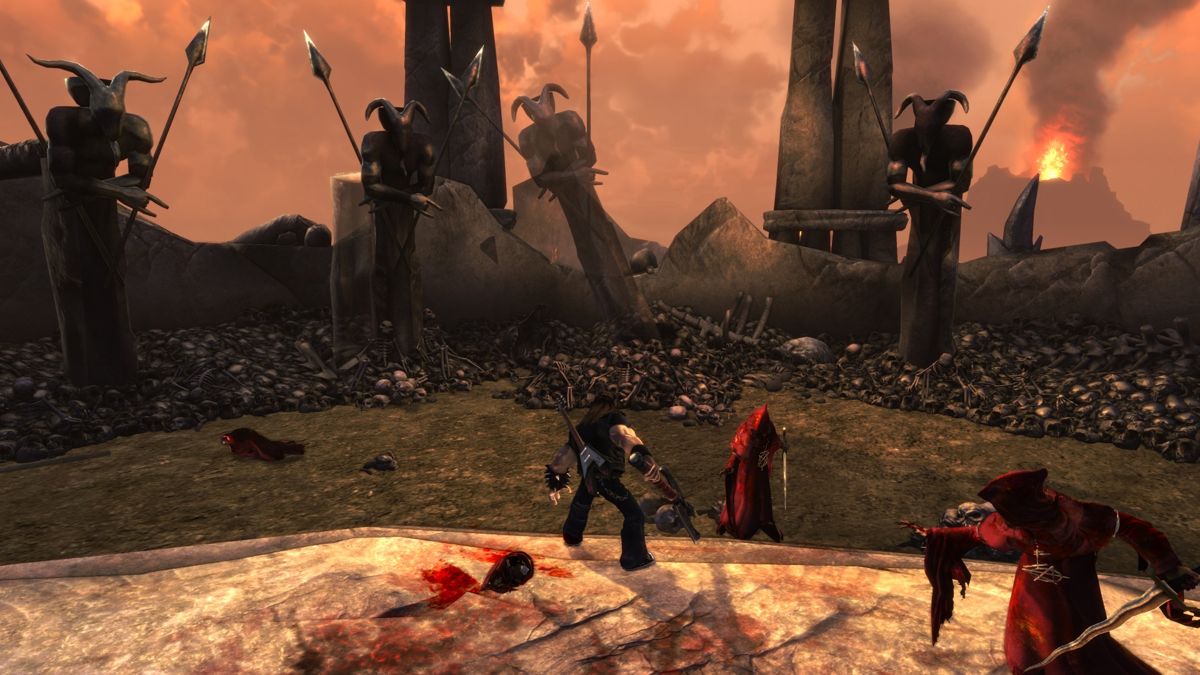
The graphics are lovely and fulfill the goal that anytime you pause the game will result in an image that could pass as an album cover. Vast graveyards, eclipses rimmed by lightning, temples of dark priests, etc. Graphics that go with a more stylized look over realism tend to age more gracefully. Schafer's story is fun, although the game ends right as it starts getting particularly interesting. Schafer apparently had to cut quite a bit of material that would have gone into a sequel had one ever been made.


Supplemental reading: The Art Of Metal: Five Decades Of Heavy Metal Album Covers, Posters, T-Shirts, And More

SKALD: Against the Black Priory (2024)

  SKALD: Against the Black Priory is a Kickstarted RPG by Anders Laurindsen that hearkens back to classic PC RPGs, particularly those for t...