Showing posts with label brawler. Show all posts

Tuesday, August 8, 2023

AmiGameJam 2022


This year's Amiga Game Jam happens to have had the theme of sword and sorcery. There were nine submissions made between October 31 and July 31, and voting is still underway for the next 11 days. Seems like a good idea to have a brief look at the entries (note that most are more like demos or even "proof of concept" than fully completed games).
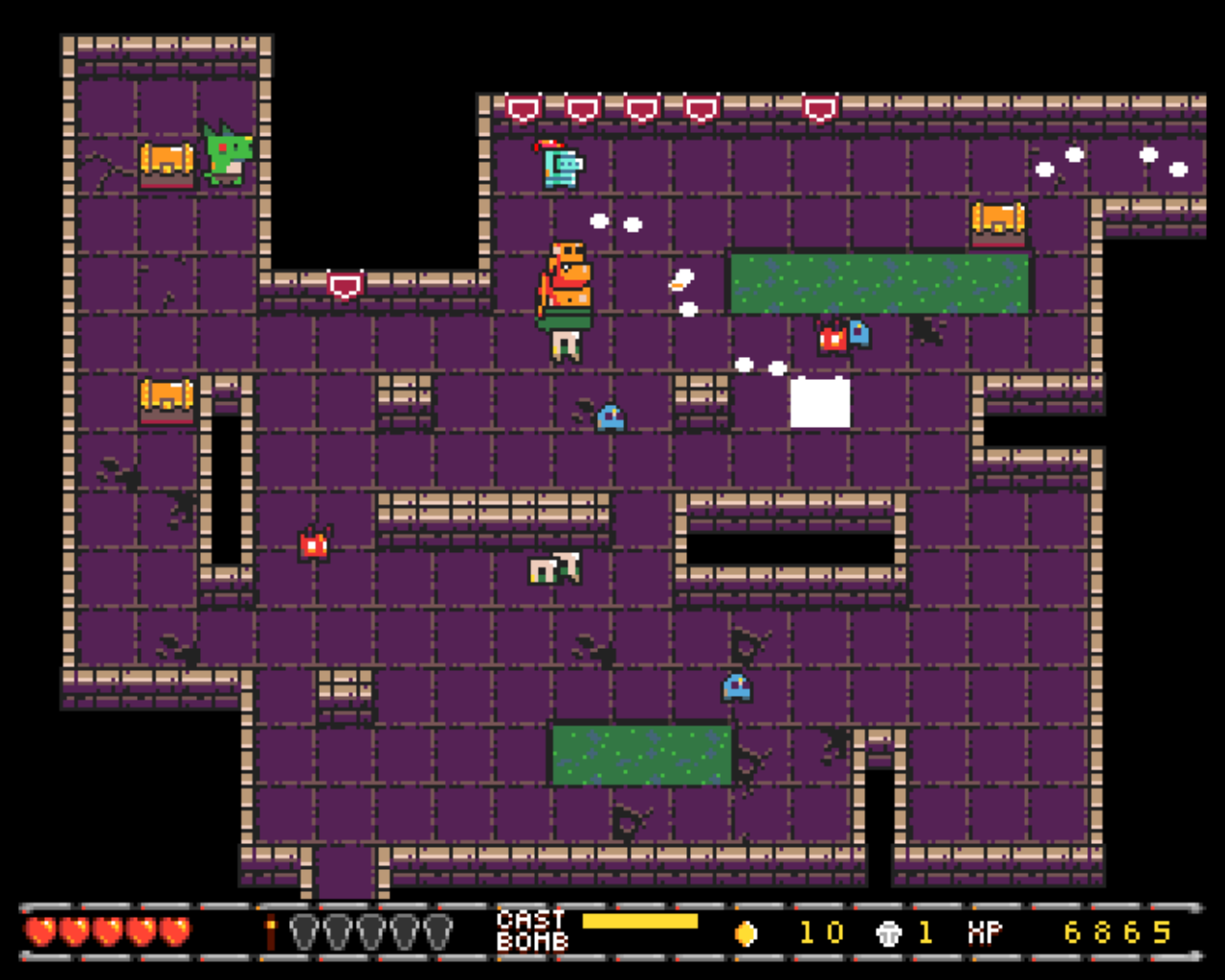
Rogue Declan Zero, by nivrig, is a "challenging, procedurally-generated, roguelite twin-stick shooter" in which you have to control Sir Declan as he fights through dungeons, closing hellgates that wizards have opened beneath the castle. 

It plays a bit like a fantasy version of Robotron and as Rogue-lite games go the difficulty curve seems relatively gentle. It's pretty generic fantasy - people often have differing ideas of what "sword and sorcery" means, as we'll see in some of the other entries - but it's fun, easy to get into, and the dungeons are just short enough to make it easy to play just one more.

******
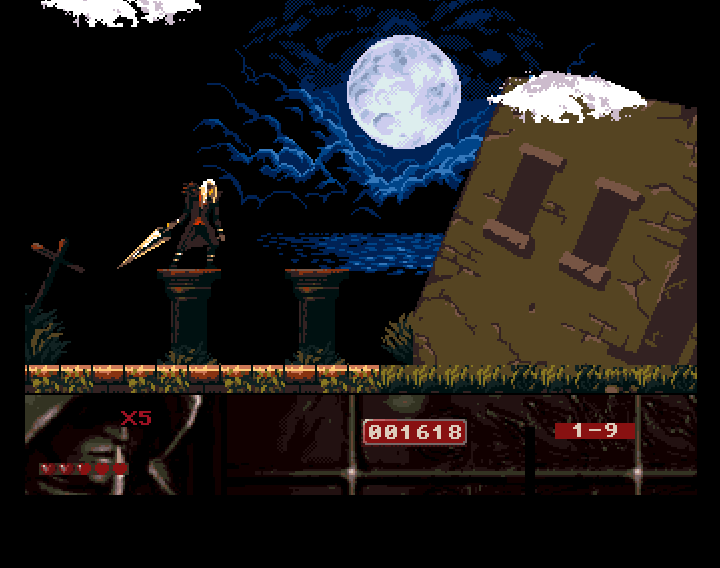
Gothicvania, by Amiten Games, is clearly inspired by Castlevania. Infernal creatures are menacing the town of Valencia and it's up to warrior-sorcerer Sir Lucas to use his magical, fire-spewing sword to defeat them.

This could be a pretty good Castlevania clone if it's completed and such a game would be welcome on the Amiga since the official Castlevania port currently has a 2.98 turd rating on LemonAmiga. As it stands right now, Gothicvania is pretty rough around the edges, with awkward animation and collision detection. Hopefully the creators will continue working on it and fleshing it out.

******
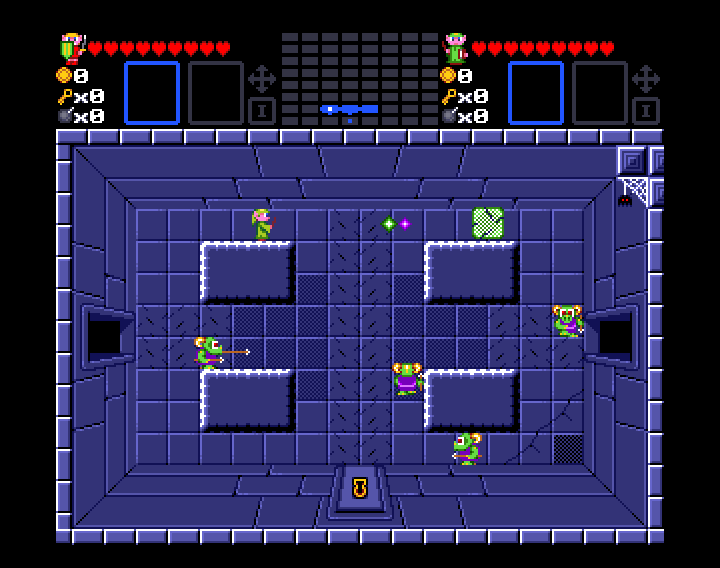

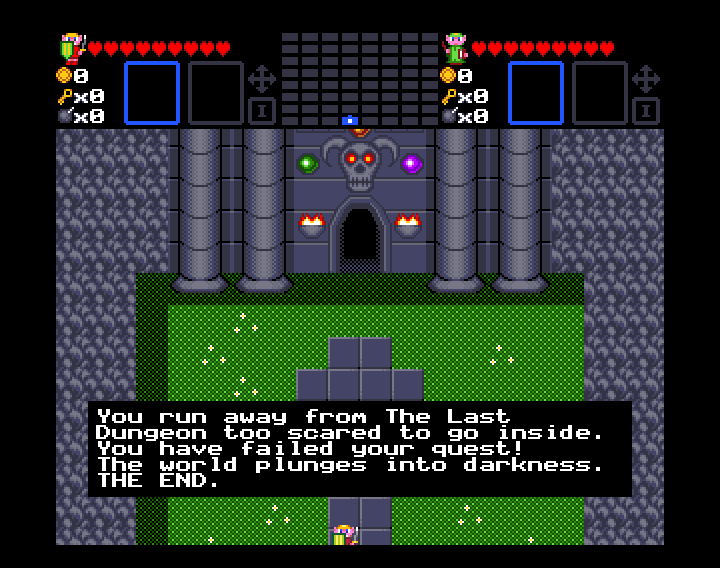
The Last Dungeon, by PixelPlop, is a Zelda clone, specifically the dungeons that you play in the original NES Zelda. Unlike Zelda, you get a choice of protagonists, a barbarian or a wizard (literally sword and sorcery), and it's got a slightly grittier feel than Zelda, with details like bloody pentagrams on the floors and grislier enemies. 

As an an attempt at recreating that Zelda feel, it works quite well and really just needs a bit of polishing at this point.
******
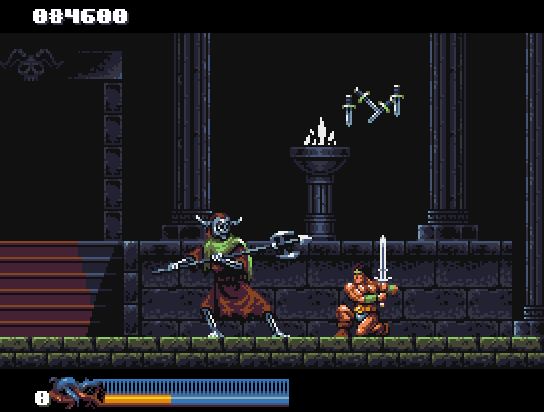

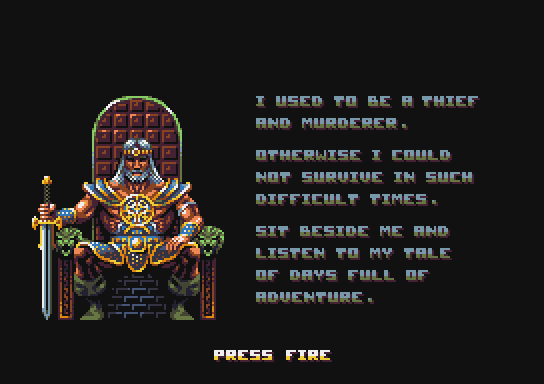
Rastan, by basementApe, is exactly what it seems to be: porting the original arcade game to the Amiga 500 as closely as possible. Rastan was ported to numerous systems but the Amiga never got it for some reason, but this version is gathering a lot of interest because it looks and sounds fantastic. It's not an exact translation - aspects of the arcade like the swinging vines have been replaced by moving platforms and the controls haven't been fully implemented - but if things keep up this could end up being the best home version of the game, exceeding even the Apple IIgs version.

******
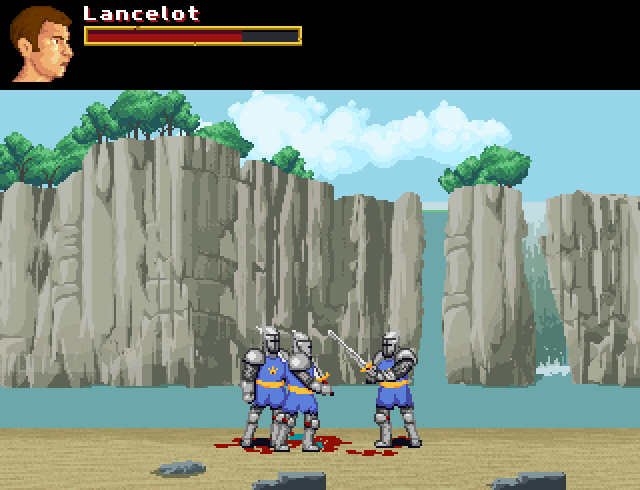
King Arthur: Rise of the Round Table, by Latebit, is a beat-'em-up in which you control Sir Lancelot as he battles a gang of enemy knights. It doesn't last long (defeating all the knights seems to just restart the demo) but there's some quality pixel art, the combat is easy to pick up (high, middle, and low attacks) and the overall look and gory style recall the classic Moonstone. There's some real potential if they stick with it and expand it into a full game.

******
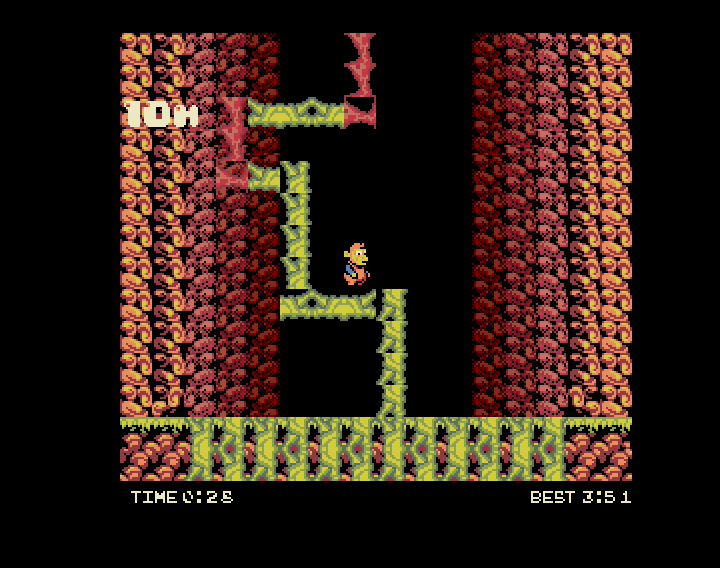

Jack in the Pit, by earok, involves you being knocked from a cloud into a deep pit, so you have to grow a beanstalk all the way back up while various elements try to rip it down from underneath you. The game was apparently created in only 48 hours but it's an impressive piece of work that looks and plays better than many games that have more protracted development times. It's not entirely clear how it fits the theme aside from being broadly fantasy, but at least it's fun.

******
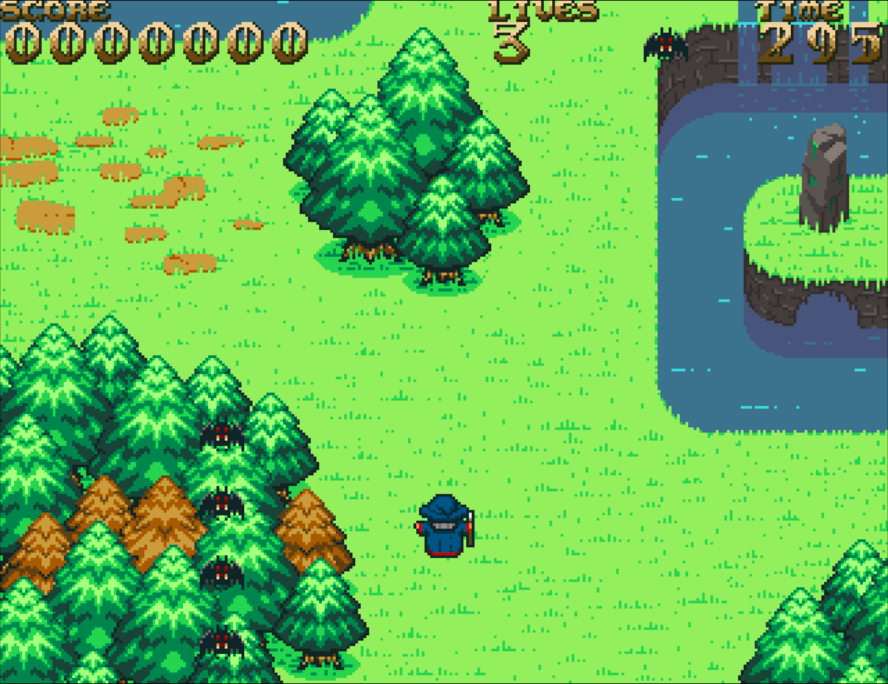
Caravandalf, by Peter and Gordon Mackay, is a caravan shooter (trying to get as high a score as possible within a time limit) in which you control a wizard (Gandalf the Grey?) as he soars through the air blasting enemies. It could definitely use some music, but it's a fast-paced bit of fun for what it is.

******
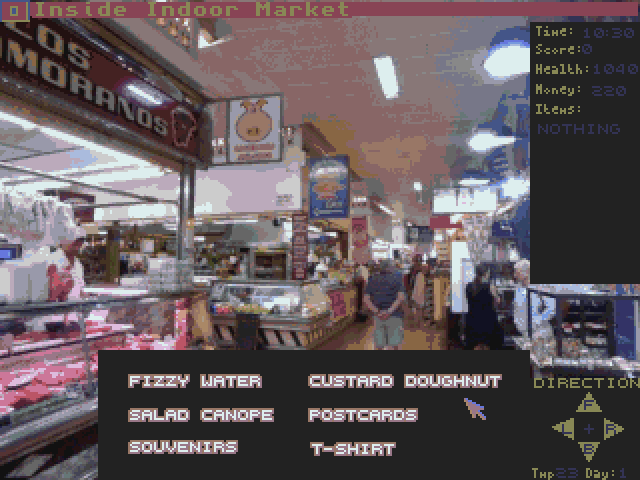

Holiday, by lifeschool22, is a "photo RPG" that tasks you with surviving a vacation to Spain in 2018. You have to find items like sunscreen to help you survive the oppressive heat. What does this have to do with sword and sorcery? *shrug* Game jams!

******


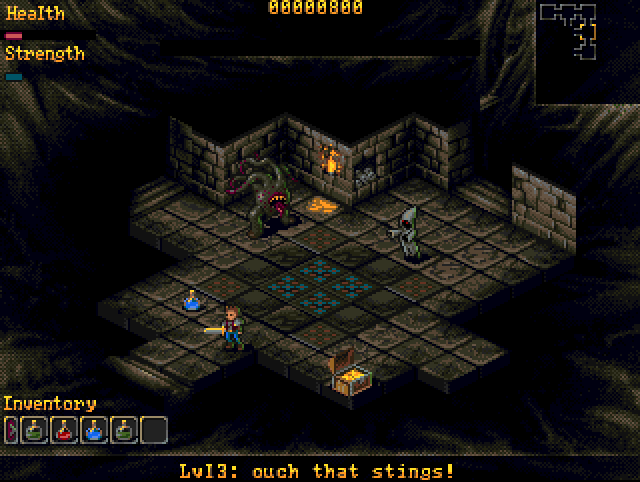
Roguecraft, by Badgerpunch Games, is an Amiga expansion of Rogue 64, a Rogue-like C64 game the creators did a couple of years ago. It's the usual Rogue-like game in that you explore a randomized dungeon, most likely getting killed repeatedly as you learn how the game works and what potions do, but this one has a lot of style. 

Not counting Rastan, which at least has the advantage of a classic arcade game providing a blueprint, this is the most impressive overall submission. The impressive graphics are reminiscent of HeroQuest and it generally seems like a fully finished game. It will be interesting to see how the judging goes, but the best of the lot would seem to be between this and Rastan.

Tuesday, May 16, 2023

Elderborn (2020)


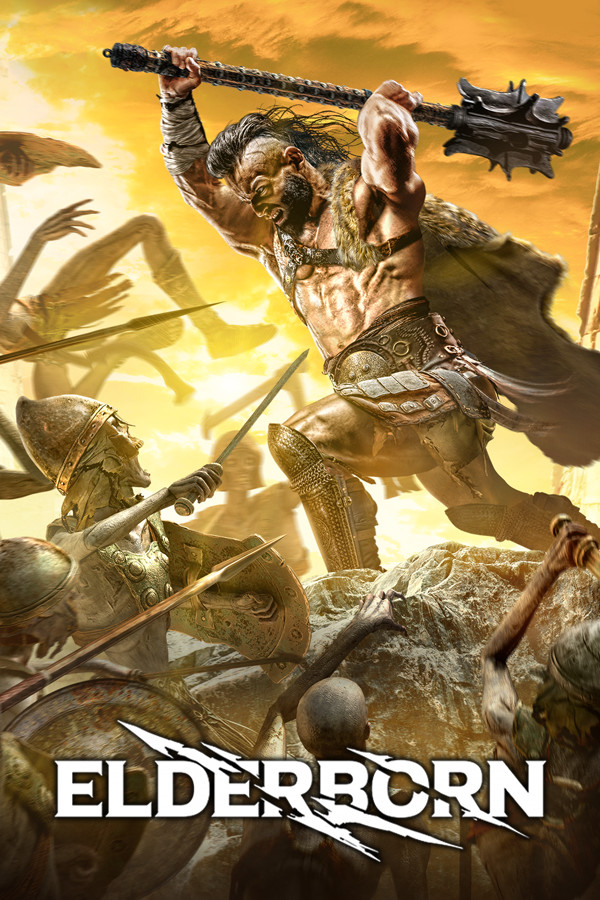
Elderborn is described by its Polish creators, Hyperstrange (Jupiter Hell, Crossbow: Bloodnight, Blood West), as "a Metal AF* Slasher with brutal FPP melee combat and souls-like/RPG character progression. In the times of legend, barbarian tribes need a new dark messiah. Be that merciless slayer. Uncover ancient secrets in the city of doom. Forge your own destiny! *Action Fantasy." The terms "souls-like" and "dark messiah" are particularly notable because the game takes heavily after Dark Messiah of Might and Magic and Dark Souls.

As with Dark Messiah, the game is a first-person melee combat game in which you break through enemy shields by kicking them, although Elderborn lacks Dark Messiah's complicated physics and magic systems. You can at least kick weaker enemies off high ledges to kill them. And like Dark Souls, enemies leave behind experience that can be picked up and cashed in for skill increases at special  respawning locations (mostly fountains instead of bonfires). If you're killed, you'll have to trudge back to where you were snuffed to gather up all the experience your previous life had accumulated, but you lose it entirely if you're killed again.

The premise of the game is suitably Howardian. As a member of a barbaric tribe, you're tasked with making a pilgrimage to the golden city of Jurmum, which has fallen into decadence under the "guidance" of its corrupt priesthood and the exploitation of strange technology that powers the city, and by pilgrimage it means you're supposed to kill everything you see there, but few have ever returned from the city. You're given a choice between a male or female warrior (no real difference between them) and in the game's opening you have to slay the other option in an arena before setting out on your quest. You begin in the catacombs beneath the city, then move into the city itself. Along the way you'll battle various types of undead warriors, homicidal lepers, giant scorpions, and Lovecraftian fishmen. Note that many of these enemies aren't friendly with each other and it's often easy to get them to fight each other. There's some unintentional comedy in sometimes walking close enough to trigger an enemy into moving only to see him turn around, run the opposite direction, and start attacking another group of enemies.

Getting good at the combat mostly involves unceasing movement (often utilizing the game's quick-dash ability) and mastering the game's parrying system. A successfully timed parry will stun the enemy and leave them vulnerable to an extra-high damage counterattack. You can also fully heal yourself with a special injection up to three times before needing to kill more enemies to refill the injections. Unlike Dark Souls, there is no stamina meter that forces you to be conservative in dodging, blocking, or attacking, so the game is quite a bit faster than current-day "souls-like" games. Instead, you'll be contending with potentially large mobs of enemies at particular points in the game, racing from one opponent to the next, whittling down their numbers as you go. There are also some minor puzzle-solving aspects, mostly to do with operating some of the peculiar machines in the city.

For a "Metal AF" game, the soundtrack is adequate. It's suitably hard-driving and enhances the mood in parts but it's also not especially memorable, especially with several games today being accompanied by heavy soundtracks, such as Mick Gordon's work on the new Doom games. The graphics are quite good, but there's a certain lack of color to them. The catacombs are heavy on the blue while the city is a lot of brown (see the game's title card/poster above). It's tough to equal masters like Frazetta in nailing a sense of foreboding and violence while still being very colorful.

The weapon selection is varied enough to cover just about any playstyle (I settled on the spears), and there aren't too many games that allow you to unlock the ability to rip a corpse's head off and use it as a projectile.

The most unfortunate thing about the game is simply how short it is. There are essentially two levels, albeit long ones, and then a relatively brief epilogue. The game seems to end right as it's getting going, leaving a sense that you just completed the opening episode of a shareware game only to realize there's no more of it left. Hopefully a more substantial sequel will come some soon.


Saturday, April 8, 2023

PORTS: Golden Axe - Genesis/Mega Drive (1989)


 Sega didn't waste much time porting Golden Axe to its new Mega Drive/Genesis console, getting it out just in time for Christmas the same year it debuted in the arcades.

They did a pretty good job on it. It's a slight downgrade in audio and video, lacking the great First Blood voice samples and the parallax scrolling of the arcade, but for audiences accustomed to NES games, it would have looked spectacular having something so close to the arcade version at home. More importantly, it plays just about right, too. Techniques that work well in the arcade version still work well in the home version as it moves at a very similar speed and the collision detection seems pretty close as well.

The best home ports usually do something extra with the game and in this case Sega added an extra, final level to the game. It plays out just like the arcade version, with the heroes travelling to Death Adder's castle on the backs of the giant turtle and eagle, but after facing the villain in the throne room and saving the king and princess, instead of the farcical, Blazing Saddles-like ending of the cast breaking out of the arcade, the king informs you that you only faced an underling and the master is somewhere behind the door from which Death Adder appeared. So you head through the door and tackle the final stage.

The last stage is slightly disappointing in its look. Instead of something wild and creative, like maybe dragging the heroes into another dimension or something, it's just a dungeon with some tougher enemies within, many of whom can be cheaply defeated by knocking them into bottomless pits. Before long, you face the true villain, Death Bringer, who's just like Death Adder except getting hit by him is extremely costly because in addition to taking damage from his giant axe, a hit also triggers a magical explosion similar to what the players can do with their fully charged magic attacks. It's a good challenge. Overcoming him leads to the heroes emerging back into the throne room and receiving some thanks from the king and a congratulatory message from the game before some credits roll.


Wednesday, March 8, 2023

Warrior Blade: Rastan Saga III (1992)


After the dud that was Nastar, Taito concluded its Rastan arcade trilogy with a more respectable effort. In Warrior Blade: Rastan Saga Episode III, we pick back up with old Rastan on his throne, telling more stories of his adventurous past. This time around, he and his friends Dewey the ninja(?) and Sofia, a whip-wielding former princess turned thief, battle foul creatures as they try to claim the jewels of Depon. But of course the story isn't the reason anyone plays a game like this. It's about evoking a certain mood, which is also for the best because the English text translation is lousy, even if no one outside Japan saw it on initial release because the game wasn't released abroad.

The game doesn't appear to share much talent with the previous two games in the series, aside from Masahiro Takaki on music, and it seems that the big plan for the game and getting the series back on track was to largely ape Golden Axe. Instead of a purely horizontally scrolling experience, characters have a bit more room to maneuver up and down and it plays like a traditional brawling game as cooperative players try to take down groups of enemies without being surrounded and struck down from behind. Instead of simply swinging his sword, Rastan has a set of moves he can use, such as charging attacks and even grabbing enemies so he can bash their faces with the pommel of his sword or fling them at their partners. It's mostly standard stuff for the genre, only distinguished by the fact that few games besides this and Golden Axe use a S&S theme.

The graphics look great. The characters are large and well-detailed. Rastan in particular looks very much the Conan clone he was always intended to be, like he stepped out of a John Buscema or Neal Adams drawing. Enemies include classic sword-and-sorcery types like serpent men, rival tribesmen, armored knights, living skeletons (of course), fishmen, and cloaked wizards. Some of the boss enemies are quite befitting of the genre, such as the skeleton of a dead king on his throne that moans "help me" as demons fly out of his carcass, or a giant tentacled sea monster. The stages, most of which can be selected in any order, have names like The Enchanted Castle of Zananstaff, Mahadidekaradi Spiral Tower, or The Palace of Black Demon Religion. There are also interlude stages in which the heroes engage in battles on horseback or while rising into the clouds on the backs of dragons. The heroes themselves don't use a lot of magic, but amusingly you can occasionally summon a wizard and can force him to cast screen-clearing spells on your behalf by booting him in the ass until his meter is spent.

In its own time, the most eye-popping thing about the game was that it used a gimmick Taito had previously busted out for its Darius and Ninja Warriors games, which was to place two monitors side-by-side in one cabinet to create a widescreen image. Not a big deal now, but it really made games standout in arcades back then. 

At the game's conclusion, Rastan, mercenary as ever, divvies up the winnings with his friends and parts ways with them, frustrated that he hadn't found what he was looking for and continuing to seek a kingdom for himself. And that was the end of Rastan's adventures in video games, not counting a half-assed attempt years later to throw him in a different barbarian-themed console fighting game.


Monday, September 12, 2022

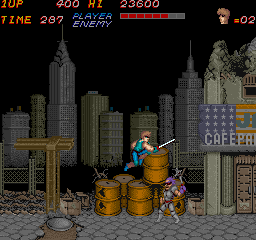
Trojan (1986)


When sword and sorcery started fading from prominence in the 80s, one of the genres that arguably picked up the standard and gave audiences some of the same feeling was post-apocalyptic sci-fi/action. Generally (though not always...) lacking in sorcery or fantasy elements, but stories about hardened warriors wandering a bleak landscape, often having to revert to melee weapons because of scarcity of firearms, coming into conflict with local warlords, and then moving on the next adventure. Trojan (Tatakai no Banka - Battle Song?) takes place in one of these scenarios. 

The player controls a man armed with a sword and shield as he hacks his way through the demon army of a tyrant named Achilles. The game begins in a ruined city, then proceeds through wilderness, dilapidated factories, and ends up at Achilles's classically styled palace. Many of your foes are just armored men with maces and crossbows, but some appear to be flame-spitting mutants and others have bionic attachments like a metal arm with an extendable claw. Some especially annoying guys will use gyro-packs to attack you from the skies. Some enemies can knock your weapons away from you, forcing you to fight with your hands and feet until you can retrieve a fresh set, which makes the hero look like a total badass in his ability to adapt. 


It's the fourth game designed by Takashi Nishiyama, who broke in at Irem and created Moon Patrol, and then went on to design Kung Fu Master/Spartan-X (inspired by Jackie Chan's Wheels on Meals) before leaving for Capcom. Trojan feels like a spiritual successor to Kung Fu Master in that both games are strictly horizontally-scrolling brawlers in which you often have to determine if it's better to move forward or to turn around and take care of the goons breathing down your back while also minding the knife-throwers and other threats still coming from the front. Trojan is a lot more hectic than Kung Fu Master, and Capcom's influence shows in how the game, much like Ghosts 'n Goblins, requires you to beat it twice before it's considered properly completed. The "true ending" for Trojan, though, only amounts to some insignificant changes in the ending text and most players should feel satisfied if they only complete the first loop - that's an accomplishment in itself.

Visually the game is exceptionally dark, mostly taking place at night, with lots of muted gray and brown backgrounds, while the somewhat more colorful characters look very manga-influenced. Although the game has a lot of the popular hallmarks of the genre, with the crumbling buildings and goons in big shoulder pads, it's hard to imagine that the game wasn't heavily inspired by Fist of the North Star, particularly considering its Japanese origins. Fist of the North Star was a very hot series at the time and had a bigger impact on video games than many westerners realize. For instance, it was also a primary influence on Double Dragon, despite popular assumptions that Double Dragon was some kind of campy take off of The Warriors or martial arts B-movies. 


Monday, June 13, 2022

Blade Master (1991)


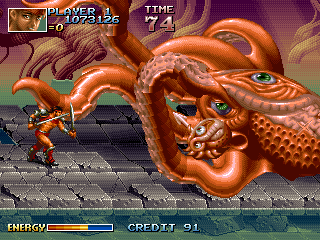
There's not a lot of information available on Blade Master, but it was released by Irem in 1991, and was known as Cross Blades! in Japan. 

It's a beat-em-up game in which players can control either the dual-sword-wielding Roy or the spear-and-flail-wielding Arnold as they battle their way from left to right in pursuit of Roy's girlfriend, Princess Emina, who's been kidnapped by the demon lord because she possesses a spell that can seal him away. Roy has a headband that with his long brown hair kind of makes him resemble Miles O'Keefe in Ator, while the hulking Arnold is kind of obvious, although in both cases the portraits in the upper corners of the screen simply look like a couple of Asian heroes.

Unlike a lot of beat-em-ups, Blade Master's gameplay doesn't involve a lot of combos, but instead it's a countering/parrying system that demands timing during attacks. There are also some simple moves like a downward strike that come in handy. Many of the bosses can be knocked down and then leaped on to start hammering into their chests. Beating people when they're down is always such a satisfying element of this genre. Enemy AI isn't very impressive as enemies will sometimes become immobile depending on the player's approach.

Irem's games around this time were known for lush graphics and this one makes a good first impression. The heroes and the assorted humanoids they fight look good for their relatively modest heights. Bosses are imposingly huge, including a kraken with gorgeously animated tentacles and a biomechanical, Giger-esque giant with a retractable neck. 


The backgrounds feature attractively rendered sights such as cities rising above clouds, a distant sunset, and rocky valleys, but it doesn't take long to notice that there's a lot of repetition, like seeing the backgrounds cycle in old Hanna-Barbera cartoons. The final two of the seven stages disappointingly recycle the same endless bridge graphics, and it's a long game by beat-em-up standards so seeing the same imagery for minutes at a time gets wearisome. There's a section in which the heroes ride on the backs of giant flying bugs, but it's all too brief. The game could have used one or two more imaginative setpieces like that. The game also resorts to recycling the humanoid bosses as it continues - one becomes two or three later in the game.

Not a bad game but one that feels like it could have used some extra care to become a must-play.


Tuesday, March 22, 2022

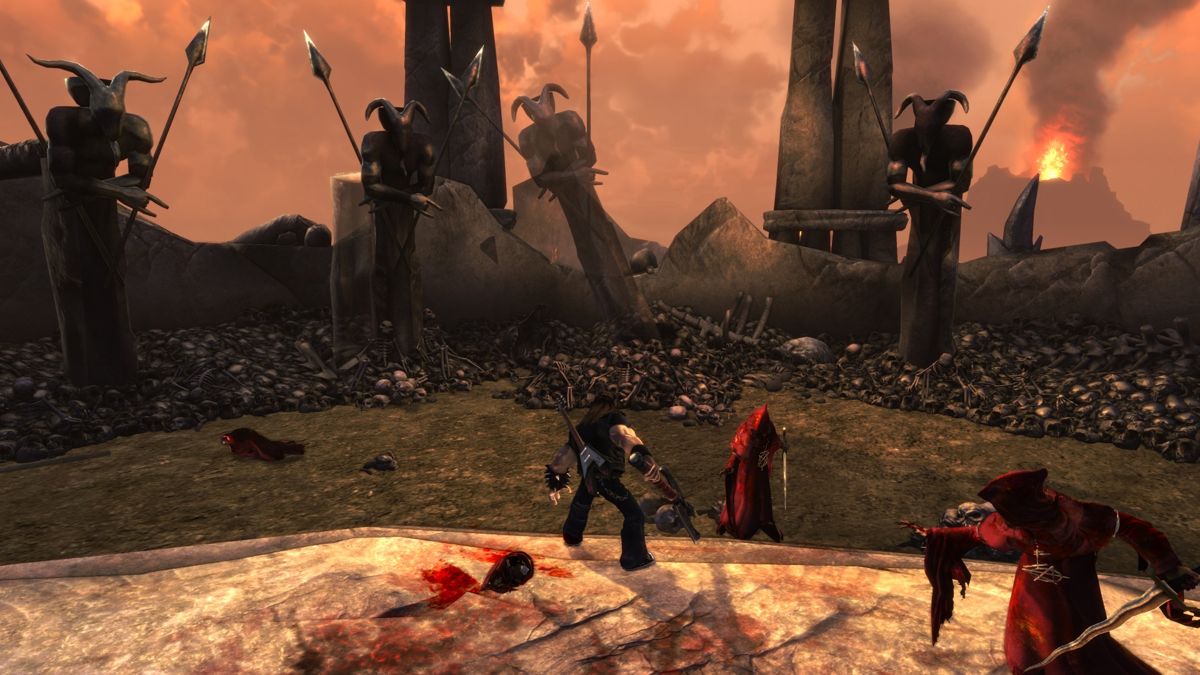
Brutal Legend (2009)


Brutal Legend came about when Tim Schafer got the idea to make a game in which all the fantasy imagery prevalent in heavy metal music and album covers was taken literally. Eddie Riggs, roadie for a lousy tween-oriented numetal group, is transported to an alternate dimension in which mountains are made out of amplifier stacks, chrome spiders spin webs of guitar strings, and endless war exists between people that follow particular subgenres of metal. Much like John Carter arriving on Barsoom and finding his true place in the universe, Eddie quickly takes the skills that have made him a great roadie and uses them to build an army to free humanity from the rule of demons and their glam metal sellouts.


Like all of Schafer's work, the game is comedic and features an exaggerated cartoon sensibility, but it's sincere at the core. It follows the rule that while the world seems silly, the inhabitants don't know that. They build hot rods reminiscent of Big Daddy Roth's work because their gods left the blueprints and materials for only those cars and that's all there is to it. The game also isn't watered down for the sake of a hypothetical family audience - metal tends to be edgy so the game honors that with plenty of gory combat and rough language. 

Schafer was also interested in the relationship between bands and their fans and the feeling of them all being united while charging into combat, which lead to the game's most controversial feature and its commercial downfall (or at least its near-term disappointment). Influenced primarily by Herzog Zwei for the Sega Genesis, a game that combines action with real-time strategy elements, Schafer wanted the gameplay to culminate in scenes of Eddie commanding large numbers of troops while also actively participating in the fighting. The game starts by teaching the player basics of fighting alone, then introduces the idea of issuing commands to small squads running with you, and then the game gives Eddie to power to sprout bat wings and fly high aboveground where he can call forth different units and send them out to fight. The problem is that many players assumed that once Eddie took flight he had to stay there, essentially acting as a cursor without much connection to what was going on far below. The intention was that players would realize that the battle would go easier if they returned to earth and lead troops to victory by diving back into the fray. Contrary to many reviews, the game doesn't "suddenly switch from a hack-and-slash to an RTS"; it remains an action game that simply adds some RTS aspects to the third-person brawling. The easiest path to winning the game is to remember that your character is best used directly in combat.

Schafer also had some issues coming from a PC adventure game design background. Adventure game players are accustomed to constantly tinkering with the environment to solve weird puzzles and Schafer seemingly expected Brutal Legend players to act similarly with respect to finding collectibles scattered around the game world, but many action game players were expecting the game to explain everything that could be done through in-game tutorials and thus missed out on many benefits of exploring the game's gorgeous environments. 

Although the gameplay is entertaining once you get on its level, the main appeal to metal fans is that it features the greatest soundtrack in history. Over 100 songs from 75 bands that cover almost every part of the genre. Major names like Motorhead, Judas Priest, Black Sabbath, and Slayer are included, along with excellent but obscure names like Brocas Helm, Omen, and Slough Feg. The most noteworthy omissions are Metallica, who were apparently too expensive and were working on their own Guitar Hero game around that time; Iron Maiden, who have dabbled in video games but have never been very savvy about the medium; and Ronnie James Dio, who was originally to participate but abruptly dropped out for still mysterious reasons. 

Dio's performance of "The Mob Rules" was used to help sell the game when it was first unveiled and he was cast as the game's arch villain, Lord Doviculus, but the part was recast with Tim Curry as Schafer explained that they felt Curry was a better fit for the part. Although it's true that Curry did a great job, the fact that Dio had been cast as Doviculus at all was peculiar. Dio made his name singing uplifting songs about believing in yourself and overcoming adversity in a classic metal style. Why cast him as an S&M-themed industrial metal demon? Dio seems a better fit for the role of the Guardian of Metal, but that part went to Ozzy Osbourne and Dio's exit from the project seemed to coincide with Ozzy's hiring. Dio had a notable rivalry with Ozzy and many fans have speculated that Dio may have taken offense to Ozzy being more heavily promoted as part of the game's cast. Schafer later acknowledged that "things did get a little complicated with that whole set up," which seems to indicate that it wasn't just a simple matter of Dio being recast and then deciding to do something else. Not only is his music not in the game, there are no references to him at all. You can't visit the Man on the Silver Mountain, there are no rainbows in dark places to be found, and you can't go to the shore and observe priests diving in the ocean. AC/DC's music isn't in the game, either, but there is at least a character clearly based on Brian Johnson.

The graphics are lovely and fulfill the goal that anytime you pause the game will result in an image that could pass as an album cover. Vast graveyards, eclipses rimmed by lightning, temples of dark priests, etc. Graphics that go with a more stylized look over realism tend to age more gracefully. Schafer's story is fun, although the game ends right as it starts getting particularly interesting. Schafer apparently had to cut quite a bit of material that would have gone into a sequel had one ever been made.


Supplemental reading: The Art Of Metal: Five Decades Of Heavy Metal Album Covers, Posters, T-Shirts, And More

Wednesday, January 5, 2022

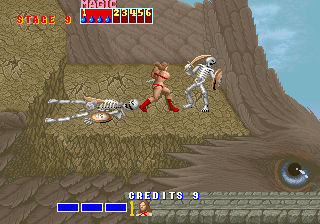
Golden Axe (1989)

I had a few thoughts on where to start, something more recent or something very old, but Golden Axe kept coming to mind. Why not?


It is an arcade game released by Sega, designed by Makoto Uchida, who previously worked on Altered Beast and would go on to design the Die Hard Arcade/Dynamite Cop games. Strongly influenced by Double Dragon, it plays like a horizontally scrolling beat-em-up game, but instead of picking up weapons (because the characters are already armed), for powering up the player can either accumulate potions for magical attacks or mount one of three creatures that attack in their own ways. One of the creatures is a squat, tail-whipping and bird-like creature referred to as a cockatrice (which also previously appeared as an enemy in Altered Beast), the other two are dragons that breathe fire in different ways.

The player can choose one of three characters to control, differentiated in a typical way for beat-em-up games: physically strong but with weak magic, physically weak but with strong magic, and an intermediate character. They're each on a quest to defeat Death Adder, a hulking, ax-wielding brute who's taken over the kingdom and is keeping the king and princess hostage. Ax Battler, the barbarian, wants revenge for his mother's murder. Tyris Flare, the amazon, wants revenge for her parents' murder. Gilius Thunderhead, the dwarf, wants revenge for his brother's murder. The motives are about as simple as you can get.

The game is fun, intuitive to control, and relatively easy for a coin-muncher. Some of the collision detection can be tricky, but even having not played the game for a good while, I was able to complete it in around 20 minutes and using no more than what would have been $1.50 per character. The graphics are good and the music does an adequate job of evoking works by Basil Pouledoris. My friends and I used to love hearing the death cries of the game's characters that were sampled from "First Blood."


Stylistically, the game aims straight down the middle in how it goes for a sword-and-sorcery flavor and it's probably more reminiscent of mid-list books that were written in the 70s as cash-ins than the major classics of the genre. Uchida is said to have studied the "Conan the Barbarian" movie quite a bit for inspiration, and the presentation of the characters follows the classic post-Frazetta veneration of the human physique. Ax Battler is a muscular swordsman in a blue speedo. Tyris Flare is a swordswoman in a red bikini. Gilius is a bit irregular since the genre doesn't often depict dwarf heroes, but it's not like there's a rule that you can't have non-human heroes. Death Adder is also very muscular and wears relatively little clothing. Not practical, but for better or worse modern visual depictions of the genre largely favor this style of hairless bodybuilders facing down their enemies.

One of the most striking enemies in the game is the skeleton warrior who rises out of the earth with a sword and his brow angled down in a permanent glare, straight out of the climax of Ray Harryhausen's "Jason and the Argonauts." Most of the others are an assortment of club and sword-swinging goons, male and female.


For setting, the heroes travel through the wilderness, arriving at a village on the back of a giant turtle that swims across the sea. They pass through a town but, finding the way to the villain's castle blocked with enemies, they ride and fight on the back of a giant eagle to the castle's ramparts and proceed to the throne room for the final confrontation. 

After besting Death Adder, he collapses on back as he flings his axe skyward, only for it to twirl down and embed itself in his chest, causing blood to explode out of the wound. The heroes release the king and his daughter and the game abruptly cuts to an arcade in which kids are playing the Golden Axe arcade game, at which point the game's cast of characters jump out of the screen and chase the kids through the streets of what is presumably Tokyo. It was common in games of the era to not take themselves very seriously, but overall this is about as pure a S&S game as has ever been made. I suspect most won't fit the genre so cleanly.

Supplemental viewing - Conan the Barbarian (1982); Jason and the Argonauts (1963)

Supplemental reading - Kyrik: Warlock Warrior, by Gardner Fox

SKALD: Against the Black Priory (2024)

  SKALD: Against the Black Priory is a Kickstarted RPG by Anders Laurindsen that hearkens back to classic PC RPGs, particularly those for t...