Showing posts with label Stealth. Show all posts

Tuesday, December 5, 2023

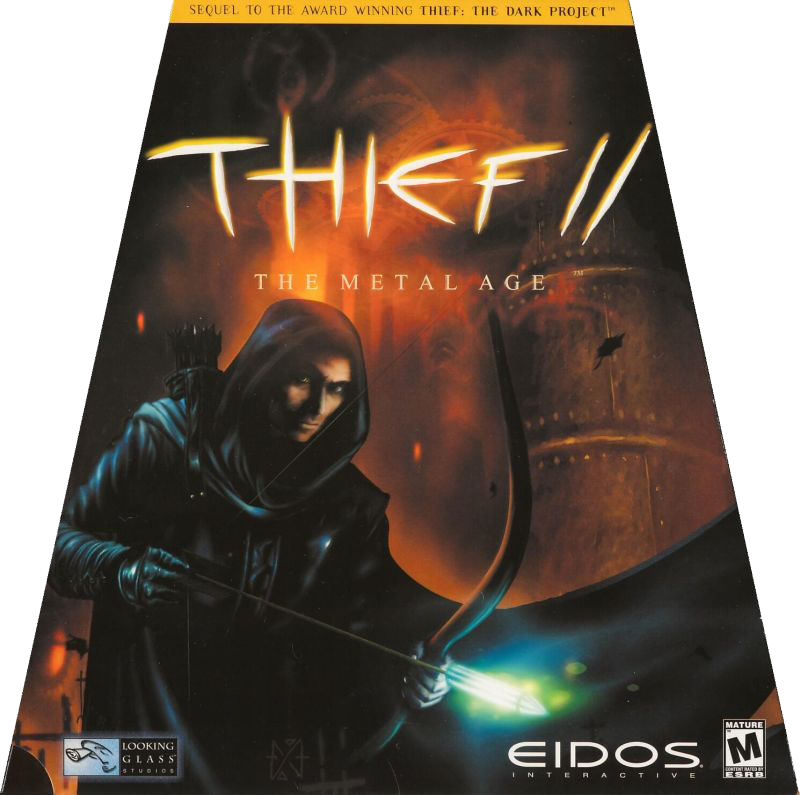
Thief II: The Metal Age (2000)


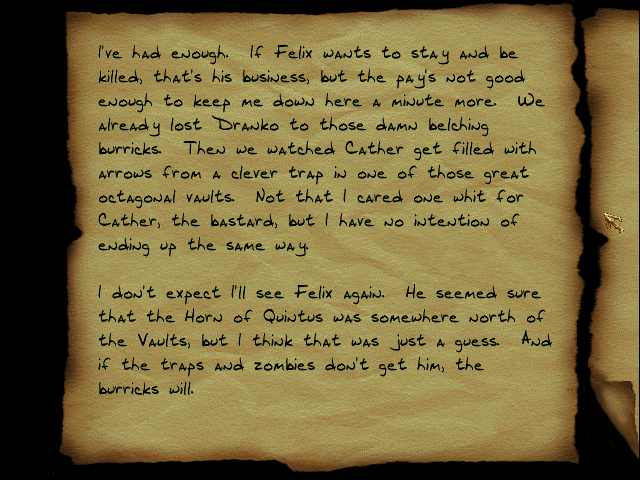
With Thief: The Dark Project turning out to be an unexpected success, Looking Glass Studio didn't take too long to produce a sequel. The first game featured Garrett battling Chaos-worshipping pagans who wanted nature to run amok over the world, so the sequel, The Metal Age, goes for a contrast. At some point a Hammerite splinter faction called the Machinists, lead by the mysterious Karras, ascended and began upgrading the technology level of the City. It's now full of steampunk surveillance cameras and even security robots that look like ED-209 from Robocop given a baroque chassis. 
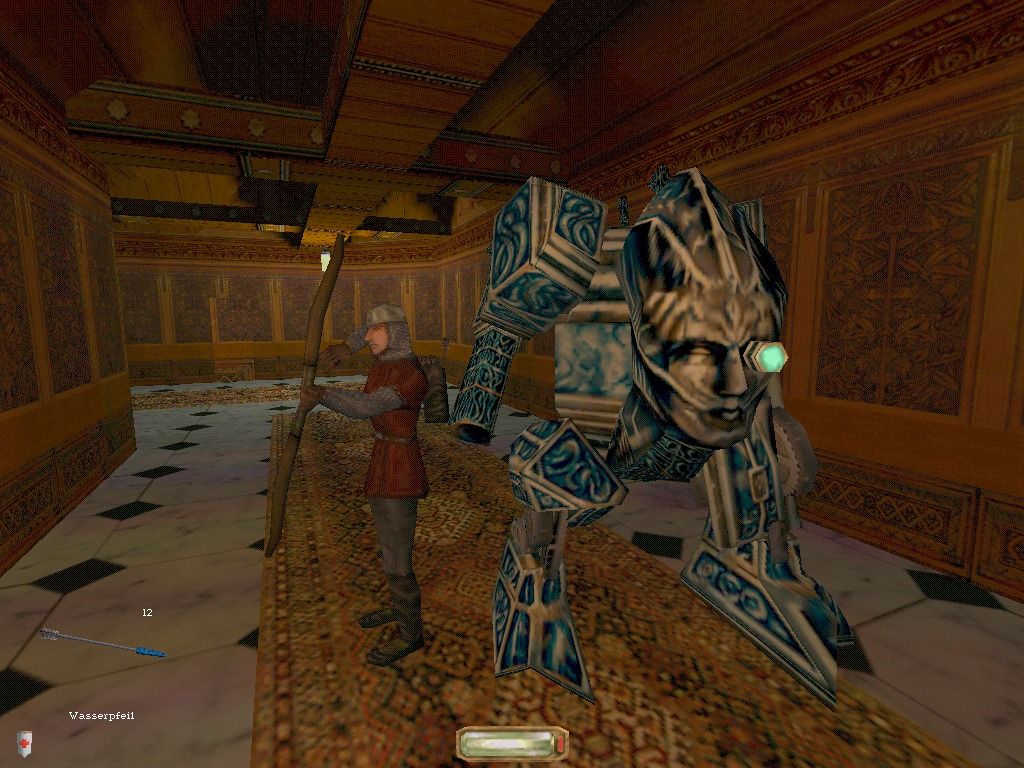
It's not much of a spoiler to reveal that Karras, with his Droopy Dog accent, is a madman who's been working with the city police to abduct criminals and undesirables and transform them into automatons that the city's nobility can use to as cheap labor to replace their human servants, but Karras has an additional plot to unleash a weapon that will annihilate organic life entirely. Much like the first game, Garrett starts out simply doing his usual work of burglarizing mansions, but he will gradually be pulled unwillingly into conflict with the Machinists and have to infiltrate their cathedrals, factories, and bases to uncover and stop Karras's schemes.

The game largely plays the same as the original, with keeping to the shadows as much as possible and making as little noise as possible the keys to success. Garrett has some extra tricks, such as using the steampunk eye he got as a replacement for the one plucked out in the prior game as a link with scout spheres he can toss to scope out areas without exposing himself. The designers listened to player feedback from the original game and emphasized stealth gameplay above all else, largely avoiding the  first game's occasional pushes toward faster action that were included because they were uncertain players would tolerate a game with so little combat. Thief II's levels are sprawling and complex and mission objectives sometimes evolve as new areas are explored. Garrett will often have to criss-cross large buildings to find important objects or operate switches that will unlock areas he needs to enter, such as a level in which he has to rob the vault of a huge, highly secure bank by getting into its basement to deactivate the vault door's massive bolt lock. In keeping with Looking Glass's design philosophy, players are allowed to approach levels however they like, with most areas having multiple points of entry, and playing on expert difficulty is encouraged because doing so exposes the player to more of the game, requiring that they simply accomplish more objectives instead of superficially making enemies tougher.

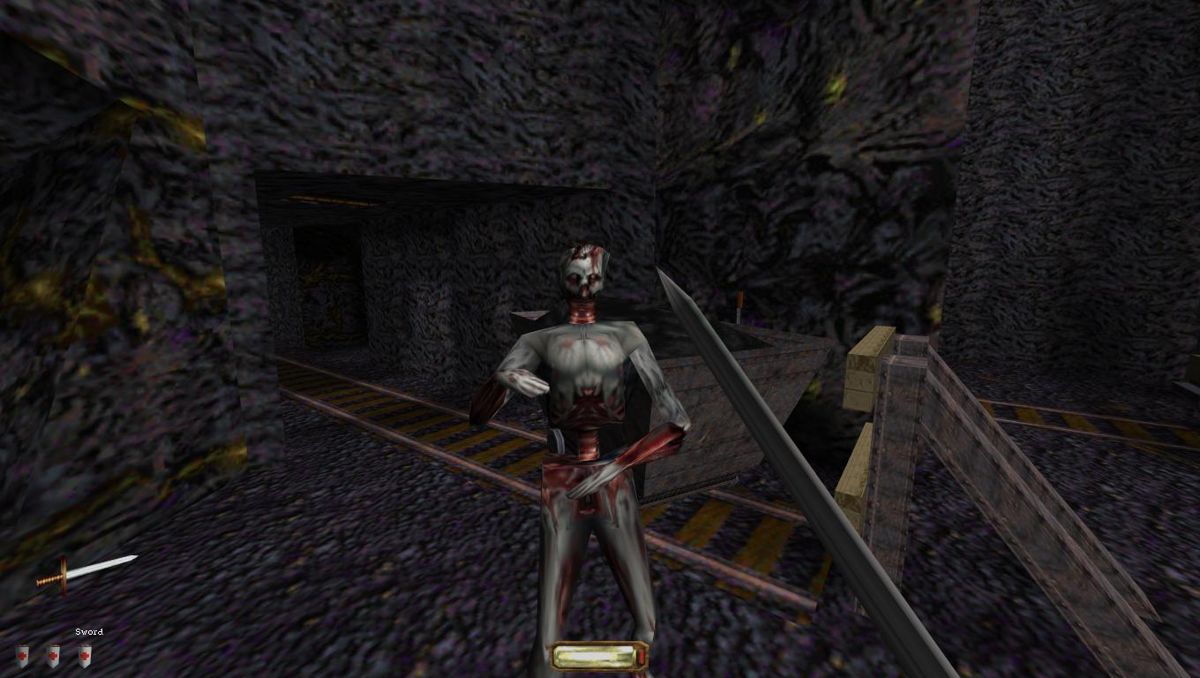
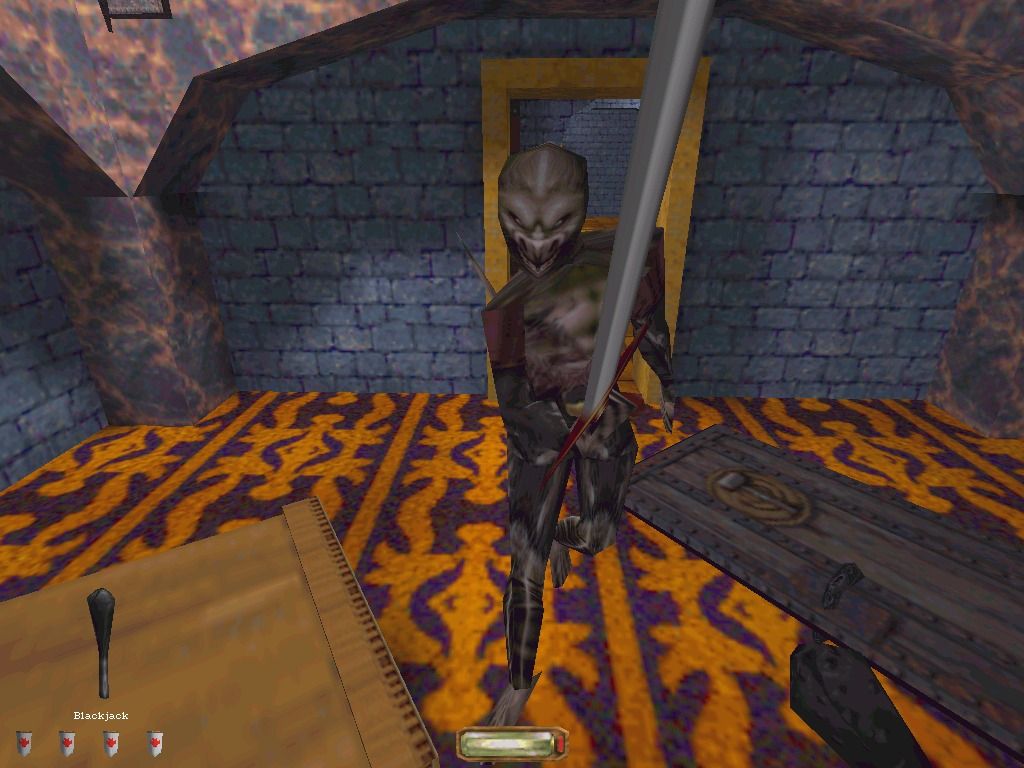
A downside of the game's greater focus on stealth and the creation of steampunk antagonists is that the game does lose a bit of the sword and sorcery flavor of the original game. Although the undead aren't entirely absent, their appearances are sparse and quickly pass, and monsters like the burricks and elementals are entirely absent. The unceasing use of Machinist enemies gives the game a slightly drier atmosphere. In the celebrated Life of the Party level, Garrett can briefly invade a necromancer's tower in the middle of the city. If the player is foolish enough to read the Book of Ash (the Thief universe equivalent of the Necronomicon) on the wizard's altar, the player will find himself beset by a pair of ghouls. A later level finds Garrett stuck in pagan territory, where he has to tangle with humanoid enemies and possibly even living trees. These moments of horror are very welcome in giving a break from the robots and Machinist patrols.

Thief II maintains the moody style of cutscenes and the game is still exceptionally well-written compared to most video games. 

Garrett is as cynical as ever, although he does get a bit unusually emotional at the climax, perhaps the only note that's questionable. Garrett is a very refreshing game character in how he feels vulnerable and how no matter how big the story gets, his adventures always come down to how well he can sneak in and out of a particular structure. Although the games tell a broader story, any level has the feeling of a single short story featuring this protagonist who merely wants to perform his trade to make enough money to keep his rent paid. As well-loved as these original two games are, they've given rise to a rich scene of fan-created missions that can be freely downloaded, many of them well-designed variations of raiding ancient tombs or opulent mansions.


Monday, October 10, 2022

Thief: The Dark Project (1998)


There are so many classic sword and sorcery stories centered on thieves - e.g., The Tower of the Elephant, The Tale of Satampra Zeiros, Ill Met in Lankhmar, Liane the Wayfarer, etc. - and Thief: The Dark Project seems to take after them so well, but the funny thing is that in looking over its development history, Thief's final form seems to have been largely an accident.

The germination of it began with plans at Looking Glass Studios for some kind of sword-fighting/melee combat game, including one that would have involved hacking up communist zombies. Before long, the developers shifted focus to an Arthurian-themed game called Dark Camelot, which would have inverted the lore, making King Arthur the villain and Mordred the hero (very edgy 90s). Dark Camelot had a troubled development period until the developers noticed that missions involving sneaking around were more involving than the rest, so they shifted focus again, ditching the King Arthur stuff in favor of full-time thieving, and renaming the game The Dark Project. The setting mutated further, putting players in a steampunk city only known as The City, which is under the control of a religious order called the Hammerites, who seem like what might have happened if medieval Freemasons had taken over the Catholic Church.


The player controls a man named Garrett. The game explains in one of its stylish, Nine Inch Nails-esque cutscenes that Garrett was a street urchin who tried to pick the pocket of a man who happened to be part of a secret sect called the Keepers. The man adopted Garrett and had him trained in the ways of the Keepers (the opening tutorial covers this period), but Garrett turned out to be a rebellious and amoral type who struck out for himself, using his skills to become an independent master thief. 

The game begins with Garrett pursuing his regular work (i.e., robbing a rich noble's mansion), but as it progresses, Garrett finds himself caught up in a hard-boiled story in which he's hired by shady benefactors to steal accursed prizes and finds himself exploring increasingly weird, sinister environments. 

Unlike most games, Thief's story is clearly told and doesn't fall prey to sprawling or becoming overambitious. Garrett does a job, that leads to another job, this job attracts the attention of a femme fatale who offers Garrett a job he might not normally do but he takes it anyway, this leads to yet another job that pulls him even more out of his comfort zone but the pay is too good to turn down (plus, beautiful woman). Double-crosses happen and by the end Garrett is in way over his head against a Pan-like figure called the Trickster God. Everything flows logically until it reaches a logical end. In the right hands, it could reasonably be adapted as a traditional story and not lose much.


One of the lessons Looking Glass learned after creating Ultima Underworld is that, contrary to prevailing wisdom, games become less immersive the more players have to interact with NPCs (humans simply have far more responses to situations than what any game could account for), so when they designed System Shock they made it so that players would never do more than listen to what NPCs were saying and they furthered this in Thief. There are no dialogue trees and no choices to be made. Although Garrett is a relatively distinct character in the sense that he has a certain job and a personality suited to that job, his reactions to story developments are almost entirely kept to the brief cutscenes that set the context for his next mission. He'll make very occasional wry comments on things he sees that don't rock the boat too much ("Looks like these stairs have seen better days"). Otherwise, players are free to find what they encounter as funny or disturbing as they'd like and they're free to react how they'd like within the game's constraints.


What the players will encounter starts out relatively normal, with Garrett being up against armored guards protecting a rich man's house. In the second mission, Garrett has to infiltrate a prison through some mines beneath, but these mines have undead corpses shambling around them. In the next mission, Garrett robs a massive tomb that is crawling with undead - it's this point that the game's sword and sorcery content, the sense of adventure mingling with supernatural horror with a vulnerable hero exploring forbidden territory, is arguably at its strongest. A later mission, in which Garrett is hired to burglarize another mansion, starts out normal enough but as Garrett ascends the floors he's confronted by bizarre sights like twisting hallways, rooms that are upside down, hallways that play tricks on perspective, rooms that open into infinite voids, and tunnels that seem to shrink passersby down to rodent size. It's Lewis Carroll given a very Lovecraftian twist.


There are no expository dumps in the game. After all, why would Garrett, someone who lives there, need someone to explain How It All Works to him? Between bits of conversation, papers and books the player can read, and simply observing how the world works, it's possible to glean that the setting's history involves some kind of calamity that unleashed an undead plague on the world, and that the Hammerites' ascension involved their ability to fight back against these forces and wall off the most afflicted parts of the city. The fact that they're such humorless fanatics possibly is because of the pressures they face in managing this existential threat. But it's mostly down to interpretation.


Oh, right, how does it play? As a thief, it's all about staying out of sight and making as little noise as possible. Like the Shadow himself, Garrett practically vanishes in deep shadows. On soft surfaces, he makes very little noise, but metallic or hard-tiled floors are terrifyingly hard to keep quiet on. To help him along, he's got a Green Arrow-like array of trick arrows he can use, such as arrows with vials of water that somehow can silently douse a blazing torch or arrows that sprout moss to give Garrett an instant carpet to run on silently. Garrett's shadow coverage and detectability are indicated through a very simple icon on the screen. Garrett can kill or club enemies from behind, but if he leaves their bodies lying in the open, guards will become suspicious if they discover them. Garrett does have a sword, but he's no Conan or Gray Mouser in swordsmanship and face-to-face encounters are to avoided if at all possible. Although Thief does show its age in its graphics and some AI limitations of the enemies, it's actually still superior to many modern stealth games, especially in how it uses sound to differentiate surfaces. Another nice feature is in how it handles difficulty - instead of the classic move of giving enemies more health or putting more enemies in a level, kicking up Thief's difficulty simply adds more objectives to your mission list, so you're actually encouraged to explore more thoroughly and see more of what the game has to offer.

The game can be a bit rough in controls. Garrett's mantling ability doesn't always work predictably, and his aim with his blackjack or sword can sometimes be infuriatingly picky (fortunately, enemies don't always notice the weapon fanning through space behind their heads). The physics sometimes mean Garrett hilariously struggles to get up a simple step while crouching. And although most of Thief's game time is absorbing to play, in its later stages it sometimes waffles on its own stealth concept and seems to encourage Garrett to fight and generally do things to which the game engine isn't ideally suited, a problem similar to the Tomb Raider games from the same era. Some missions are just not as good as others. Return to the Cathedral in particular is notorious for going from a white knuckle horror experience to exasperation as players have to constantly double-back over the area to fill a lengthy "Oh, just one more thing..." shopping list for an addle-brained Hammerite ghost.

Thief was very well-received by PC players of the time and despite its age is still today rightfully regarded as a first-rank classic. It spawned a sequel that gained even more acclaim; a second sequel that had a more mixed reception but is still considered to have some very good qualities, especially if its modded; and then a modern reboot by a different studio that most people feel just missed the point.


Wednesday, March 9, 2022

Dishonored (2012)


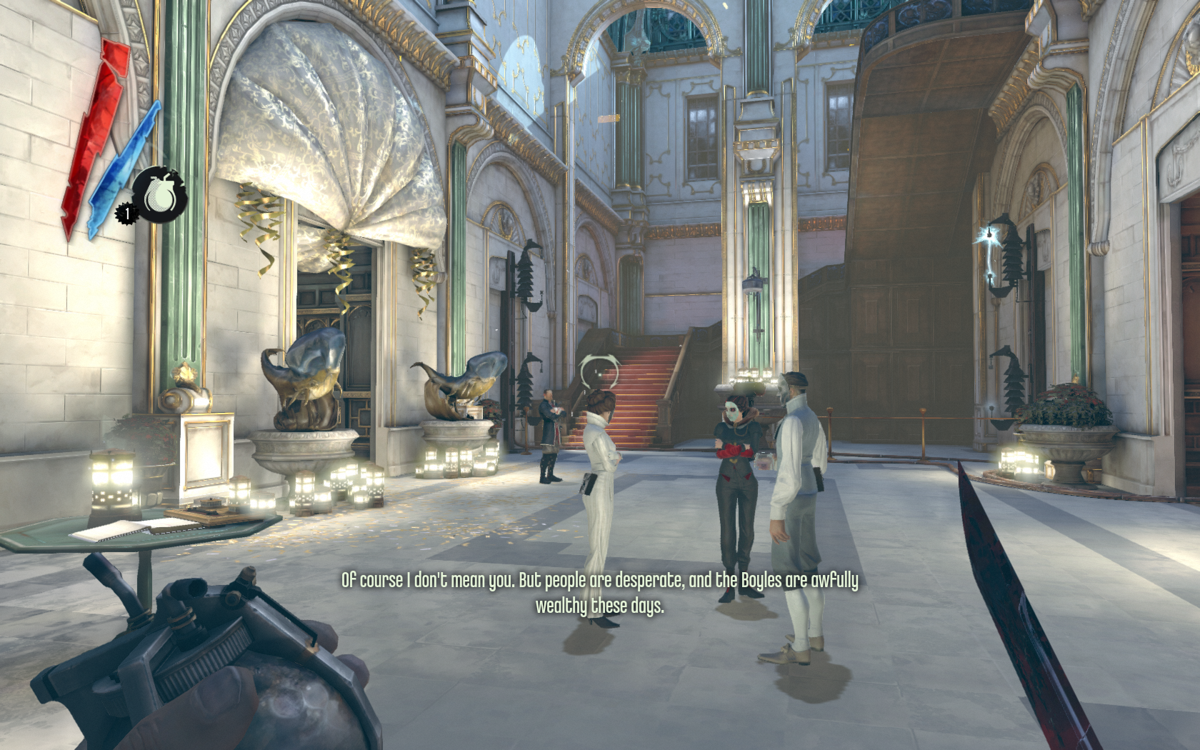
Dishonored, released by Arkane Studios, probably isn't most people's idea of a traditional sword-and-sorcery work. The player controls a royal bodyguard, Corvo, to the empress of a secondary world modeled on Victorian London. It's technically not a steampunk world, but rather a world in which fantasy technology is entirely powered by whale oil. The empress is assassinated, her daughter is kidnapped, and Corvo is framed for the crime and sent to prison. Months later, a group of conspirators loyal to the empress helps spring Corvo from the joint and immediately afterward Corvo is approached by a mysterious cosmic entity called the Outsider, who provides Corvo with supernatural powers that Corvo may use to gain his revenge. The Outsider's relationship with Corvo and other mortals is broadly reminiscent of how Elric's magic is supported by Arioch and other supernatural beings.

Unlike the other games covered so far, in which story served more as flavor and as something to simply put various aspects of the games in context, Dishonored is a big-budget modern game that attempts to tell a full story of Corvo's fall and rise and insists that players watch lengthy cutscenes, interact with fully voiced supporting characters, read books full of background information on the world and its people, and listen to audio logs. It's a far cry from the hard-hitting, get-right-to-it manner of Rastan or Golden Axe. But Dishonored in many ways takes after the Thief series and Thief is absolutely thick with Fritz Leiber-esque atmosphere.

Dishonored is designed to offer as much freedom as possible to the player in achieving goals. The game can be completed without directly harming a single person by sneaking about like a ghost, or Corvo can charge in and capably hack his way through multiple opponents with his sword and pistol, setting off alarms and causing complete chaos. Corvo's powers potentially include teleportation, possession, stopping time, or calling forth hordes of plague rats to overwhelm foes. Corvo is also armed with several types of gadgets such as traps, grenades, and hacking devices. It doesn't take long for Corvo to seem quite overpowered compared to all the enemies around him. 

The game was initially intended to simply be an assassination game, as Corvo would eliminate important characters that were part of the conspiracy against him and the empress, but co-director Harvey Smith (Deus Ex, Thief: Deadly Shadows) proposed that missions have alternate non-violent solutions, although in some cases it could be debatable whether the non-fatal method is more humane; e.g., in one mission your solution leads to a female target being kidnapped by an admirer who will forever have the woman at his mercy without anyone realizing her circumstances. The game judges the player through a simple morality system based on how much chaos the player causes. More death and explosions lead to more negative consequences and the bad ending, while keeping body counts low leads to a happier outcome.

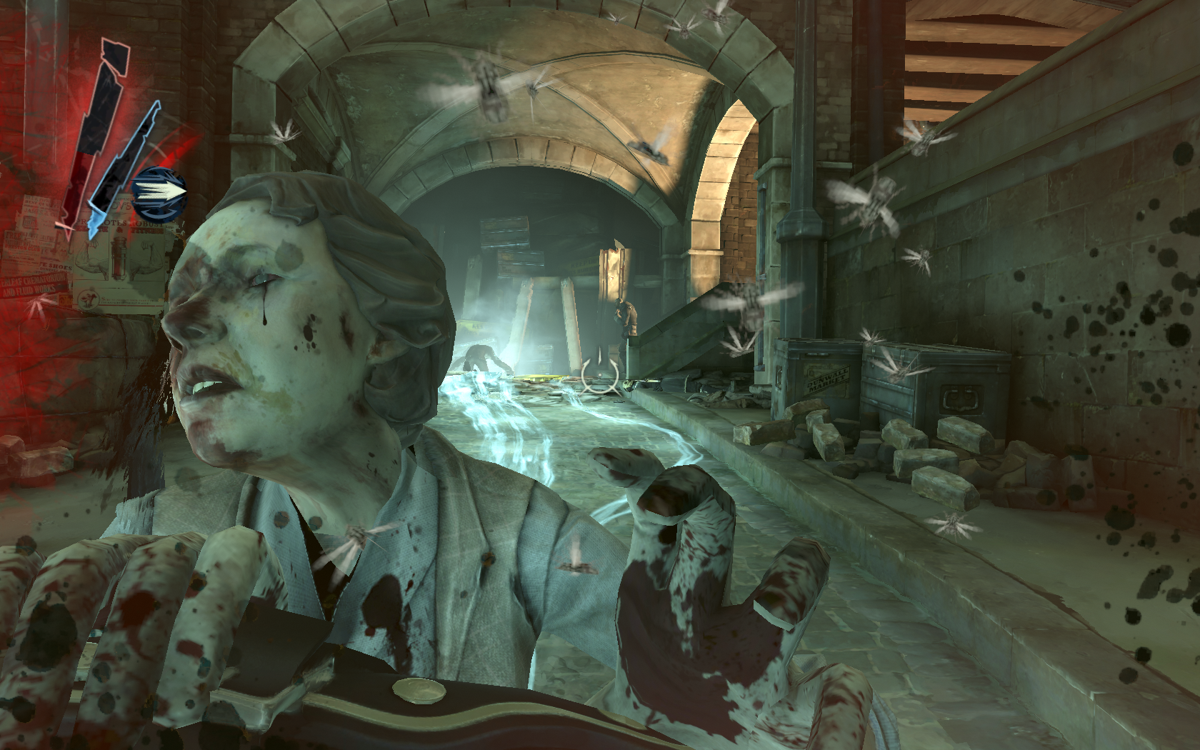
The fantasy elements are relatively restrained in that enemies are all essentially human. Even the "zombies" present in the game are actually people reduced to that state because of an unexplained plague afflicting the city. There are no hints of elves, orcs, or dwarves anywhere. 

Visually, the game uses a painterly effect that is effective in providing a sense of realism, but stylized just enough that the game's seams don't show. The artists, such as Viktor Antonov, cited as inspiration works by Gustave DorĂ© and illustrations for Rafael Sabatini's novels such as Captain Blood, among others. 


As with so many big budget games, the production values are very impressive, although I can't help thinking that the big name voice cast the studio hired was somewhat wasted. Aside from Michael Madsen as the villain/DLC protagonist Daud, I failed to recognize most of the voices and was surprised to see names like Brad Dourif and Carrie Fisher listed in the cast. It's enjoyable enough to play but the story is predictable and I never felt invested in the fates of any of the characters. The game is almost too effective at evoking a sense of squalor - the overwhelming brownness of it and the trash- and carcass-strewn streets and houses become wearisome after a while, reminding me of how many recent fantasy works seem weirdly preoccupied with excrement and garbage. But at least the game is of a modest length and doesn't overstay its welcome, either.


SKALD: Against the Black Priory (2024)

  SKALD: Against the Black Priory is a Kickstarted RPG by Anders Laurindsen that hearkens back to classic PC RPGs, particularly those for t...