Showing posts with label Rastan. Show all posts

Tuesday, August 8, 2023

AmiGameJam 2022


This year's Amiga Game Jam happens to have had the theme of sword and sorcery. There were nine submissions made between October 31 and July 31, and voting is still underway for the next 11 days. Seems like a good idea to have a brief look at the entries (note that most are more like demos or even "proof of concept" than fully completed games).
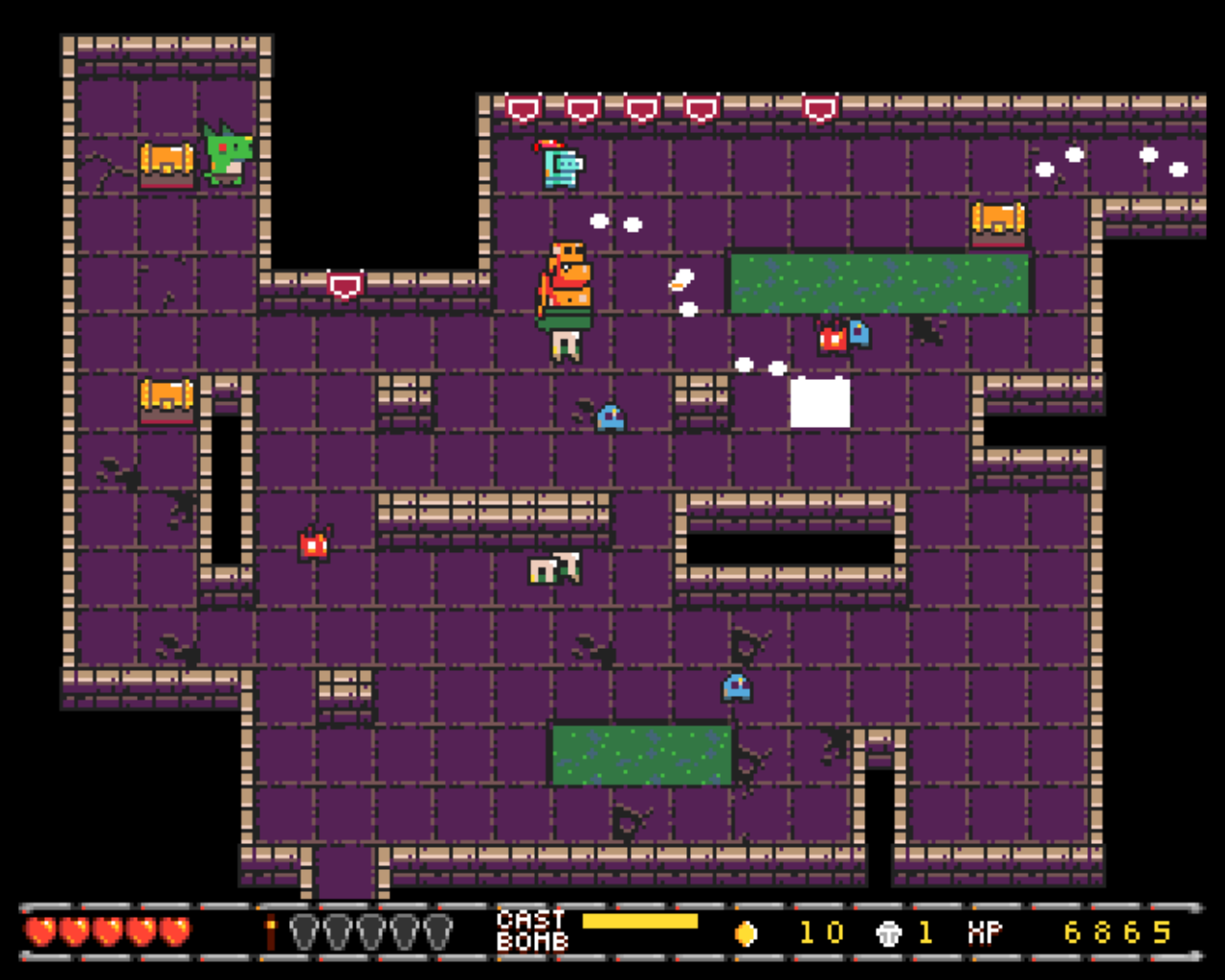
Rogue Declan Zero, by nivrig, is a "challenging, procedurally-generated, roguelite twin-stick shooter" in which you have to control Sir Declan as he fights through dungeons, closing hellgates that wizards have opened beneath the castle. 

It plays a bit like a fantasy version of Robotron and as Rogue-lite games go the difficulty curve seems relatively gentle. It's pretty generic fantasy - people often have differing ideas of what "sword and sorcery" means, as we'll see in some of the other entries - but it's fun, easy to get into, and the dungeons are just short enough to make it easy to play just one more.

******
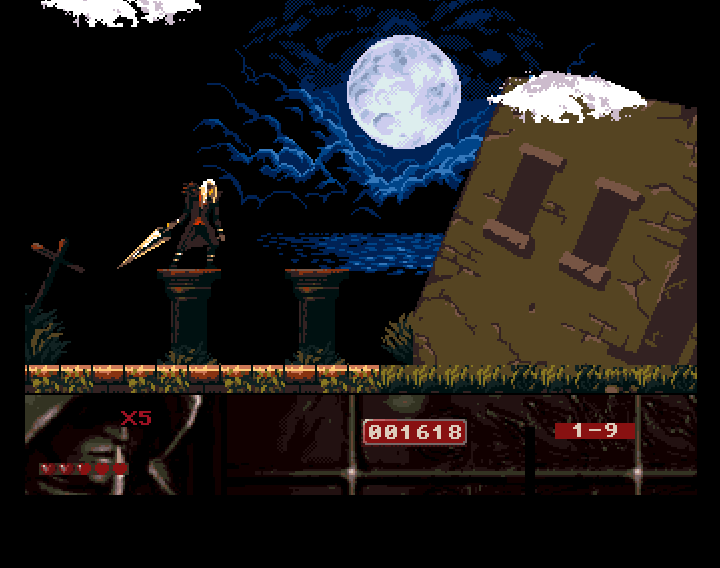
Gothicvania, by Amiten Games, is clearly inspired by Castlevania. Infernal creatures are menacing the town of Valencia and it's up to warrior-sorcerer Sir Lucas to use his magical, fire-spewing sword to defeat them.

This could be a pretty good Castlevania clone if it's completed and such a game would be welcome on the Amiga since the official Castlevania port currently has a 2.98 turd rating on LemonAmiga. As it stands right now, Gothicvania is pretty rough around the edges, with awkward animation and collision detection. Hopefully the creators will continue working on it and fleshing it out.

******
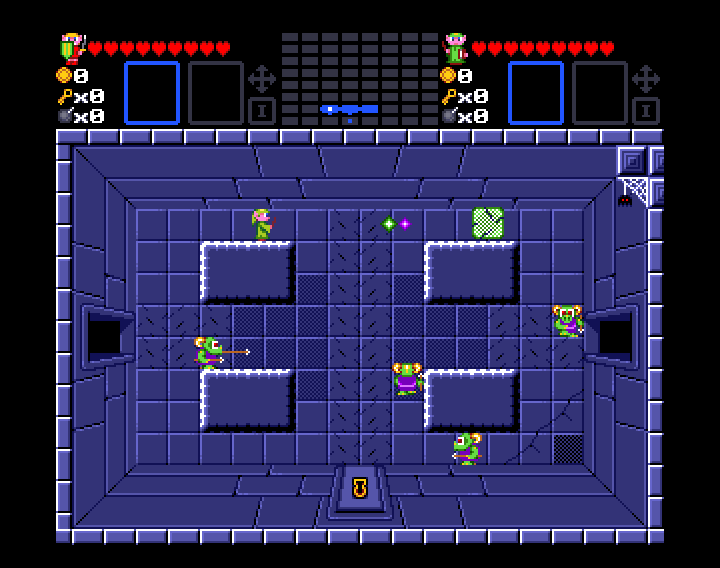

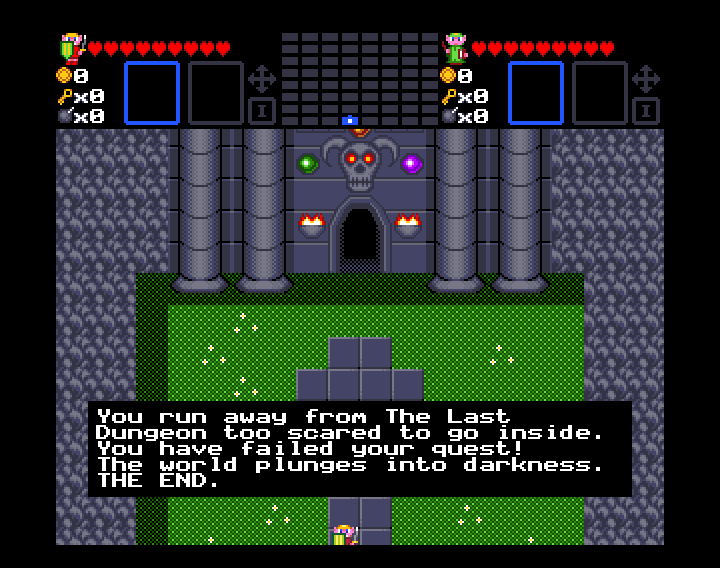
The Last Dungeon, by PixelPlop, is a Zelda clone, specifically the dungeons that you play in the original NES Zelda. Unlike Zelda, you get a choice of protagonists, a barbarian or a wizard (literally sword and sorcery), and it's got a slightly grittier feel than Zelda, with details like bloody pentagrams on the floors and grislier enemies. 

As an an attempt at recreating that Zelda feel, it works quite well and really just needs a bit of polishing at this point.
******
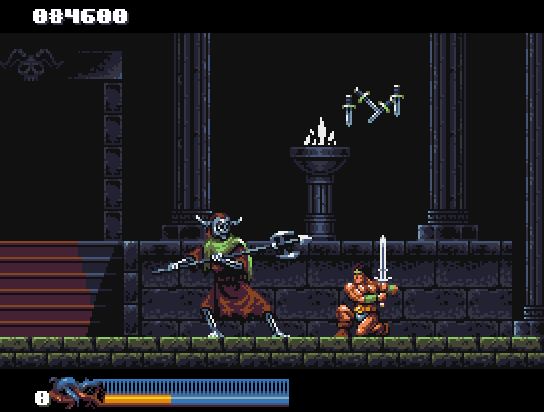

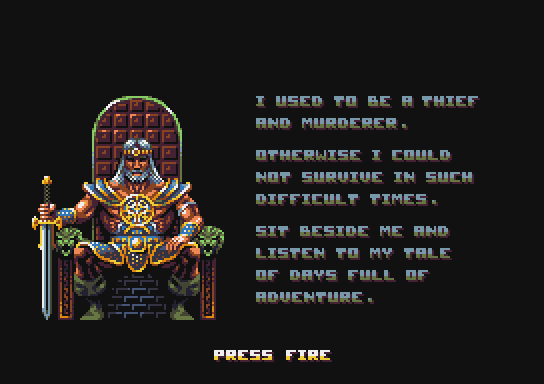
Rastan, by basementApe, is exactly what it seems to be: porting the original arcade game to the Amiga 500 as closely as possible. Rastan was ported to numerous systems but the Amiga never got it for some reason, but this version is gathering a lot of interest because it looks and sounds fantastic. It's not an exact translation - aspects of the arcade like the swinging vines have been replaced by moving platforms and the controls haven't been fully implemented - but if things keep up this could end up being the best home version of the game, exceeding even the Apple IIgs version.

******
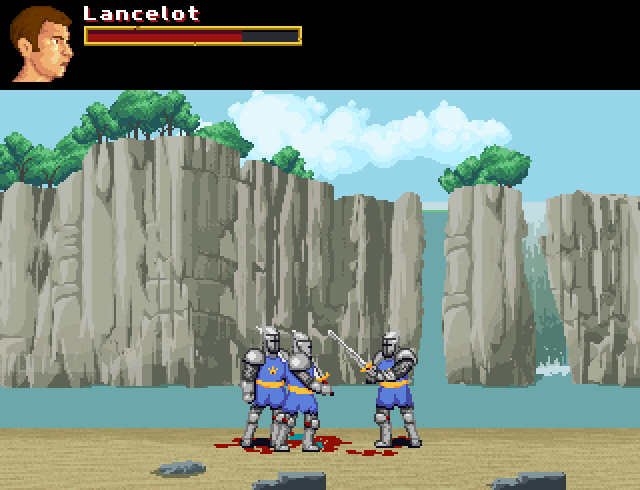
King Arthur: Rise of the Round Table, by Latebit, is a beat-'em-up in which you control Sir Lancelot as he battles a gang of enemy knights. It doesn't last long (defeating all the knights seems to just restart the demo) but there's some quality pixel art, the combat is easy to pick up (high, middle, and low attacks) and the overall look and gory style recall the classic Moonstone. There's some real potential if they stick with it and expand it into a full game.

******
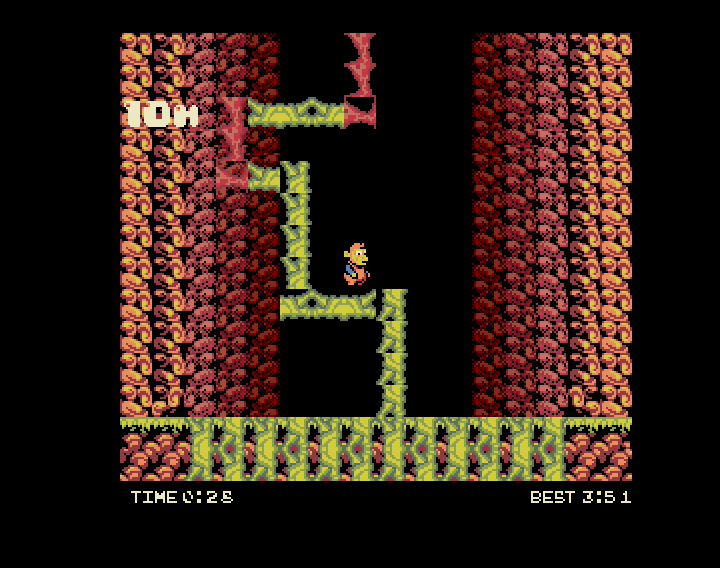

Jack in the Pit, by earok, involves you being knocked from a cloud into a deep pit, so you have to grow a beanstalk all the way back up while various elements try to rip it down from underneath you. The game was apparently created in only 48 hours but it's an impressive piece of work that looks and plays better than many games that have more protracted development times. It's not entirely clear how it fits the theme aside from being broadly fantasy, but at least it's fun.

******
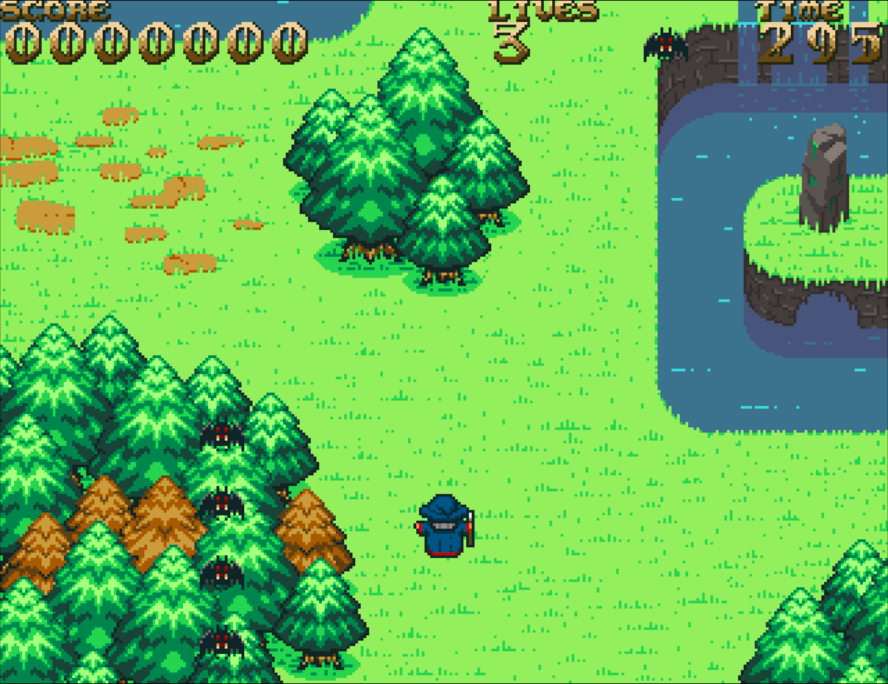
Caravandalf, by Peter and Gordon Mackay, is a caravan shooter (trying to get as high a score as possible within a time limit) in which you control a wizard (Gandalf the Grey?) as he soars through the air blasting enemies. It could definitely use some music, but it's a fast-paced bit of fun for what it is.

******
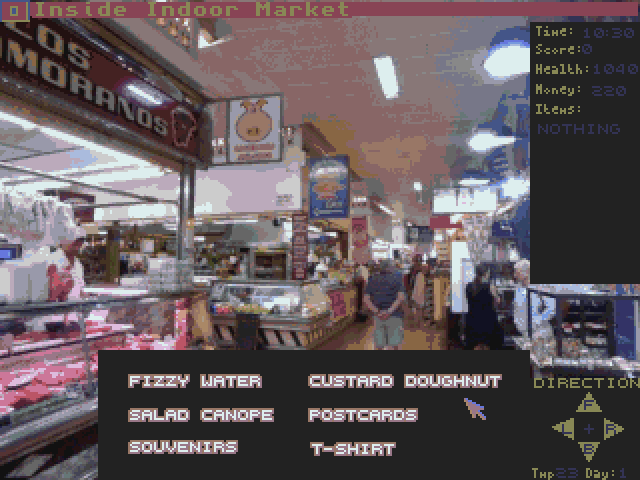

Holiday, by lifeschool22, is a "photo RPG" that tasks you with surviving a vacation to Spain in 2018. You have to find items like sunscreen to help you survive the oppressive heat. What does this have to do with sword and sorcery? *shrug* Game jams!

******


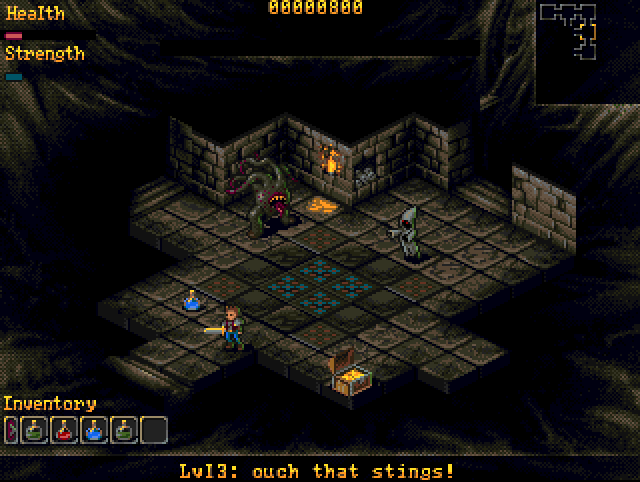
Roguecraft, by Badgerpunch Games, is an Amiga expansion of Rogue 64, a Rogue-like C64 game the creators did a couple of years ago. It's the usual Rogue-like game in that you explore a randomized dungeon, most likely getting killed repeatedly as you learn how the game works and what potions do, but this one has a lot of style. 

Not counting Rastan, which at least has the advantage of a classic arcade game providing a blueprint, this is the most impressive overall submission. The impressive graphics are reminiscent of HeroQuest and it generally seems like a fully finished game. It will be interesting to see how the judging goes, but the best of the lot would seem to be between this and Rastan.


Wednesday, March 8, 2023

Warrior Blade: Rastan Saga III (1992)


After the dud that was Nastar, Taito concluded its Rastan arcade trilogy with a more respectable effort. In Warrior Blade: Rastan Saga Episode III, we pick back up with old Rastan on his throne, telling more stories of his adventurous past. This time around, he and his friends Dewey the ninja(?) and Sofia, a whip-wielding former princess turned thief, battle foul creatures as they try to claim the jewels of Depon. But of course the story isn't the reason anyone plays a game like this. It's about evoking a certain mood, which is also for the best because the English text translation is lousy, even if no one outside Japan saw it on initial release because the game wasn't released abroad.

The game doesn't appear to share much talent with the previous two games in the series, aside from Masahiro Takaki on music, and it seems that the big plan for the game and getting the series back on track was to largely ape Golden Axe. Instead of a purely horizontally scrolling experience, characters have a bit more room to maneuver up and down and it plays like a traditional brawling game as cooperative players try to take down groups of enemies without being surrounded and struck down from behind. Instead of simply swinging his sword, Rastan has a set of moves he can use, such as charging attacks and even grabbing enemies so he can bash their faces with the pommel of his sword or fling them at their partners. It's mostly standard stuff for the genre, only distinguished by the fact that few games besides this and Golden Axe use a S&S theme.

The graphics look great. The characters are large and well-detailed. Rastan in particular looks very much the Conan clone he was always intended to be, like he stepped out of a John Buscema or Neal Adams drawing. Enemies include classic sword-and-sorcery types like serpent men, rival tribesmen, armored knights, living skeletons (of course), fishmen, and cloaked wizards. Some of the boss enemies are quite befitting of the genre, such as the skeleton of a dead king on his throne that moans "help me" as demons fly out of his carcass, or a giant tentacled sea monster. The stages, most of which can be selected in any order, have names like The Enchanted Castle of Zananstaff, Mahadidekaradi Spiral Tower, or The Palace of Black Demon Religion. There are also interlude stages in which the heroes engage in battles on horseback or while rising into the clouds on the backs of dragons. The heroes themselves don't use a lot of magic, but amusingly you can occasionally summon a wizard and can force him to cast screen-clearing spells on your behalf by booting him in the ass until his meter is spent.

In its own time, the most eye-popping thing about the game was that it used a gimmick Taito had previously busted out for its Darius and Ninja Warriors games, which was to place two monitors side-by-side in one cabinet to create a widescreen image. Not a big deal now, but it really made games standout in arcades back then. 

At the game's conclusion, Rastan, mercenary as ever, divvies up the winnings with his friends and parts ways with them, frustrated that he hadn't found what he was looking for and continuing to seek a kingdom for himself. And that was the end of Rastan's adventures in video games, not counting a half-assed attempt years later to throw him in a different barbarian-themed console fighting game.


Tuesday, July 12, 2022

Rastan Saga II/Nastar (1988)


Rastan was a classic late 80s arcade hit for Taito. Somehow this sequel didn't turn out so well. Possibly the only thing saving it from a worse reputation than it already has is that it isn't well-known at all. The game's design is credited to Hisaya Yabusaki, whose only other design credit is for Taito's animal conservation-themed brawler Growl.

The game's attract mode lays out the story in classic Engrish: The "Rastania" was a sacred place, in which the sacred temple, "Skycraper", soared into the sky. It is said that whoever conquer the "Skyscraper" would rule the "Rastania". A wicked group has invaded the "Skyscraper" and has tried to make it their own. If the situation is left as it is, the place would eventually be controlled by the wicked group.

The player controls a headstrong warrior who seeks to defeat the "wicked group" occupying the tower, although the settings for the five levels don't bother with internal consistency very much. You'll go from looking over tree tops, to a cavern, to a forest, etc. The characters are bigger than the sprites in Rastan, but the game is slower and feels much clumsier to control. Actions like the downward stab that were easy to execute in Rastan now require precise timing - if you do the downward attack too soon the warrior will revert back to his regular stance before coming down on the enemy and will take damage. Even grabbing and leaping off Taito's classic swinging ropes can be oddly finicky. Even worse, the game takes advantage of this and will force the player to deal with incredibly difficult jumps or fall to his death in bottomless pits. One particular trap involves having to do a weird mid-air crouch while falling to squeeze into a tiny space - moves like this have to literally be pixel-perfect in execution. It feels cheap instead of challenging.


Probably the most noteworthy difference from Rastan in gameplay is that the player can block attacks when not attacking. The hero starts with a short sword and shield and can also obtain a long two-handed sword or a pair of iron clawed gauntlets that have shorter range but more power. 

Between levels, the game treats the player to scenes of the hero commenting on the action; e.g., clearing level 2 gives a closeup of him with the claw weapon, declaring, "You wicked people! How did you like my assault? Oh, here come tough enemies!" One can imagine how this would sound appropriately badass with a proper translation - maybe something like "You bastards! You like the taste of my steel? Come and get some more!" - but good Japanese-to-English translations even today can't always be taken for granted. At least the music is still pretty good, although not as immediately memorable as the original's.


Thursday, February 17, 2022

Rastan (1987)

Rastan (aka Rastan Saga) was released by Taito, design credited to Toshiyuki Nishimura under the direction of Yoshinori Kobayashi. Nishimura also is credited as designing The Astyanax, a game that will likely get some coverage here down the line. 

Along with Golden Axe, Rastan is probably the purest example of sword and sorcery in an arcade game and yet another game very clearly influenced by the Conan the Barbarian movie. The international version of the game doesn't have much to show for a story aside from the image of an aged Rastan on a throne, similar to the movie's final image of Conan as a king. The Japanese version, however, includes a screen explaining that Rastan has made a business arrangement with the princess of a kingdom: Rastan will slay a dragon and upon dropping its head before the princess, she will give him all of the money.

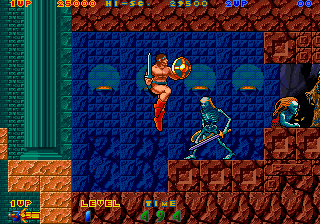
Rastan is one of the standout games of its time in terms of presentation. The character designs are instantly memorable, with Rastan being an agreeably drawn loin-clothed barbarian taking on various enemies that tend to have a mythological slant. Centaurs, amazons, chimeras, and harpies, among others. There isn't a lot of parallax scrolling, but the lush, richly colored environments are imbued with memorable effects such as changes in time of day or weather, and interesting features such as colossal statues far in the distance that any Tolkien fan would recognize as the Argonath. Best of all, Rastan has an absolutely great Basil Pouledoris-influenced soundtrack by Naoto Yagishita and Masahiko Tagaki that would probably make a fine transition to a full orchestral performance.


Whereas Golden Axe was modeled on brawlers like Double Dragon, Rastan is purely horizontal and enemies generally are vanquished with a single stroke. Levels are divided between an outdoor section, such as mountains or murky forests, and fortresses that Rastan must navigate until meeting an end-boss in a throne room. Rastan's basic weapon is a sword, but he can find axes, morning stars, or (best of all) a magical sword that shoots fireballs, along with items that carry effects such as replenishing his health or making him more resistant to damage. Rastan has a health bar that runs down to a heart that beats harder as his life runs down, another classy visual touch. An important distinguishing feature of the game's design is that Rastan need not stop before attacking or leaping. A big part of developing a successful strategy for the game is balancing the urge to rush ahead while cleaving through enemies with the need to occasionally slow down or even stop and wait for an opening.

An amusing touch is that Rastan will sometimes have to jump out and grab a swinging vine, calling back to Taito's Tarzan game, Jungle King, which was reworked as Jungle Hunt after the Burroughs estate rattled its saber at the company (not a lot of Tarzan or ERB-based games out there...).

Rastan is unusually difficult even by the standards of coin-munching arcade games. Enemies are numerous and never stop charging at you from both sides. Moreover, the stages are full of hazards such as pits and lakes that will kill you instantly if you fail to make a leap. On top of that, the game pulls a bit of a tough trick on players when it reveals that there are no continues for the final level. To actually overcome the game, one has to learn it very well instead of just purchasing credits all the way through. I confess I've never beaten the game. I'm not good enough.

If one is good enough to win, the game reveals Rastan moving on before concluding with the shot of his older self on the throne, stating that this was only one of his adventures on the way to earning his kingship, and that he might have other stories to tell. Taito did create more games featuring the character, but those are stories for another time...


SKALD: Against the Black Priory (2024)

  SKALD: Against the Black Priory is a Kickstarted RPG by Anders Laurindsen that hearkens back to classic PC RPGs, particularly those for t...