Showing posts with label platformer. Show all posts

Sunday, April 21, 2024

Lionheart (1993)


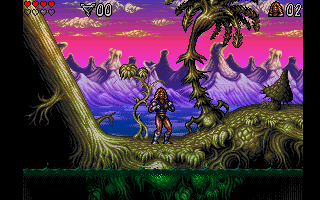
Lionheart for the Amiga might be described as being like Thundercats except not lame. The story of the game is that Valdyn, a half-man/half-cat swordsman nicknamed Lionheart, is sent on a quest to retrieve the Cat People's priceless Lionheart jewel, which has been stolen by the evil wizard Norka. As an extra incentive, Valdyn's woman was turned to stone by Norka, so he needs to find a cure for her, too. Shortly after beginning his quest on the back of a flying dragon, however, Valydn is shot down by Norka's airship and crash lands in a forest far from his objective, so now he has to fight all the way across the land, through forests, swamps, volcanic lands, and the city and fortress.

The game was created by a team at German publisher Thalion and it's one of the great visual feasts of its era as Henk Nieborg really knocked himself out with the pixel art, pushing the Amiga as far as it could be pushed for 2D graphics. As graduates of the demoscene, Thalion was known for having beautiful games and Lionheart is arguably its masterpiece. Every single element of the game is lushly rendered, from the multi-hued skies to the verdant plantlife, and the parallax background scrolling. There are effects used for the opening and closing cutscenes that are never re-used in the gameplay. And the sound is exceptional for the Amiga, with simultaneous music and sound effects, something Commodore machines often traded off on because of the limited sound channels available. Valdyn himself is very smoothly animated and has numerous poses that also lead to their own specific animations; e.g., step to the edge of a platform and he'll make a show of maintaining his balance. Slide down a steep surface and Valdyn will unveil a new sword-swinging animation specific to that situation. It's the kind of character-based design that was highly valued in the 16-bit era, when every company was hoping a game character would show personality and break out as a popular mascot. 

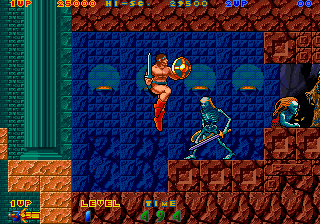
The game doesn't just look great, it plays well, too. Although there's a strong Rastan influence on the game, it plays a bit differently in that Valdyn has to stand still while attacking. Hold the button down and push forward and Valdyn will perform a straight swing of his sword, push up and he'll do an overhead strike, push backward and he'll do a spinning reverse attack. Kneel down, hold the button and push forward and he'll do a low kick. It takes a short while to get used to it but it's not a bad system when you settle down with it, and the game isn't so blisteringly paced that it rushes at you before you've had a chance to practice. Jumping is generally easy to control with the possible exception in some instances of gaps that need a fast running start before Valdyn can clear them.
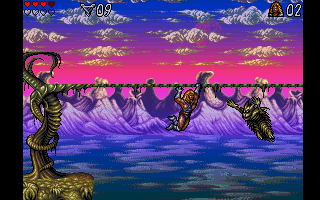

Like a lot of games of the time, levels are full of collectibles for extra lives, attack power-ups, and health refills. Also be sure to find the hidden level to get the magical amulet that unlocks the best ending for the game.

If there's a major flaw in the game, it's that the game is just really long for a game of its genre. Levels play out three or four times as long as those in similar action games, and the game is quite difficult, so memorizing and executing the right path through the game is even more exhausting than usual. It can be done, the game is mostly fair in how it's designed, but there are times when it crosses the line from feeling thrilling to "Huh, this is going on a bit, isn't it?"

The Amiga library is in an awkward place in retrospect. The system was well ahead of its time, delivering 16-bit graphics and sound in 1985, but most of its games were designed for a single-button controller that rapidly went out of date, so players used to advancements in console gaming in particular tend to deride most Amiga efforts at competing with Nintendo and Sega games. Lionheart stands as an example that in the right hands the Amiga was well up to the task of competing.

Although there were no sequels to Lionheart made - Thalion didn't last much longer - Valdyn did reappear in Thalion's classic RPG, Ambermoon, as a recruitable party member. And in recent times, Lionheart was ported to Windows in a freely available version.


Friday, February 16, 2024

Volgarr the Viking (2013)


Volgarr the Viking was one of the old Kickstarter success stories, a throwback to Rastan intended to be particularly challenging and gameplay-heavy. "A game with no real challenge is like a cheeseburger with no meat...We're here to put the meat back in the cheeseburger!" the creators, Crazy Viking Studios, said, and they meant it. Volgarr the Viking is a tough game that demands practice and memorization of the best ways to overcome difficult parts.

Being a viking, Volgarr is resurrected by Odin and sent out to fight whatever happens to be in front of him. That's about the extent of the story, although there are multiple endings based on how you play and the endings reveal certain things, such as how Fafnir the Dwarf was transformed into a dragon. The creators weren't kidding when they talked about a "time when games were about the game, not about the cutscenes or cinematic presentation."


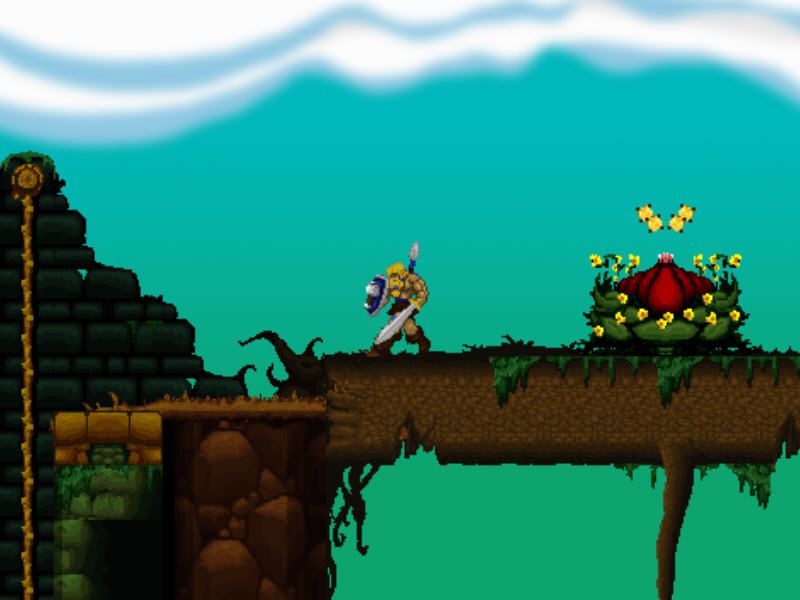
The pixel art isn't a lush knockout on the level of Henk Nieborg's work or the Metal Slug games, but it's solid enough and the graphics are very clear, with characters easy to distinguish from backgrounds at all times, which matters in a challenging gameplay-first game. Despite the Norse theme of the game, Volgarr will cut his way through a variety of Lovecraftian fishmen and lizardmen and other giant bugs and sea creatures.


The music is deliberately non-retro and features stirring compositions by Kochun Hu that stand up well to anything short of Basil Pouledoris's Conan the Barbarian score. There are many sword-and-sorcery B-movies that wish they had music as good as this game does.

To get into the details of how it plays, Volgarr can swing his sword and also throw spears that when thrown into walls also serve as platforms for him to jump on to reach high places. He can move while attacking with the sword but must stop in place to throw a spear. He can also double-jump in midair and stab downward while falling. Similar to Rastan but with a few extra wrinkles thrown in and making progress mostly means knowing which sequence of moves to make in particular situations. Volgarr also has various layers of protection. Get hit once and he'll lose his helmet, get hit again and he'll die. His shield can block attacks but it will break unless a reinforced version of the shield is picked up.

Unlike a lot of modern games, Volgarr doesn't feature liberal use of checkpoints or saving, so if someone plans to get good at the game, they'll do best to carve out some decent time for the game and be willing to die and retry many times until they master just a single level, never mind the whole game. And then even more so if someone wants to get the best possible ending.


Sunday, January 21, 2024

Sword of Ianna (2017)


Sword of Ianna is a sequel/demake of Blade of Darkness created by the Spanish Retroworks. The premise is that the player controls Jarkum, a descendant of the barbarian Tukaram from Blade of Darkness, who is called by the goddess Ianna to retrieve her sword and defeat another great evil.

What it shares in common with its inspiration is a similar difficulty level in that it tries to replicate the perilous, thin-margined combat of Blade of Darkness in a 2D platformer. Simple enemies can be dispatched quickly but if you don't respect them they can also inflict a lot of punishment on you and leave you handicapped going forward if you can't secure enough healing items. There's also a lot of running, jumping, and climbing involved as Jarkum has to navigate environments inspired by the original game, solving simple puzzles such as finding levers to open gates while avoiding traps. The combat uses the old method of pushing the action button to draw your sword, then holding the button and pushing a joystick direction to execute certain attacks. When not in combat, you can run and climb up or down ledges. The game does feature frequent checkpoints, so dying doesn't cost much of a penalty in terms of time lost. Like many modern games, even the more difficult ones still want you to succeed and progress all the way through to the end.

The game was released for the MSX, ZX Spectrum, and Amstrad CPC computers, the three most popular PCs in Spain in the 80s and represents each system quite well, although the MSX version is probably the most well-rounded of the three. If a game like it had been released back then, it would have been heralded as a classic, with well-drawn graphics featuring large, well-animated characters and moody environments - orc fortresses, musty tombs, and temples of evil based on the original Blade of Darkness settings. The enemies from Blade of Darkness, such as the orcs, dual-sword-wielding skeletons, and golems, also make returns in 2D form. And it has a memorable soundtrack that emphasizes a sense of danger and mystery. One doesn't need to have played Blade of Darkness to get Sword of Ianna, but it adds a little extra layer of appreciation to what the developers present.


Friday, December 15, 2023

Primal Light (2020)


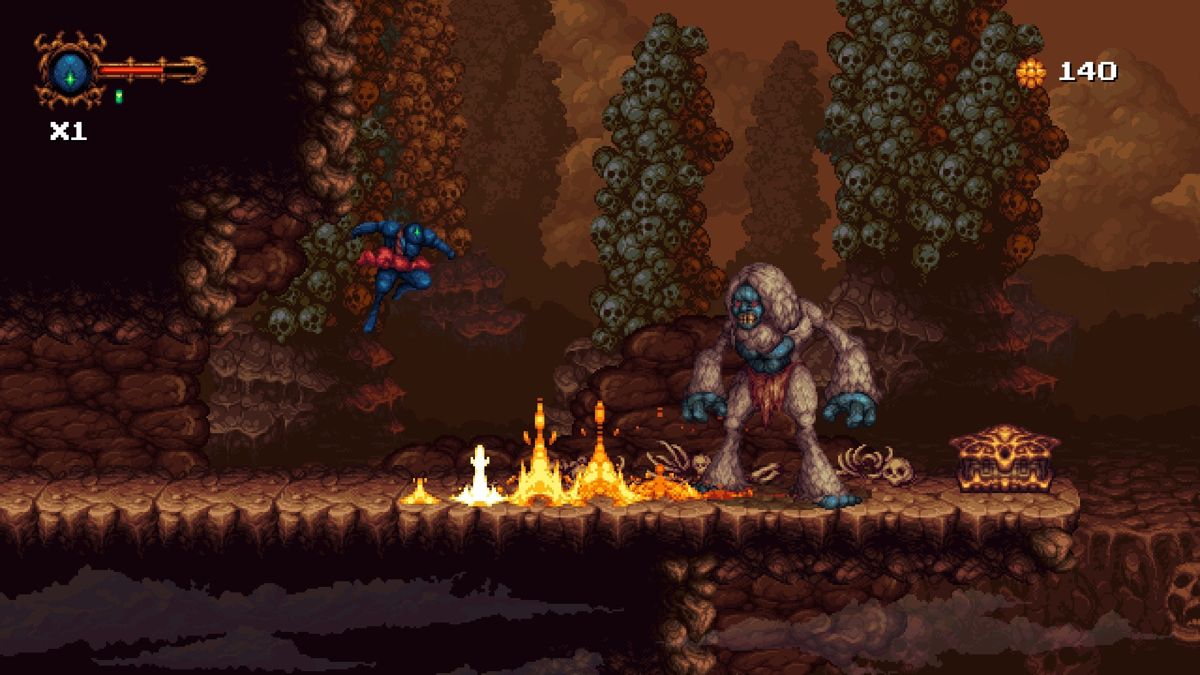
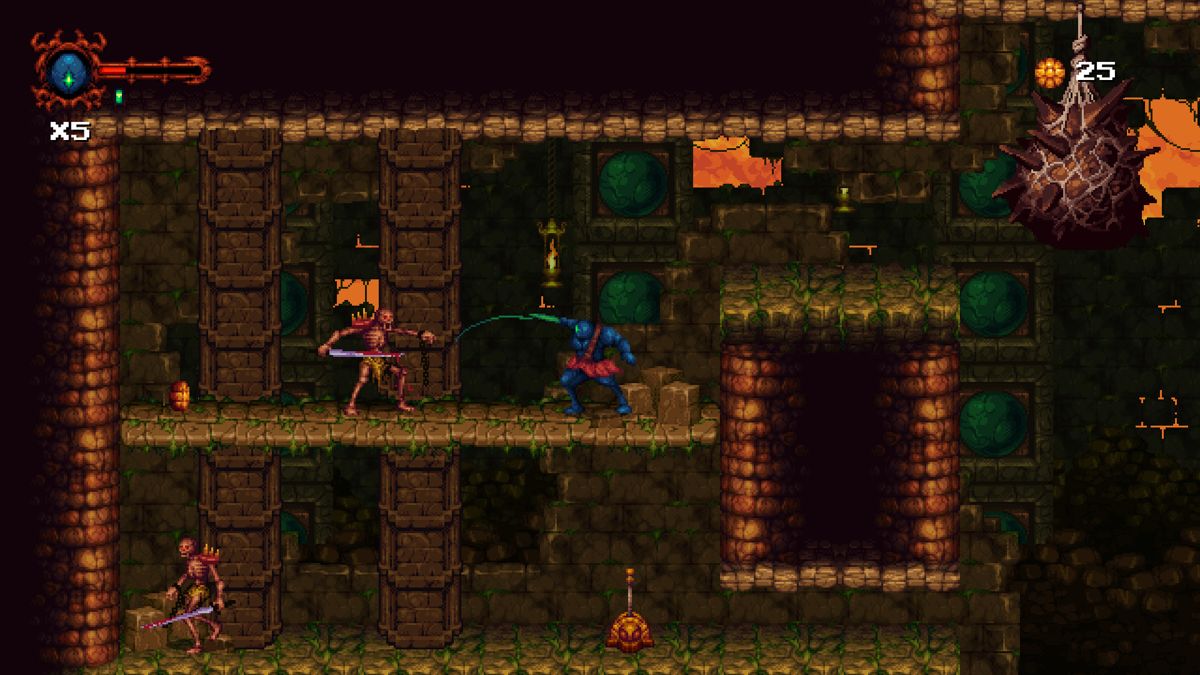
In Primal Light, you control "Krog, a mysterious blue creature in a red loincloth, as he traverses a labyrinth of ladders, levers, traps, and monsters." The game was created by Fat Gem, a studio that appears to be comprised of two people, Jeff Nixon and Shane Sicienski. Krog specifically is a humanoid who seems to have a carapace-like skin and glowing green cross where a person's face would be. The use of a non-human protagonist is a bit reminiscent of some of the protagonists seen in the stories of Schuyler Hernstrom and other writers that like to go for a more exotic, off-Earth feel in their characters and settings.


There's barely any story in Primal Light. Krog, like many before him, comes home to find his village devastated and the few survivors implore him to go forth and destroy the "dark god" responsible. So Krog heads out, runs and jumps through 10 levels with difficult boss enemies at the end of each, and then comes home to a simple congratulatory image if he succeeds. It's not a game to be played by people who look to video games for their stories. 

It is a game that can be enjoyed by people who like to be challenged, because even on easy mode Primal Light is quite difficult. Like the "Nintendo hard" games of the past, much of the challenge comes from enemies being placed in such a way as to knock Krog off course during jumps, sending him falling to an instant death. The level bosses can also be tough, with fast-moving and complicated patterns that have very tight margins for evading harm. The game does allow Krog to replenish some health a limited number of times per life, and currency picked up throughout levels can be used to buy extra lives. The game is also generous with the number of lives you start with and in allowing continues. The game will occasionally have a fork in the path through a level, with the alternate route featuring a challenge section ending with a power-up that can give Krog an extra edge in the game, but at minimum Krog will learn several techniques like double-jumping and mid-air dashing that will make him more mobile but also will be needed to overcome platforming sequences. That said, Krog's only attack throughout the game is to slash with his sword.


The game has some really pretty high-resolution pixel art and nice music, and it controls well enough that you usually will blame yourself for failing more than the game. It would have been nice if Krog had the ability to look up or especially down to cut down on the number of blind jumps that occasionally crop up. Although you can usually make a good guess as to where the floor is going to be, the ability to confirm it would be even better. Overall, it's a good game, worth checking if you're into this type of rush'n'attack and platforming challenge, and its grim, alien setting sets it apart from many games.


Sunday, October 29, 2023

Targhan (1989)


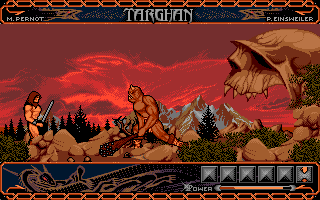
Targhan was the creation of Silmarils, a French studio with a knack for visually striking games with lush pixel art. The game's manual includes some backstory about where the hero, Targhan, comes from, stating that he comes from a village called Edengarfin and that he had grown up to be a great chief of his tribe, but that he left because a legend of an "Evil One" with a great secret kept him restless. The game covers Targhan's quest to defeat this evil wizard. 


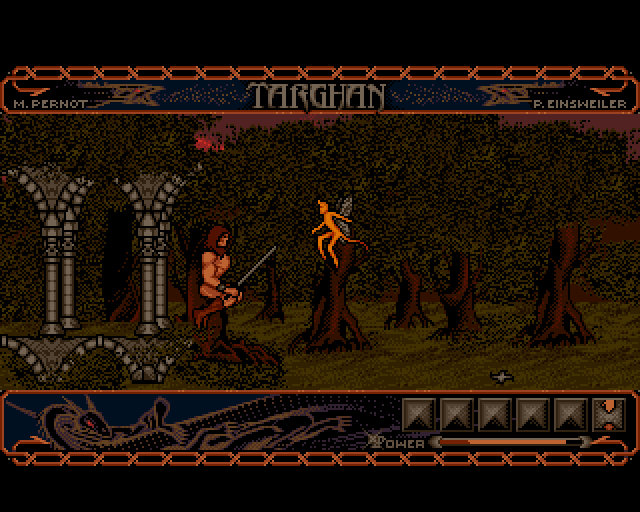
Targhan has the classic sword-and-sorcery hero's uniform: a great, chiseled physique; a long, thick mane of hair; short trunks with a belt; boots; metal wrist bands; a sword; and that's it. He can pick up a maximum of five sub-items like shurikens to use for distance attacks, healing potions, and necessary quest items like keys. He wanders through verdant European forests with deer trotting through the background, to crumbling ruins, to imposing castles. Most of the enemies are humanoids, sometimes rat-headed men and sometimes just men in scary-looking armor. Somewhat at odds with the S&S vibe is that you'll sometimes come up against elf woman archers and in one section you apparently invade a village of dwarves nestled among treetops, killing every guard that gets in your way. It seems the elves and dwarves are as bad as everyone else in this land. 

Targhan resembles sideways hack-and-slash games like Rastan but in motion it's quite different. The animation is a bit stiff and the controls seem perhaps influenced by Barbarian's style of holding the fire button while moving the joystick to perform combat moves. When Targhan goes into combat against a humanoid opponent, the fighting is definitely more Barbarian-style, with the opponents hammering at each other until one falls, so it's important to master the timing needed to connect with your swings and hit the enemy before he hits you. Perhaps the creators envisioned a system of thrilling swordfights with impressive attacks and counterattacks, but in practice the most effective technique is generally to just hold the button down and never stop swinging straight ahead. The enemy will try to close in get hit, bounce back, and repeat until dead. For flying enemies like bats, just wait until they descend to attack and then nail them with one swing.

Assuming one gets sufficiently comfortable with the fighting and jumping, the game really becomes a puzzle/adventure game, about knowing which way to go first and which objects to gain to unlock deeper parts of the game. Occasionally Targhan will find scrolls with bits of text that provide hints, but also you just have to work it out through trial and error. For instance, one of the first things necessary is to explore an underground cave system, but obviously you can't see in the dark. The solution is to go back to the surface and wander until you see a small yellow pixie-like creature approaching you. Instead of killing it (which is possible), allow the creature to approach, where it becomes apparent that it's friendly and it begins to follow you. When you return to the caves, it transforms into a floating light source that allows you to navigate the caves without any issue. Like classic adventure games like King's Quest, it's probably helpful to try to map the game out and figure out where all important objects are and the most efficient path to collecting and using them. Then you just have to survive all the fights and vanquish the wizard to get an anticlimactic ending.


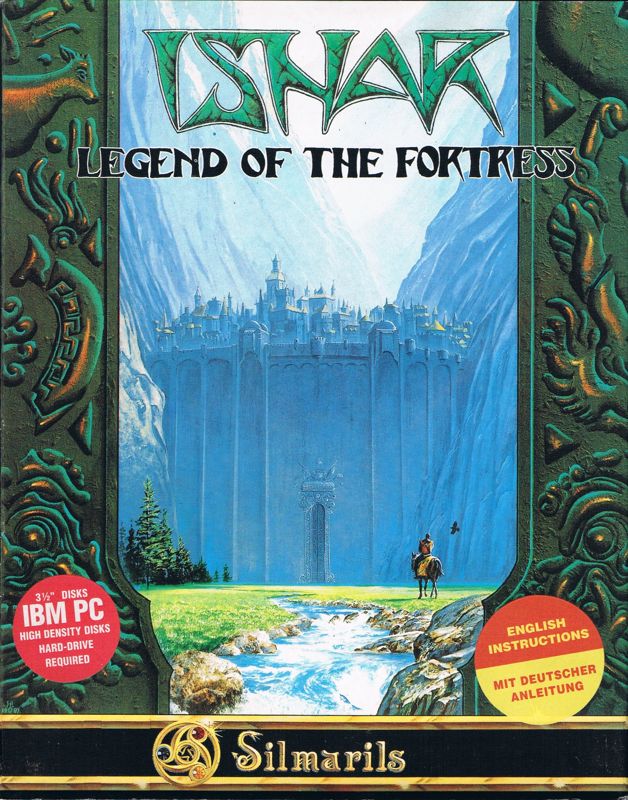
Targhan's no hidden gem but it's not a bad game to play as long as one is patient and willing to put up with its shortcomings for the sake of exploring its little fantasy world for a while. Although it didn't spawn any direct sequels, it wasn't the end of Targhan as a video game hero as Silmarils brought him back a couple of years later as a recruitable companion in its RPG, Ishar: Legend of the Fortress. He's classed as a barbarian in that game and is a tough fighter.


Monday, October 2, 2023

The Scorpion King: Sword of Osiris (2002)


Scorpion King: Sword of Osiris was released to tie-in with...The Scorpion King movie that spun off from Stephen Sommers's Mummy films. Often this means death for video games, but Sword of Osiris had the good fortune of being developed by WayForward Technologies, which around the time of the game's release had begun to distinguish itself by creating games that hearkened back to the glories of 16-bit console gaming in an era where 3D game design was still finding itself.

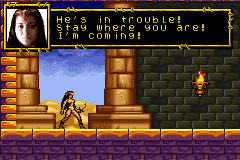
The game is meant as a sequel to the film and begins with the player controlling Kelly Hu's character, Cassandra, who is lured to a temple only to find that the villains, the wizard Menthu and his partner Isis, have tricked her into thinking they were keeping the Scorpion King Mathayus prisoner. 

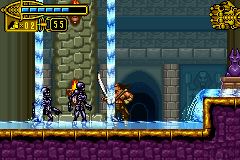
It's one of those fake-out levels video games sometimes use, where the player controls a side character who's meant to be killed/lose the big boss fight at the end of the level. Menthu and Isis defeat Cassandra and kidnap her while the real Mathayus enters the temple to rescue her, so the player repeats the same level but in a slightly different way because Mathayus, being the Rock, plays differently than Cassandra. He can switch between a sword (strong but more limited range) or dual sickles (weaker but covering more area), and he can use the sword to walljump to get to higher platforms. Once completing the introductory level, the object of the game is laid out: Cassandra mentally contacts Mathayus and directs him to uncovering a magical gauntlet called the Hero's Gauntlet, which will help him find the Sword of Osiris, the only weapon that can destroy the Scorpion Stone, which the villains are planning to use to conquer the world. The Hero's Gauntlet, similar to Thanos's Infinity Gauntlet, has four notches in the knuckles that are unlocked after the Mathayus defeats the boss enemy for each level. Picking up fire jewels sometimes dropped by enemies powers up Mathayus's weapons, lighting them up with flame and dealing double damage with each attack but taking hits from enemies depowers them until more jewels are found.

Sword of Osiris isn't a particularly difficult game. Enemies tend to have easy patterns to recognize and adapt to and the game generally avoids the sort of dirty tricks that were common in 1980s and 90s games; e.g., blind jumps leading to instant death. The main thing to grasp in terms of overcoming it is knowing which weapon to use in which situations. It's also not a very long game, with only seven levels, but ultimate victory could be delayed in that gaining the Sword of Osiris, needed to defeat the final enemy and unlock the true ending, can only be done by locating six runes that lie within treasure rooms hidden in each level beyond the opening. Being thorough will allow the player to find the runes but it's easy to miss one or two before you know what to do and that means restarting the game and going back through earlier levels. The game does have a simple password feature to note progress, so it doesn't have to be completed all at once. 


WayForward's game are generally not very ambitious in terms of design, but they tend to be very competent and reliably fun meat-and-potatoes action games while sporting excellent pixel art and animation. Sword of Osiris was one of the first games that showed what the company could do - the next game it released after was Shantae, which is now known as a classic Gameboy Color title and the foundation of the company's signature franchise. Sword of Osiris is vibrantly colorful and adequately scratches an itch one might have for some classic side-scrolling hacking, slashing, and platforming. It's superior to any of Rastan's home ports, for one thing, and if it was released today with the license scrubbed off of it, it would probably be welcomed as a quality entrant in the retro game design scene. There's also an argument to be made that it might be better than its source material. The Scorpion King movie was serviceable but it didn't spark a sword-and-sorcery revival despite somehow spawning four more direct-to-video sequels. Sword of Osiris is probably more well-crafted as a game than The Scorpion King is as a movie, although neither is essential.


Tuesday, August 8, 2023

AmiGameJam 2022


This year's Amiga Game Jam happens to have had the theme of sword and sorcery. There were nine submissions made between October 31 and July 31, and voting is still underway for the next 11 days. Seems like a good idea to have a brief look at the entries (note that most are more like demos or even "proof of concept" than fully completed games).

Rogue Declan Zero, by nivrig, is a "challenging, procedurally-generated, roguelite twin-stick shooter" in which you have to control Sir Declan as he fights through dungeons, closing hellgates that wizards have opened beneath the castle. 

It plays a bit like a fantasy version of Robotron and as Rogue-lite games go the difficulty curve seems relatively gentle. It's pretty generic fantasy - people often have differing ideas of what "sword and sorcery" means, as we'll see in some of the other entries - but it's fun, easy to get into, and the dungeons are just short enough to make it easy to play just one more.

******

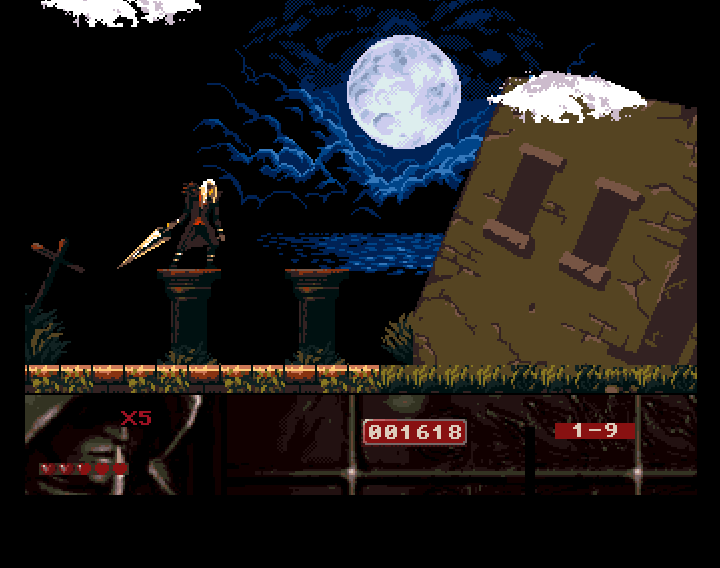
Gothicvania, by Amiten Games, is clearly inspired by Castlevania. Infernal creatures are menacing the town of Valencia and it's up to warrior-sorcerer Sir Lucas to use his magical, fire-spewing sword to defeat them.

This could be a pretty good Castlevania clone if it's completed and such a game would be welcome on the Amiga since the official Castlevania port currently has a 2.98 turd rating on LemonAmiga. As it stands right now, Gothicvania is pretty rough around the edges, with awkward animation and collision detection. Hopefully the creators will continue working on it and fleshing it out.

******


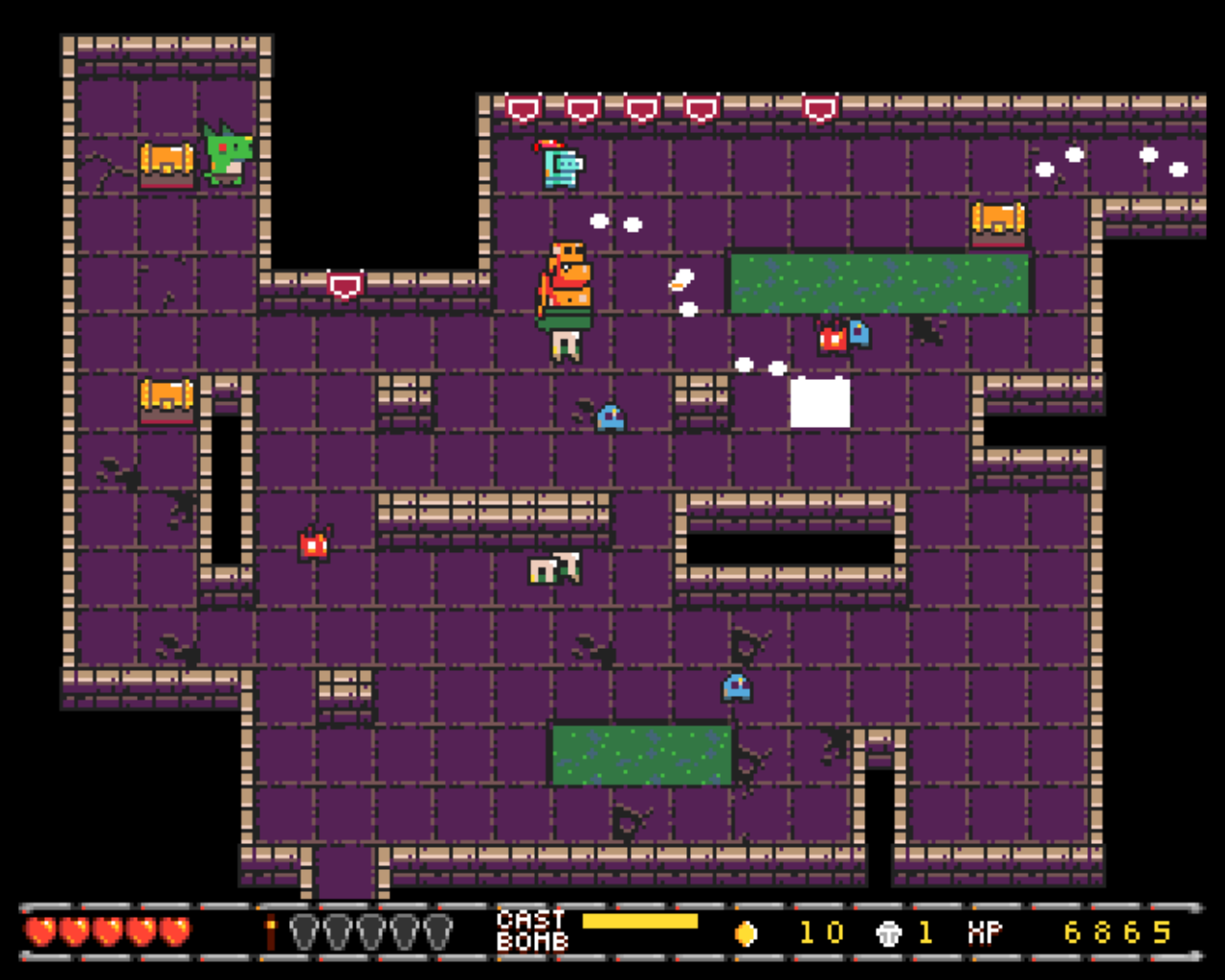
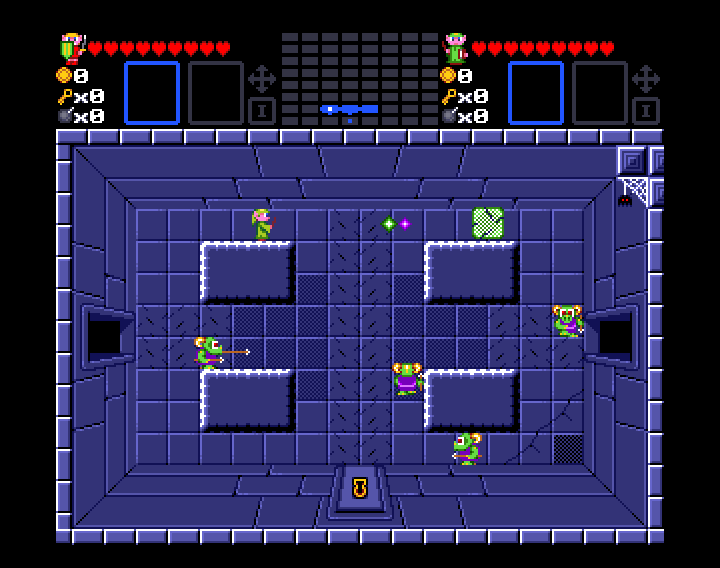
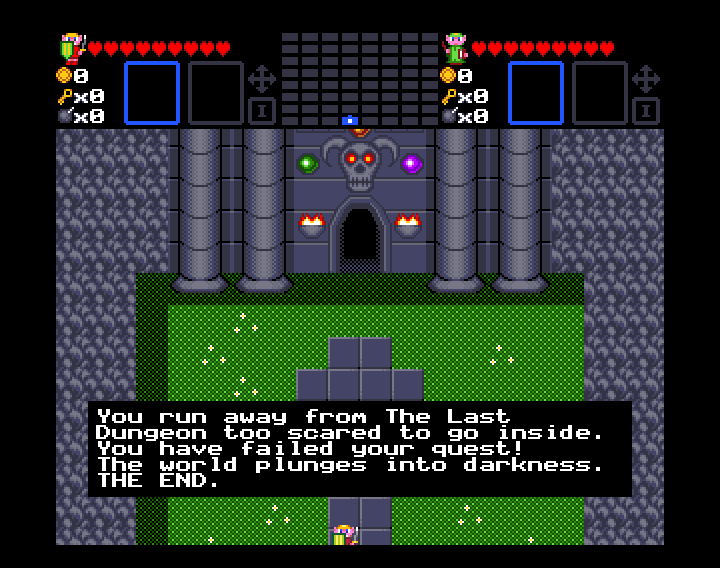
The Last Dungeon, by PixelPlop, is a Zelda clone, specifically the dungeons that you play in the original NES Zelda. Unlike Zelda, you get a choice of protagonists, a barbarian or a wizard (literally sword and sorcery), and it's got a slightly grittier feel than Zelda, with details like bloody pentagrams on the floors and grislier enemies. 

As an an attempt at recreating that Zelda feel, it works quite well and really just needs a bit of polishing at this point.

******


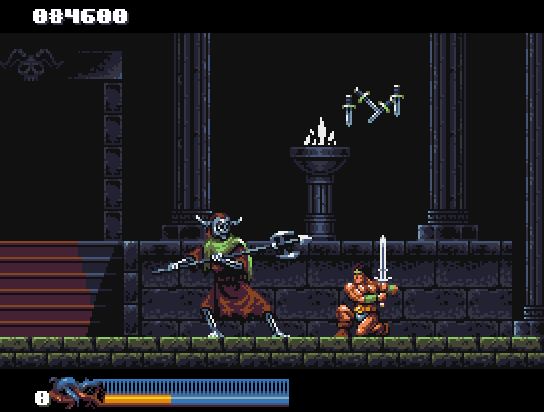
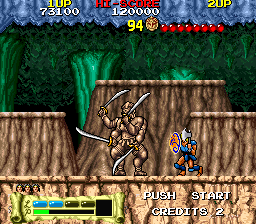
Rastan, by basementApe, is exactly what it seems to be: porting the original arcade game to the Amiga 500 as closely as possible. Rastan was ported to numerous systems but the Amiga never got it for some reason, but this version is gathering a lot of interest because it looks and sounds fantastic. It's not an exact translation - aspects of the arcade like the swinging vines have been replaced by moving platforms and the controls haven't been fully implemented - but if things keep up this could end up being the best home version of the game, exceeding even the Apple IIgs version.


******

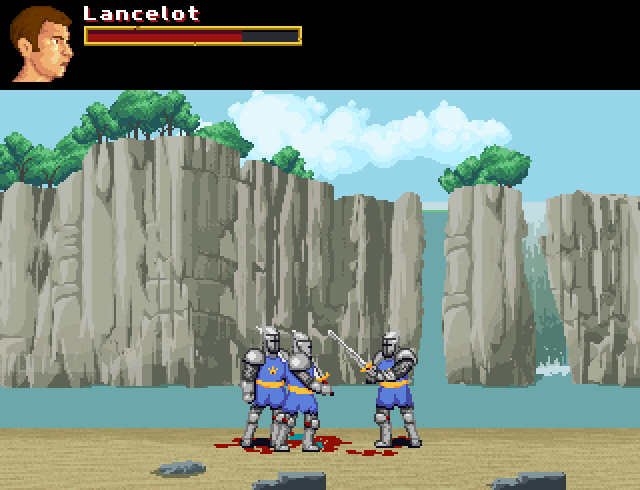
King Arthur: Rise of the Round Table, by Latebit, is a beat-'em-up in which you control Sir Lancelot as he battles a gang of enemy knights. It doesn't last long (defeating all the knights seems to just restart the demo) but there's some quality pixel art, the combat is easy to pick up (high, middle, and low attacks) and the overall look and gory style recall the classic Moonstone. There's some real potential if they stick with it and expand it into a full game.

******


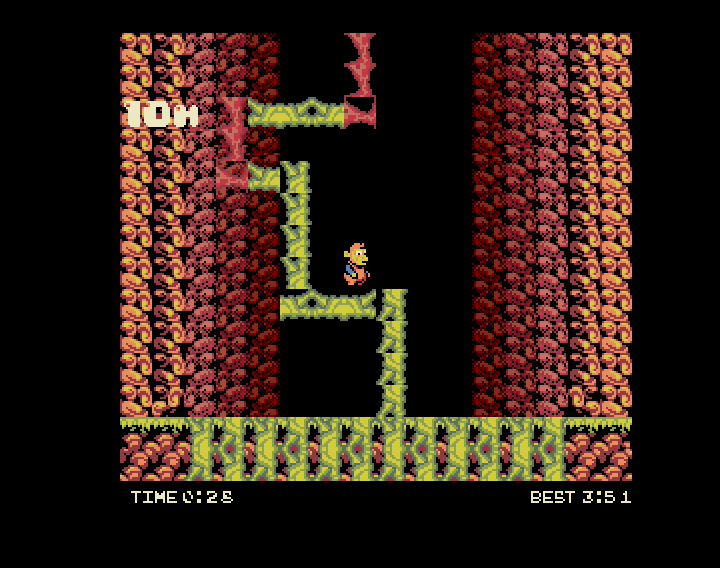
Jack in the Pit, by earok, involves you being knocked from a cloud into a deep pit, so you have to grow a beanstalk all the way back up while various elements try to rip it down from underneath you. The game was apparently created in only 48 hours but it's an impressive piece of work that looks and plays better than many games that have more protracted development times. It's not entirely clear how it fits the theme aside from being broadly fantasy, but at least it's fun.

******

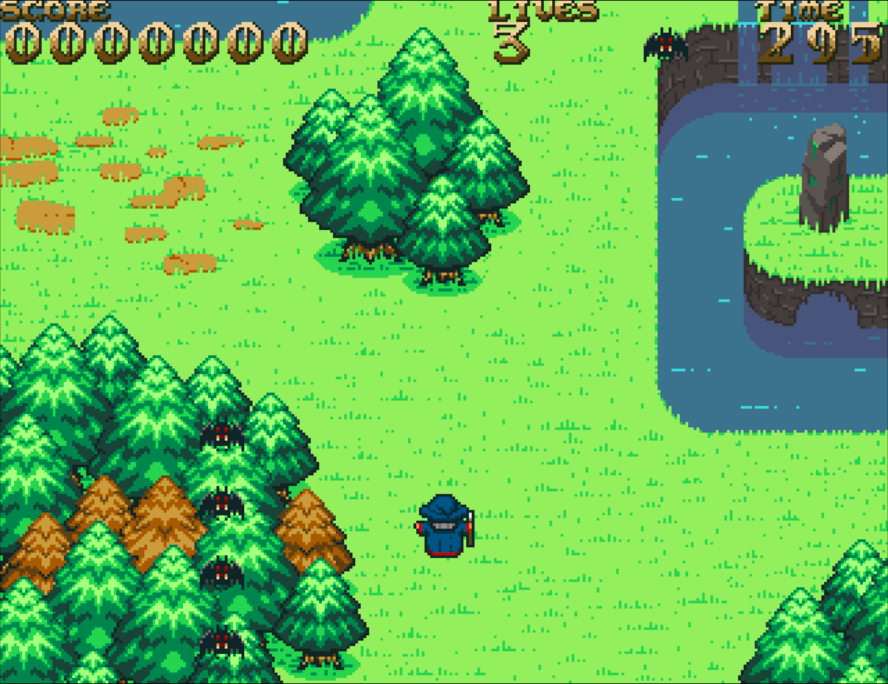
Caravandalf, by Peter and Gordon Mackay, is a caravan shooter (trying to get as high a score as possible within a time limit) in which you control a wizard (Gandalf the Grey?) as he soars through the air blasting enemies. It could definitely use some music, but it's a fast-paced bit of fun for what it is.

******


Holiday, by lifeschool22, is a "photo RPG" that tasks you with surviving a vacation to Spain in 2018. You have to find items like sunscreen to help you survive the oppressive heat. What does this have to do with sword and sorcery? *shrug* Game jams!

******


Roguecraft, by Badgerpunch Games, is an Amiga expansion of Rogue 64, a Rogue-like C64 game the creators did a couple of years ago. It's the usual Rogue-like game in that you explore a randomized dungeon, most likely getting killed repeatedly as you learn how the game works and what potions do, but this one has a lot of style. 

Not counting Rastan, which at least has the advantage of a classic arcade game providing a blueprint, this is the most impressive overall submission. The impressive graphics are reminiscent of HeroQuest and it generally seems like a fully finished game. It will be interesting to see how the judging goes, but the best of the lot would seem to be between this and Rastan.


Tuesday, May 23, 2023

Deathflood: Dungeon of Doom (2022)


Deathflood: Dungeon of Doom is a brand new C64 game (freely available from Windigo Productions here) that concerns a lone thief, either the male barbarian or an amazon, who investigates the allegedly abandoned stronghold of a powerful necromancer with the intent on looting its treasures. Locating the stronghold reveals that it's not entirely abandoned because the necromancer's experiments are still shambling about the crumbling halls, and the bulk of it is actually beneath the mountains in which it's situated. Penetrating to the bottom, the thief finds the remains of the necromancer but when attempting to seize the corpse's priceless jeweled crown, the foolish thief sets off a trap: the entire complex is now rapidly filling with water.

The game itself begins with what would be the breakneck finale of most stories, as the player has to escape the dungeon while evading the necromancer's undead minions, grabbing as much treasure as possible, and staying just ahead of the ascending waterline. This is much easier said than done because some of the rooms can get complicated as the player has to climb up and down ladders, searching for keys to unlock doors to reach the room's exit, and the player character doesn't move particularly fast in any direction, leaving very little room for error or wrong turns before the water catches up. Falling beneath the surface isn't an instant death because the player has a limited amount of air to keep them from drowning, but of course you're now slogging through water, and the water rises relentlessly, so you need to go farther up every second to regain your breath. 

Graphically, it resembles the classic Bruce Lee a little bit, with relatively small characters and giving a good overview of the surroundings. The sound is pretty basic, with expected swishes for the sword strikes and the little dings that signify a treasure has been grabbed, but the music provides some frantic melodies. Falling under the water's surface causes all the audio to become muffled in a nice touch.

The controls take a little bit of getting used to in that the character needs a good few paces to pick up speed for long jumps and dismounting from ladders or going up stairs can be weirdly cumbersome. So while it maybe looks like Bruce Lee, it's not as fast or nimble as that game. But that's how the game is made and it doesn't take long to get acclimated. There are multiple endings to the game depending on factors such as how much treasure you snatched on the way out. Pick up enough and you might be able to buy your own kingdom. It's well worth playing and replaying to better your performance.


Thursday, April 27, 2023

Magic Sword (1990)


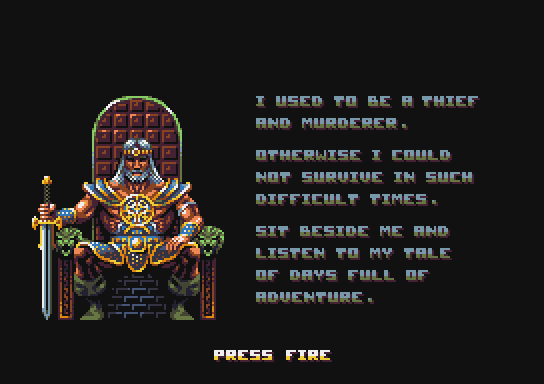
A little while after doing Black Tiger, Capcom took another crack at "Heroic Fantasy" with Magic Sword. Up to two players can take control of a hero who must ascend 51 floors of the Dragon's Tower, defeat the wizard, Drokmar, and destroy the Black Orb that gives him his power. Wizards and their towers...

Unlike Black Tiger's leaping and climbing gameplay, Magic Sword places more emphasis on plain hacking and slashing through mobs of enemies, although some areas do require the player to leap across deadly pits. Magic Sword's primary gimmick is that the player can collect keys that unlock prison cells throughout the tower, freeing their inhabitants (who call out to you with poorly translated lines like "Get rid of me!") so they can fight alongside you. The other party members - Amazon, Big Man, Ninja, Thief, Wizard, Priest, Knight - have particular strengths and weaknesses. Collecting a magic ring will allow you to recruit a Lizardman, arguably the best companion, to your side. The player can also collect various power-up items that have effects such as raising attack or defense or revealing locations of hidden chests. Altogether, the game has a lot of options to test out so the player can settle on what they like best.

At first the number of floors to go through will seem daunting, but as it turns out most of the floors can be cleared very quickly, especially if you just want to move along instead of trying to clear out every single chest on every floor. Every few levels a boss enemy will be revealed, usually a variation of a dragon or chimera. The pacing and user-friendly controls and gameplay help offset the game's running time, making it easy to jump in and start cutting through the enemies, who respawn quickly, freeing prisoners, breaking open treasure chests, and charging for the doors to the next floor.

The graphics are of Capcom's usual high quality, colorful and with well-defined characters. The main hero, shirtless with his long braided blonde hair, is reminiscent of John Jakes's Brak the Barbarian. Manami Matsumae contributes a dramatic musical score. A relatively uncommon feature for arcade games but something that had been appearing in some PC and console games at the time was giving the player a choice between a good or bad ending after defeating the wizard. You could either destroy the Black Orb as directed, or allow yourself to be corrupted by taking it for yourself.


Thursday, January 5, 2023

Valfaris (2019)


Valfaris is a semi-sequel to Slain, overseen by Slain's team of Andrew Gilmour and Thomas Jenns. While Slain was a straight fantasy that emphasized swordplay, Valfaris shifts to a sci-fi theme in which the hero wields guns as much as melee weapons. It might be coincidental, but the death metal/gothic/space opera mixture of Valfaris makes the game come across like what you might get if someone decided to combine Contra with Warhammer 40K, especially the old school extra++ grimdark 40K of the 1980s.

Slain ends with a Moorcockian twist that the character you've been controlling, Bathoryn, was actually the hero's sentient sword all along, with Bathoryn and his next wielder looking to the stars for the next adventure. Valfaris picks up with its hero, Therion, landing his wolf-shaped spacehip on his home world of Valfaris (and atop of a bunch of bastards he was going to kill anyway), which was apparently once a paradise but has since fallen into a cancerous decline, doomed to soon be swallowed by the star it's orbiting. It's hard to imagine what an idyllic paradise in these games' death metal aesthetic would actually look like, but Therion seems to have been fond of the place before he left. Much as Bathoryn was battling Lord Vroll in Slain, Therion is on a quest to slay his father, Vroll. Somehow, Therion and Bathoryn are brothers, and Therion even gains the option of wielding Bathoryn during the game.

As grim as the game's story and characters are, there is a sense of nobility and honor conveyed through them. Valfaris comes to a tragic end but the hero keeps his square chin up and never loses his resolve. There's no crying in metal. There's even a bit of humor in the form of his female AI sidekick, who has a wiseass personality similar to Cortana in the Halo series.

Valfaris plays quite similarly to Slain in the sense that in many ways it's just Slain with guns added, but that's in no way a bad thing. The extra layer of gameplay provided by the guns makes the combat a bit more lively and requiring different solutions in different situations. The guns, which are named like all the other weapons in these games (e.g., the Bastard, the Hellhammer) can be upgraded for extra effects. And much like Slain, the game is tough but fair, requiring that the player really learn how to play it instead of button-mashing through.

Graphically, it's even lusher and more impressive than Slain, and it features another very good, heavy soundtrack by former Celtic Frost member Curt Victor Bryant. There are some instances in which the game's art direction can get a bit out of hand and obscure the player's view of the action, overwhelming parts of the screen with particle and lighting effects that completely cover up the characters. Even despite this, it's a dazzling game to look at.

Valfaris does tell a complete story, but much like its predecessor it ends with a hook for another sequel,  which will apparently be more of a horizontal shoot-em-up that continues Therion's journey.


Sunday, December 25, 2022

Batbarian: Testament of the Primordials (2020)


The reason it's called Batbarian is because you control a barbarian and his sidekick, a magical bat. The game opens with them being chased off a cliff by a horde of ogres. The barbarian falls so long that the game introduces you to its sense of humor by doing a gag based on the guy falling so long that he starts getting bored. Eventually he hits the ground, deep inside a cavern. He picks himself up, reunites with his bat friend, and they head off to figure out how to escape this strange place.

The game is a Metroidvania with the gimmick that the bat is luminous and can be manipulated by tossing different kinds of fruit for it to eat, and you can get power-ups that allow you to switch among different elemental affinities. Up against an ice-based enemy? Switch the bat to fire mode to make the enemy thaw enough for you to damage it with your sword. Some switches are operated by light, so you'll need to toss a fruit over to the switch so the bat's light will turn on the switch and open the door or create the platform you need to advance. It's an interesting concept in a genre that has rapidly become crowded over the last decade.

It's a light-hearted, humorous game, with the humor slanted more toward farce. It's not funny in the same way as Age of Barbarian, where the humor is based on a specific familiarity with the genre, but more like something you'd find in the old Dragon magazine comic strips, broadly poking at fantasy cliches. Sometimes it's genuinely funny, but most of the time it's merely smile-inducing.

It's a pretty nice-looking game. The graphics are a bit on the miniaturized side, but they still convey a lot of personality and atmosphere. On the downside, between the player character, the bat, and the extra sidekicks you can acquire through the course of the game, things can get very chaotic when combat picks up a lot. Are you tracking your guy or your partners along with the bad guys? 

It's also probably one of the more challenging examples of its genre. Metroidvanias tend to emphasize exploration more than anything else and often make the player feel very powerful by the end thanks to all the powers you gain, but Batbarian likes to make the player work for everything by throwing out increasingly tricky combinations of enemies and requiring deft handling of the hero, the bat, and your partner. Although there's an RPG-like leveling system, upon a level-up the game presents the player with a slot machine that, based on when you click, will determine if your offense, defense, or "awareness" increase (awareness seems to increase the radius of the bat's illumination?). The slot machine isn't too hard to use, but it's also a needless bother and if you're not paying attention to it, you might get stuck picking up more awareness increases than is advisable and then handicapping yourself in terms of attack/defense power by the later stages of the game.

The biggest issue the game has is that it's yet another pretty good Metroidvania in a genre that's stuffed with similarly pretty good examples. You could pick it up and have a decent time playing it, but you could say that about many other games as well and when really top level games like Hollow Knight are out there, you need to be better than just decent to stand out. The barbarian theme is amusing but not explored very deeply beyond gags about how he expresses himself in dialogue scenes (do you pick the brutish option or the eloquent one?).


Tuesday, November 29, 2022

Black Tiger (1987)


Black Tiger (aka Black Dragon) was created by Capcom under the supervision of Yoshiki Okamoto. Okamoto got his start at Konami, where he created Time Pilot and Gyruss, and at Capcom he had his hands in a whole bunch more classic games, such as Gun.Smoke, 1943, Willow, Magic Sword, and Armored Warriors, not to mention mainstay franchises like Street Fighter, Final Fight, and Resident Evil.

In Black Tiger you control a classic Frazetta-esque warrior as he fights to free the land from the clutches of three dragons that have descended on it. This takes the form of you running and jumping among platforms while blitzing your way through any creatures that oppose you. You wield a long flail while simultaneously hurling a spread of three daggers, which sounds impressive except that many enemies can take a good amount of punishment before going down. The levels scroll in all directions and have maze-like qualities, making it easy to take wrong turns and run down your time limit while your health gets chipped away. It's a pretty tough game and success is best achieved by memorizing the most efficient routes and enemy placements while keeping on your toes for any random attacks that spring up in your path. The likelihood of managing this is low, however, and the game is very much eager to eat your quarters for continues. It's also a long game that could take up to an hour to complete.

There's a modest RPG influence on the game in that you collect money (zenny) from fallen enemies, chests, and vases and you can find shops to spend that money on power-ups. Be careful of trapped chests, though. You have to find keys to unlock chests, and can gather hints by restoring to life wise men that have been turned to stone.

Black Tiger has a striking graphical look. Not overly lush or fancy, but cleanly designed and the hero and the monsters have solid, relatively realistic proportions that would be more eye-catching to a traditional western fantasy audience, rather than super-deformed styles that are common in Japanese games. The hero himself, clad in his horned helmet and scant armor, looks like he leapt right off of a classic paperback cover. It's rarely hard to track what's happening on-screen. However, there is a sameness to the levels that grows wearisome in their length. There's some recycling going on with the boss enemies - even the dragons are basically just the same enemy repeated three times. Combined with the relatively long clearance time required, Black Tiger comes across similar to games like Gauntlet or Rampage, where a little bit of the game goes a long way and it's often easier to just play a credit or two before moving on. If you do persevere, you get a congratulatory message on your strength and prowess and the credits roll over an image of the hero resting on a throne (got to get that classic throne pose in there), but at least this hero gets to have an attractive lady on his knee instead of just glowering in his loneliness like Rastan or Grandoval. 


Monday, November 21, 2022

Tomarc the Barbarian (1983)


Tomarc the Barbarian was released by Xonox for the Atari 2600, Colecovision, and Commodore computers in 1983. Xonox wasn't an acclaimed studio and is arguably the kind of lame outfit that contributed to the 1983 console gaming crash in the U.S. with its awkward, buggy releases.

Tomarc was actually supposed to be a Thundarr the Barbarian game, but Xonox was unable to secure the license before release, possibly because the Thundarr people didn't like what they were seeing from the game...

As the cover helpfully explains, Tomarc is a barbarian hero who needs to rescue his girlfriend, Senta. Tomarc is stuck in a cavern and has to find his sword while avoiding killer rats, before ascending to the dungeon, while Senta is trapped in a cage and has to cast energy bolts (see, this all makes sense if the characters were to be Thundarr and his sorceress companion, Princess Ariel) to ward off vampire bats. The most interesting thing about the game is that you have to handle these goals simultaneously. By pulling down on the joystick, you switch characters when you hear a danger signal go off.

Unfortunately, that's just about all the game has going for it. Senta's side isn't much of an issue since you're just aiming and shooting at enemies from a stationary position, but Tomarc's section is a platforming game and the platforming simply isn't fun. You have to master the angle at which he leaps because if he bangs his head on a surface, he falls and is stunned for a few seconds. It results in a game in which you feel less like a dynamic fantasy hero and more like a clumsy dork. 

On the whole, the Colecovision version is probably the one to play. The Atari 2600 version to its credit plays faster, and Tomarc better resembles a barbarian hero than the stocky green/blue/red-clad guy in the CV version, but the CV version has an exclusive second level in which Senta is imprisoned by a giant spider and Tomarc has to scale the spider's web while avoiding the spider's smaller offspring. Senta's role is much the same as the first level except she's now blasting spiders instead of bats. The CV version also has superior graphics, although the tradeoff is its slightly slower pace and the spider level seems to be buggy in that Tomarc can get stuck on certain strands of the web, unable to grab another or sometimes even forced to remain on invisible strands. Regardless, though, it's a very missable game and flunked its part in advancing the sword-and-sorcery concept in video gaming. Probably for the best that Thundarr never got a video game adaptation back then. A Thundarr game now, with graphics that could faithfully adapt Alex Toth and Jack Kirby's designs for the show, could be fun...


Sunday, October 30, 2022

Conan (1991)


Cover credited to Greg Winters.

Similar to the Conan game released by Datasoft, Mindscape's Conan for the NES was actually a different game to which they made some modest changes before they slapped the Conan branding on it. At least Datasoft's game was just a game they picked up before completion and publication, whereas Mindscape's was published under a different title on other platforms: Myth: History in the Making. 

Myth is another minor classic of old school PC gaming, mainly for the C64 and ZX Spectrum, although the Amiga version has a solid following as well. The 8-bit versions of Myth have some modest differences, but the gist is that a bored high school kid is suddenly called by the gods to battle evil in several time periods, facing enemies drawn from various mythologies such as the Greek, Egyptian, and Norse. The Amiga version altered the concept slightly so the hero is instead a more traditionally muscular, long-haired warrior. The NES version...uses Conan as the protagonist.

The gameplay is a mixture of action and puzzle-solving. You run and jump like in a regular platforming game, fending off attacks from randomly spawning monsters (like many old European games, the emphasis is more on managing your health as you absorb numerous unavoidable attacks from all sides, rather than avoiding hits entirely as tends to be the case in American and Japanese games). In the opening level, for instance, you have use magical attacks to slay monsters (those sword-wielding skeletons again) in the underworld until one drops a sword you can pick up, then you carry the sword to a particular place where a body is suspended from the ceiling by chains. You breaks the chains with the sword, causing the body to fall next to a sea of fire. After slaying this new enemy and causing its head to fall into the fire, a trident-wielding demon rises from the fire. After dispatching this demon, you pick up its trident, carry it until you meet a fire-breathing griffon, which you kill with a throw of the trident. This opens the way to the exit, and you're whisked off toe ancient Greece. It's a bit obtuse, but since your gameplay options are fairly limited you can persevere by simply blundering around until you accidentally hit on the right sequence of actions to take.

Conan of course makes no sense at all as a hero in these kinds of situations. Yeah, he's a man of action,  but he doesn't throw magic missiles around, he doesn't time travel, he isn't a pawn of gods. Even so, games can still be fun even if there's something weird about the concept, but the NES version isn't at all fun. The original computer versions have quirky gameplay (e.g., floaty jumping) but it's something that can be quickly acclimated to, but the NES version has horrific controls that make simply picking up the items you need more of a chore than it needs to be. You'd think pressing down on the controller would work well enough, but pushing down actually causes you to jump (pushing up also causes you to jump), so you have to hold down one of the attack buttons and then push down. The collision detection is lousy, so it's hard to get a sense of how close you need to be to enemies to fight them and the sword somehow seems to do even less damage to enemies than punching or kicking them. The imps that release health pick-ups, so crucial since you're under constant assault, are frustratingly elusive. That's just the first level, too. The graphics are poor, too, with the NES version looking even rougher than the Spectrum's despite the Spectrum's limited color palette. About the only positive is that there's music that could be worse. It's a port that shows many signs of laziness and sloppiness. Kind of like how Conan was treated in general in the media around that time.


Monday, August 29, 2022

Torvak the Warrior (1990)


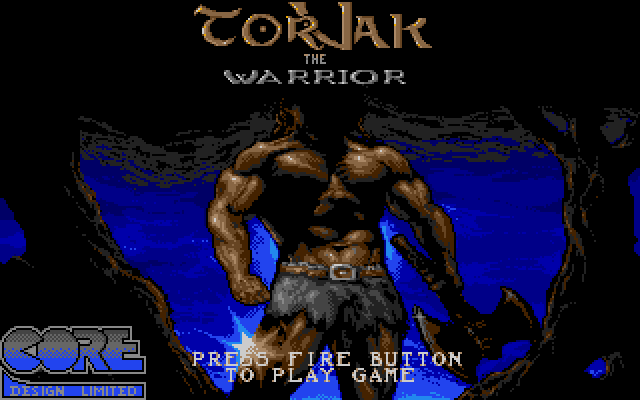
Torvak the Warrior is a relatively early game from Core Design, which of course would go on to fame for creating the Tomb Raider series. Torvak is yet another poor barbarian warrior who comes home from the war to find the whole place burned down and all villagers slain by the forces of a necromancer. With no rest for the weary, Torvak picks up his axe and heads off to make the sumbitches pay.


This takes the form of a side-scrolling hack-and-slash game in which Torvak has to generally go from left to right over five levels, but those levels can get a bit mazelike and feature long vertical shafts and hidden secrets that offer extra points and power-up items. Torvak will face human berserkers, green-skinned orcs, rat-men, oozing swamp creatures, and rock-men, among several others.

Torvak begins with his axe but he can pick up a broadsword, a warhammer (leave this one alone, it's terrible), or a ball-and-chain. He can find shields for protection, and he can find potions that allow him to unleash a limited number of magical attacks, handy for facing level bosses.

The game superficially resembles stuff like Rastan, but it's a slow, plodding experience. Torvak, with his top-heavy upper body and relatively stumpy legs, moseys along his way, stops moving while attacking, and since bigger enemies often take multiple hits to kill, he frequently has to take a shot, then leap backwards to create enough space for a second attack. Although he has an explosive jumping ability, he's definitely more akin to Arnold's lumbering portrayal of Conan than Robert E. Howard's quick, pantherish original.


Torvak the Warrior seems to have been initially designed for the Atari ST, then ported to the Amiga, a phrase that probably triggers old Amiga fans' PTSD. The Amiga version got a modest upgrade to Matt Furniss's soundtrack, but nothing else. The relatively limited colors and lack of parallax scrolling betray the game's ST origins, and even the improved soundtrack comes at the cost of forcing the player to choose between music or sound effects, but not both simultaneously, a common issue with Commodore machines because of their limited audio channels.

To its credit, though, the game plays fairly, controls well, and it looks okay even if it's not a technical marvel. Core had some good artists (Lee Pullen and Terry Lloyd in this case), so their games often had a clean, attractive look and distinctive characters. The levels have the standard swamp/mountains/jungle themes, but there are evocative background details like giant skulls and rotting carcasses of huge creatures littering the ground.

Torvak the Barbarian is better than many games, but there are also many games better than it.

Supplemental reading: Legend, by David Gemmell


Friday, August 12, 2022

Prince of Persia (1989)


It seems like there are a couple of particularly strong cinematic influences that keep coming up in sword-and-sorcery games. Conan the Barbarian is the obvious one, and the other is Ray Harryhausen's fantasy movies, mainly his Sinbad movies and Jason and the Argonauts (those reanimated skeletons keep turning up...). Jordan Mechner's Prince of Persia in many ways feels like a Sinbad movie adapted to video game form.

Mechner broke onto the scene in 1984 with Karateka for the Apple II. Karateka, about a Japanese martial artist battling through a forbidding castle to rescue his princess, stood out for its high quality animation and innovative cinematic touches, such as cutting back and forth between the hero and his next enemy as they advanced toward each other and between-level cutscenes that showed the villain scheming. Mechner, never a very prolific game creator, returned a few years later with Prince of Persia, which looks and plays like a refinement of the concepts he was working with in Karateka. The rotoscoped animation is even smoother, the combat is more engaging, and the game is just bigger and more ambitiously designed with its maze-like levels compared to Karateka's strictly horizontal castle layout.

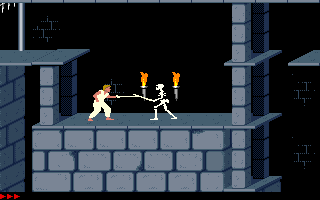
Prince of Persia begins with the sultan's daughter being approached by the grand vizier, Jaffar (it's always Jaffar, why the fixation on Jaffar?), who gives her an ultimatum to concede to marry him within one hour or die. "All the princess's hopes now rest on the brave youth she loves. Little does she know that he is already a prisoner in Jaffar's dungeons...." The player then takes control of the hero, who has just been locked within a...weirdly spacious, multi-tiered cell. Fortunately, a part of the floor collapses under his feet, revealing a tunnel into which he escapes. From here, the player can find a sword that he uses to out-fence guards barring his path and make his way through 12 levels, from the dungeon to the upper reaches of the palace. Along the way, he has to overcome many more guards of increasingly deadly swordsmanship, reanimated skeletons, boobytraps such as spikes that rise up from the floors, and some situations that involve magic, most notably a mirror that creates an evil doppelganger of the hero, before confronting Jaffar in a climactic swordfight.


True to Jaffar's word, the player has one hour of real time to get all the way through the game, although the game does allow a save to be made after level 2 is passed. A good strategy to conserve time is to save at the start of a level, explore until the most efficient route to the exit is found, and then reload and make a serious run to the exit. Most of the non-combat gameplay involves running across platforms, triggering doors to open with pressure plates in the floors (a nod to the death traps in the Indiana Jones movies), and then making difficult jumps across wide gaps before the gates can close. Secrets can be found by probing the ceilings for loose plates. Potions are scattered about that can refresh health or poison the player, and there are some with unique effects, such as one that allows the prince to fall like a feather. Combat is simple - the player can lash out with his sword, or perform a parry, and timing and positioning determine if a hit is scored. The combat was designed so that when the hero and an enemy are going full speed, it would resemble the fencing in swashbuckling films like The Adventures of Robin Hood.

Prince of Persia effectively established a new subgenre of games that people took to calling "cinematic platformers" because of the way they often use rotoscoped animation and relatively realistic characters, emphasize cinematic storytelling, and stress a more measured, careful style of play compared to standard platforming games like Super Mario Bros. Games that followed Prince of Persia include the French-made Flashback and Another World (aka Out of This World), Blackthorne, Nosferatu, and The Way, among others. It could be argued that the original Tomb Raider games adapted the genre to work in 3D, as they also emphasize platforming challenges with a frail, somewhat realistic character. The way Lara Croft has to carefully get in position to make leaps is very much akin to how cinematic platformers work.

The game has excellent art direction. The smoothness of the animation - the rotoscoping was based on films of Mechner's brother - was really striking at the time, and the graphics effectively bring across the Middle Eastern atmosphere without requiring a lot of clutter on the screen. The game looks only as detailed as it needs to be. Once you know the controls and move around a couple of screens, you just get how you need to play the rest of the game. Some welcome touches include that the enemies are just as vulnerable as you are - if you harry them backward off a ledge or into a trap, they'll die as surely as you would - and spike traps can be passed if you walk carefully through them instead of the instant-kill-on-touch quality seen in most games. The music, composed by Mechner's father, is sparse but also memorable. There's a rare sense of elegance and restraint in every aspect of the game's design that also extends to how the game handles the sorcerous elements. The game might involve sword-swinging skeletons and mystical doppelgangers, but it still feels like a relatively naturalistic world compared to the crazed delirium the afflicts most games in historical settings (and movies that are inspired by such games). You're just a man trying to rescue his lady from a sorcerer and his minions in a castle. There's no need for the whole planet to be in jeopardy from armies of flame-puking demons rampaging everywhere (not that that can't be fun in the right hands...).  


Supplemental reading: Desert of Souls, by Howard Andrew Jones

Tuesday, July 19, 2022

The Astyanax (1989)


Despite the title, Astyanax isn't about the son of Hector of Troy. The player controls a hero who must, as ever, hike across the land and battle monsters until he defeats a dark lord. The game, distributed by Jaleco and known in Japan as The Lord of King, was designed by Rastan's Toshiyuki Nishimura and Tokuhiro Takemori, with Takemori listed as director.

For a core game mechanic, Takemori brought a concept around which he'd based one of his previous games, The Legendary Axe, namely that the hero's axe has a power meter that charges up between attacks. The idea being that you have a choice between attacking a lot at low power, or saving up to unleash a much stronger blow. As it is, Astyanax is such a frantic game that most players will probably just hack away as fast as possible at the litany of foes coming from all sides. The player also can make limited use of a screen-clearing magical attack. Among the bosses are another instance of a multi-armed statue likely influenced by the Kali statue in The Golden Voyage of Sinbad, and a two-headed dragon.


Unlike some other games, Astyanax does follow a relatively consistent path in settings. The attract mode displays a huge tower rising on an island in the middle of a lake that is connected to the surrounding land by a long, narrow bridge. Indeed, the player starts out in a forested area, then moves through cave, then onto the bridge, then penetrating the castle/tower to meet the evil wizard. Because it was the 80s, the final level has the hero bust into a Giger-esque biomechanical hellhole and face skittering monsters that rear up to display mouths that look like vagina dentata, culminating in a battle against a final boss that attacks with an arm that extends across the screen, presumably because having its mouth shoot outward would have been a bit too much for the lawyers. With the job done, the tower and its island crumble and sink and the world is made safe again.
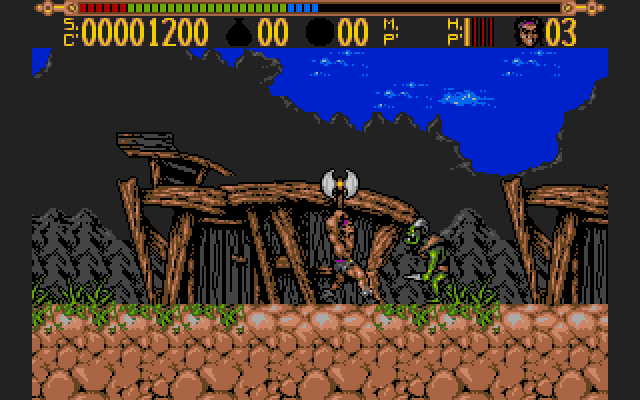
It's not a bad game, but it does overall feel inferior to the console games it's related to, both Legendary Axe for the PC Engine and the NES console port of Astyanax, which keeps the axe-charging mechanic and hack-and-slash gameplay but otherwise reworks the game quite a bit. The graphics in this arcade game are reasonably good, but it feels a bit rote in its side-scrolling design and it's so hyperactive that it renders the charge attack almost pointless. 


Tuesday, July 12, 2022

Rastan Saga II/Nastar (1988)


Rastan was a classic late 80s arcade hit for Taito. Somehow this sequel didn't turn out so well. Possibly the only thing saving it from a worse reputation than it already has is that it isn't well-known at all. The game's design is credited to Hisaya Yabusaki, whose only other design credit is for Taito's animal conservation-themed brawler Growl.

The game's attract mode lays out the story in classic Engrish: The "Rastania" was a sacred place, in which the sacred temple, "Skycraper", soared into the sky. It is said that whoever conquer the "Skyscraper" would rule the "Rastania". A wicked group has invaded the "Skyscraper" and has tried to make it their own. If the situation is left as it is, the place would eventually be controlled by the wicked group.

The player controls a headstrong warrior who seeks to defeat the "wicked group" occupying the tower, although the settings for the five levels don't bother with internal consistency very much. You'll go from looking over tree tops, to a cavern, to a forest, etc. The characters are bigger than the sprites in Rastan, but the game is slower and feels much clumsier to control. Actions like the downward stab that were easy to execute in Rastan now require precise timing - if you do the downward attack too soon the warrior will revert back to his regular stance before coming down on the enemy and will take damage. Even grabbing and leaping off Taito's classic swinging ropes can be oddly finicky. Even worse, the game takes advantage of this and will force the player to deal with incredibly difficult jumps or fall to his death in bottomless pits. One particular trap involves having to do a weird mid-air crouch while falling to squeeze into a tiny space - moves like this have to literally be pixel-perfect in execution. It feels cheap instead of challenging.


Probably the most noteworthy difference from Rastan in gameplay is that the player can block attacks when not attacking. The hero starts with a short sword and shield and can also obtain a long two-handed sword or a pair of iron clawed gauntlets that have shorter range but more power. 

Between levels, the game treats the player to scenes of the hero commenting on the action; e.g., clearing level 2 gives a closeup of him with the claw weapon, declaring, "You wicked people! How did you like my assault? Oh, here come tough enemies!" One can imagine how this would sound appropriately badass with a proper translation - maybe something like "You bastards! You like the taste of my steel? Come and get some more!" - but good Japanese-to-English translations even today can't always be taken for granted. At least the music is still pretty good, although not as immediately memorable as the original's.


Tuesday, June 7, 2022

Blackthorne (1994)


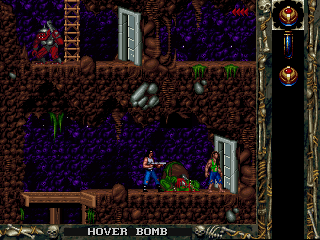
Blackthorne isn't a sword-and-sorcery game so much as it's shotgun-and-sorcery. The introduction explains that on the world of Tuul, a faction of orcs (or at least creatures close enough to the traditional image of orcs) lead by Lord Sarlac are completing their conquest of the planet. The human king Vlaros, making his last doomed stand at "Stonefist, South of the Borderlands," has his wizard transport his son, Kyle, to Earth to grow up in relative peace and safety. Twenty years later, Kyle, aka Blackthorne, has grown up to be a decorated soldier turned drifting mercenary before he's unexpectedly whisked back to Tuul to have his vengeance on Sarlac and liberate the men of his kingdom through the use of his trusty pump-action shotgun. There's also some gobbledygook involving a Light Stone and a Dark Stone both sides are fighting over that isn't very important. The setting is a mixture of fantasy and sci-fi, mostly blended according to Rule of Cool and hearkening back to days when storytellers were daring enough to mix peanut butter with their chocolate.


Blackthorne was created by Blizzard back when they were a scrappy independent studio and in many ways it's a classic Blizzard creation in that there's virtually nothing original about it, but what it does have is a lot of coolness and sheer playability. It's a cinematic platforming game in the mold of Prince of Persia or Flashback, but classics as those are most people would likely reckon that Blackthorne is just cooler than those games. Blackthorne himself is a gritty, Snake Pliskin-like figure with his long black hair; white tank top, jeans, and boots; and a pair of sunglasses that he never, ever removes. The heroes of Prince of Persia and Flashback are relatively humble in appearance - the prince having to traverse dungeons in what appear to be baggy white pajamas, and Flashback's Conrad Hart running around in his sneakers - while Blackthorne is jacked up like an 80s action hero. Everyone who's played Blackthorne remembers that the coolest move in the game is having Blackthorne extend his gun backwards to do a no-look blast. It's a move that has almost no practical use, but the fact that you can do it and it looks totally badass is enough. Blackthorne is also the only original game that features cover art by comics artist Jim Lee, back during his mid-90s commercial peak no less. Say what you will about how Lee stacks up to great cover artists, his red-hued image of Blackthorne against a black background really leapt off store shelves at the time and probably earned Blizzard a number of extra sales. The soundtrack alternates between moody horror and propulsive action to great effect.

Otherwise, Blackthorne plays like a typical example of its genre, albeit a well-polished one. Blackthorne himself is smoothly rotoscoped and must climb ledges and carefully make leaps across broad chasms. He can talk to imprisoned slaves to get hints and items. Special items such as keys, bombs, and portable elevators must be used to overcome obstacles. The gunplay centers around the characters leaning into the background and then popping out of cover to nail a shot before the opponent can duck back again. The enemies get increasingly smart about how they fight as the game progresses and mastering the timing needed to bring them down can get tricky and unfortunately somewhat tedious. There's a bit of tension between the game's hard rockin' imagery and the genre's insistence on patience and careful, measured play. One has to wonder, had Blizzard waited just a bit longer to develop it, if the game would have been more fast-paced to compete with the mid-90s explosion of the first person shooter.


Tuesday, April 26, 2022

Odallus: The Dark Call (2015)


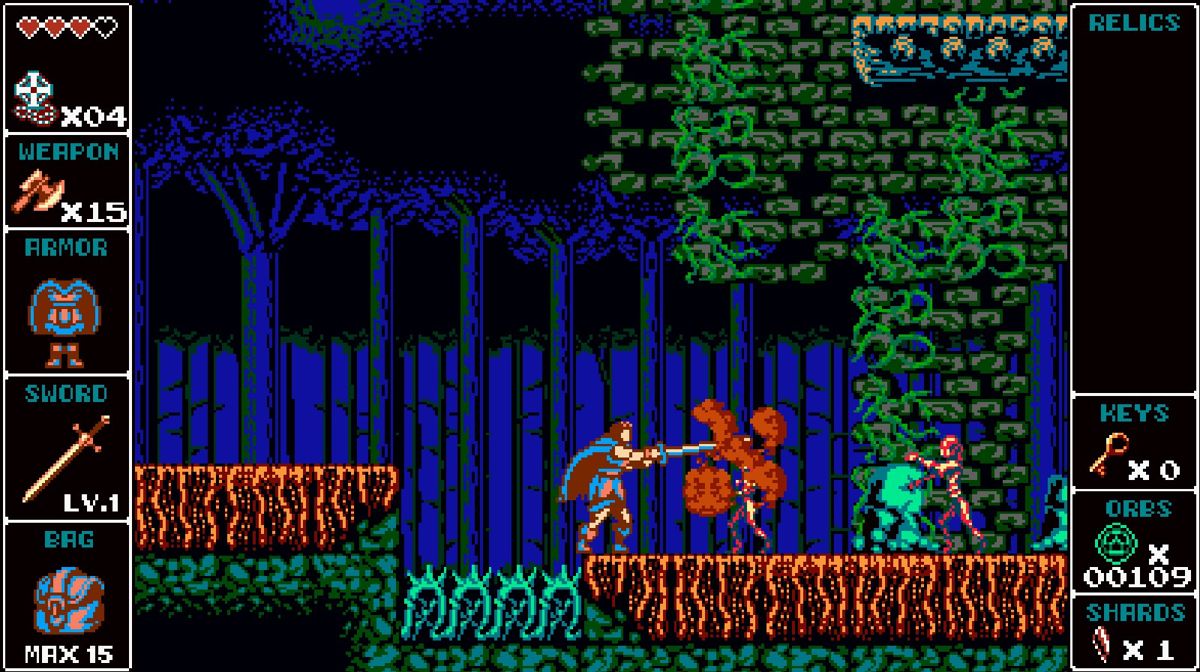
Odallus is the creation of JoyMasher, a Brazilian studio headed by Danilo Dias and Thais Weiller. It's their second game, following 2012's Oniken, with both games being united by a relatively strict adherence to the limitations of the original NES (the studio's next game, Blazing Chrome, moved beyond the NES to more of a Sega Mega Drive feel). Although the 8-bit aesthetic has been very popular among indie developers over the last decade, most such games settle on something that looks NES from a distance but on closer inspection has effects that are beyond what an NES could really do, such as mixed resolutions, going beyond the 4-color limitation, and rotation and scaling effects that were a big selling point of the Super NES. Oniken was very dedicated to being a game that wouldn't look out of place among real NES games. Odallus is much the same, although they've colored slightly outside the lines in certain ways, such as dedicating the screen space beyond the 4:3 gameplay window to character information. 


In Odallus, the player controls the somewhat unfortunately named Haggis, who returns home from a hunt to find his village burning and his only son missing. The only thing to do is to head out for revenge and to rescue his boy from the demons that took him. The dark and downbeat story is mostly conveyed through short dialogue segments when facing level bosses. JoyMasher's games so far have all featured a style that is very reminiscent of 1980s and early 90s anime, with a lot of influence from western action and horror movies. Instead of the cute, nonthreatening protagonists popular in modern anime and games, JoyMasher's stern-faced, muscular characters look like they walked out of something like Fist of the North Star, and Odallus in particular feels like a combination of Highlander and Berserk. In terms of how it compares to other games, there's a strong Castlevania and Demon's Crest influence but the dark blue-green colors and grungier feel recall the NES games published by Natsume. Natsume is mostly known today as the company that publishes Harvest Moon, but among their earlier output were games like Shadow of the Ninja, Shatterhand, and Power Blade II - games that come across like moodier takes on the sort of platforming action Konami and Capcom thrived on at the time.

Although Odallus is often described as a Metroidvania, it doesn't have the completely open world of that particular type of game. Instead, the game is broken into distinct levels with multiple exits and the player is encouraged to explore as much as possible, move to the next level, and after obtaining particular items they can then return to previous levels and unlock previously impassible exits to follow a different track for a while. It's more like the structure of Demon's Crest or Demon's Souls. Also like Castlevania, the use of limited secondary weapons is required, although Haggis has the ability to grab ledges and pull himself up, an ability that would have come in handy in many old platforming games. 

It's a very well-crafted game. Hard enough to put up a solid challenge without leaving the player too frustrated. JoyMasher has been a consistently good studio that works in a style that isn't being covered by many other modern game developers. While many other small developers have been trying to work in a childlike, super-deformed style that has become somewhat standardized, these guys produce games that not only look and sound like late 80s work but also replicate the same kind of easygoing coolness.


SKALD: Against the Black Priory (2024)

  SKALD: Against the Black Priory is a Kickstarted RPG by Anders Laurindsen that hearkens back to classic PC RPGs, particularly those for t...