Showing posts with label shoot-em-up. Show all posts

Tuesday, August 8, 2023

AmiGameJam 2022


This year's Amiga Game Jam happens to have had the theme of sword and sorcery. There were nine submissions made between October 31 and July 31, and voting is still underway for the next 11 days. Seems like a good idea to have a brief look at the entries (note that most are more like demos or even "proof of concept" than fully completed games).
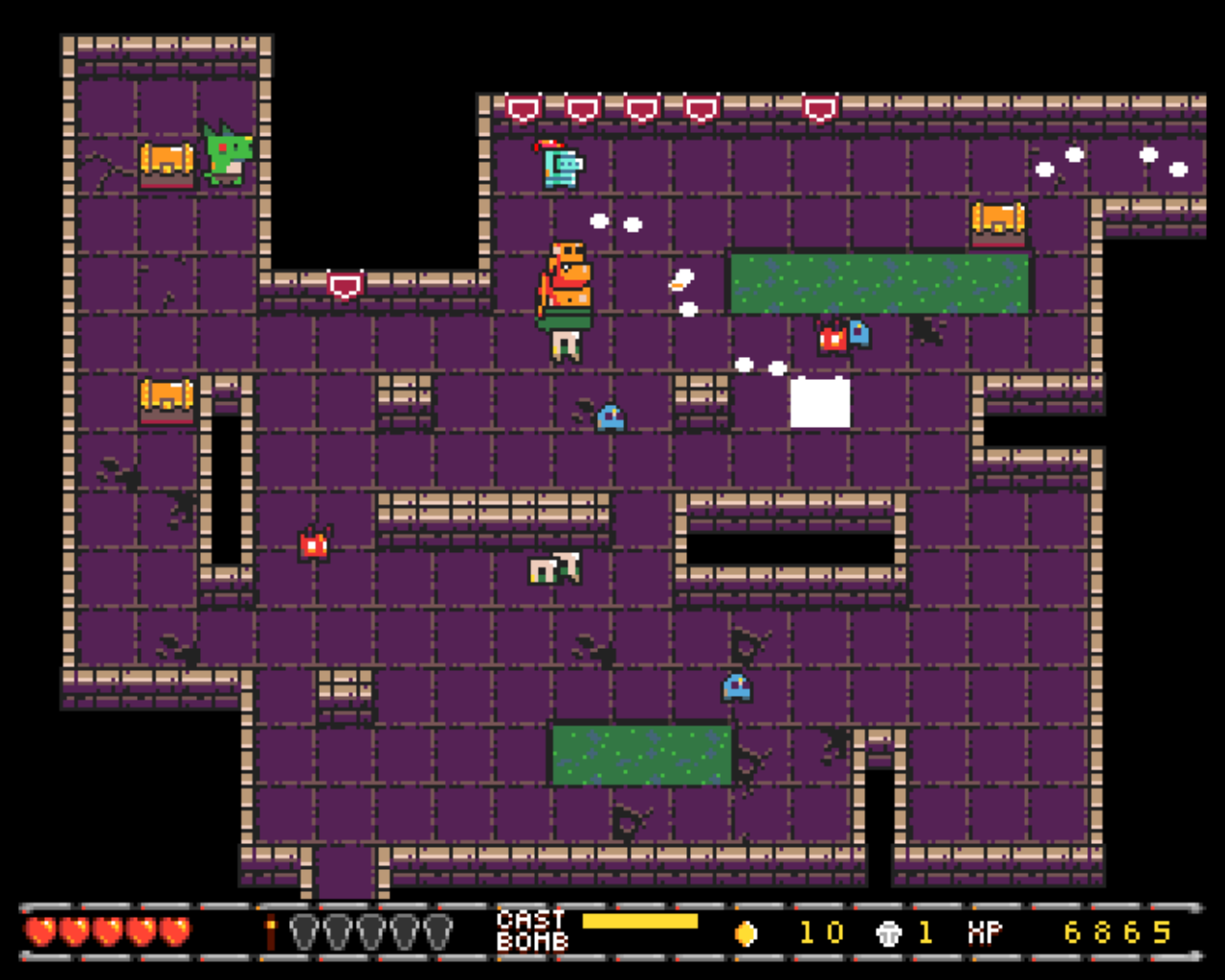
Rogue Declan Zero, by nivrig, is a "challenging, procedurally-generated, roguelite twin-stick shooter" in which you have to control Sir Declan as he fights through dungeons, closing hellgates that wizards have opened beneath the castle. 

It plays a bit like a fantasy version of Robotron and as Rogue-lite games go the difficulty curve seems relatively gentle. It's pretty generic fantasy - people often have differing ideas of what "sword and sorcery" means, as we'll see in some of the other entries - but it's fun, easy to get into, and the dungeons are just short enough to make it easy to play just one more.

******
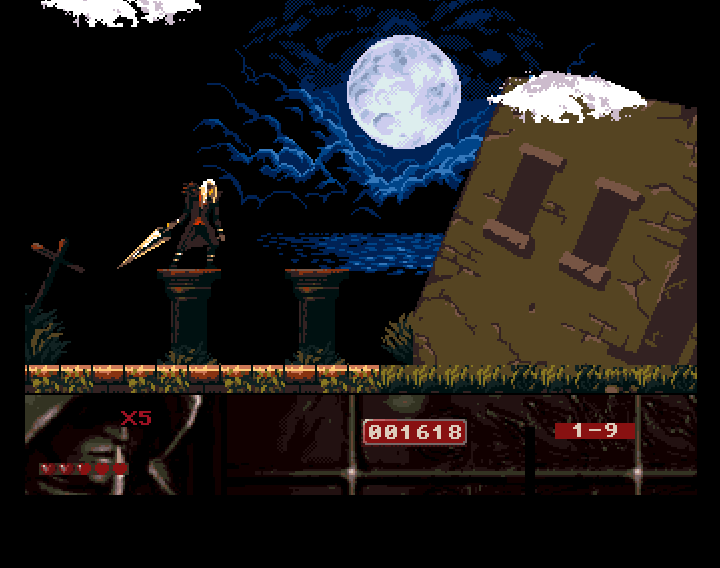
Gothicvania, by Amiten Games, is clearly inspired by Castlevania. Infernal creatures are menacing the town of Valencia and it's up to warrior-sorcerer Sir Lucas to use his magical, fire-spewing sword to defeat them.

This could be a pretty good Castlevania clone if it's completed and such a game would be welcome on the Amiga since the official Castlevania port currently has a 2.98 turd rating on LemonAmiga. As it stands right now, Gothicvania is pretty rough around the edges, with awkward animation and collision detection. Hopefully the creators will continue working on it and fleshing it out.

******
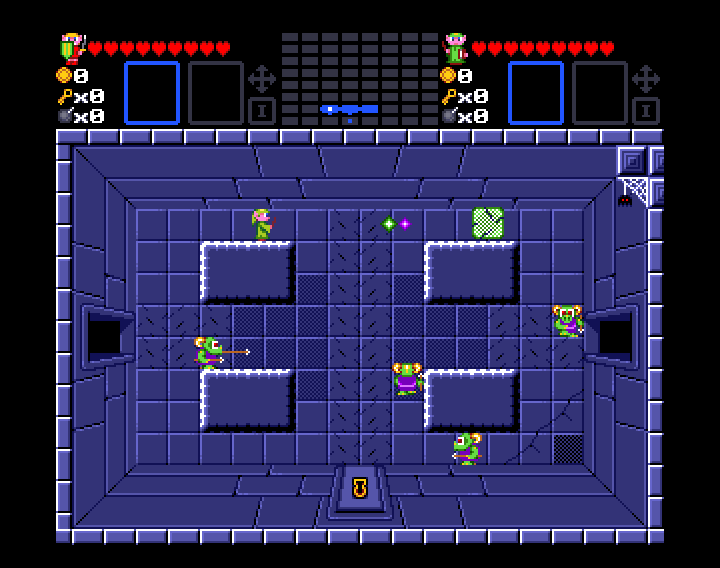

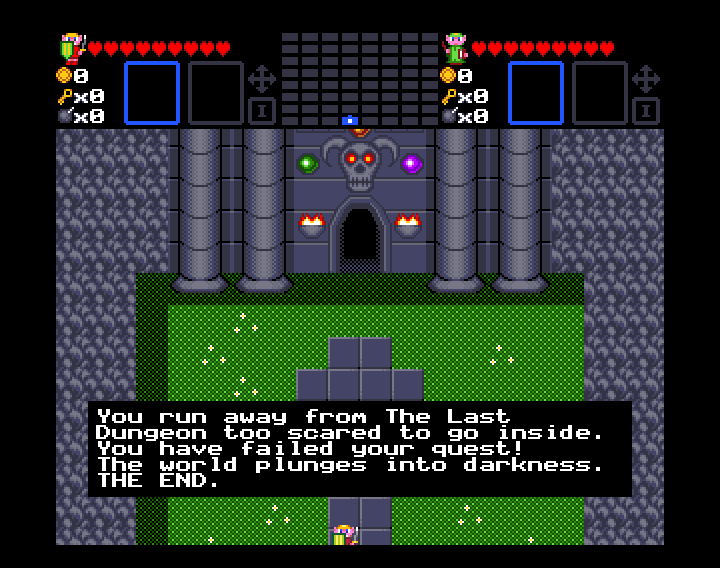
The Last Dungeon, by PixelPlop, is a Zelda clone, specifically the dungeons that you play in the original NES Zelda. Unlike Zelda, you get a choice of protagonists, a barbarian or a wizard (literally sword and sorcery), and it's got a slightly grittier feel than Zelda, with details like bloody pentagrams on the floors and grislier enemies. 

As an an attempt at recreating that Zelda feel, it works quite well and really just needs a bit of polishing at this point.
******
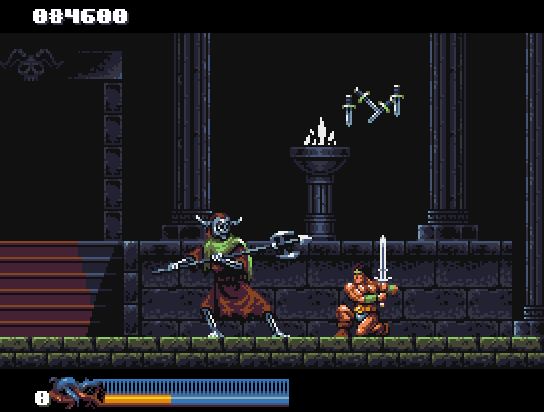

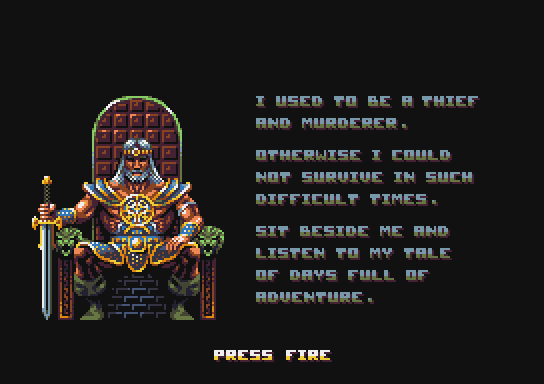
Rastan, by basementApe, is exactly what it seems to be: porting the original arcade game to the Amiga 500 as closely as possible. Rastan was ported to numerous systems but the Amiga never got it for some reason, but this version is gathering a lot of interest because it looks and sounds fantastic. It's not an exact translation - aspects of the arcade like the swinging vines have been replaced by moving platforms and the controls haven't been fully implemented - but if things keep up this could end up being the best home version of the game, exceeding even the Apple IIgs version.

******
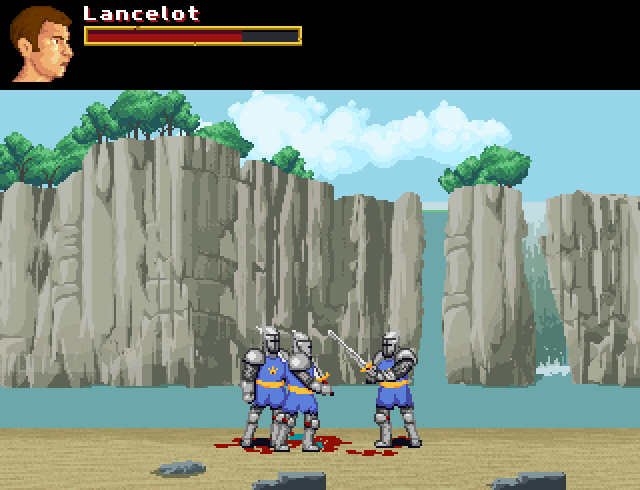
King Arthur: Rise of the Round Table, by Latebit, is a beat-'em-up in which you control Sir Lancelot as he battles a gang of enemy knights. It doesn't last long (defeating all the knights seems to just restart the demo) but there's some quality pixel art, the combat is easy to pick up (high, middle, and low attacks) and the overall look and gory style recall the classic Moonstone. There's some real potential if they stick with it and expand it into a full game.

******
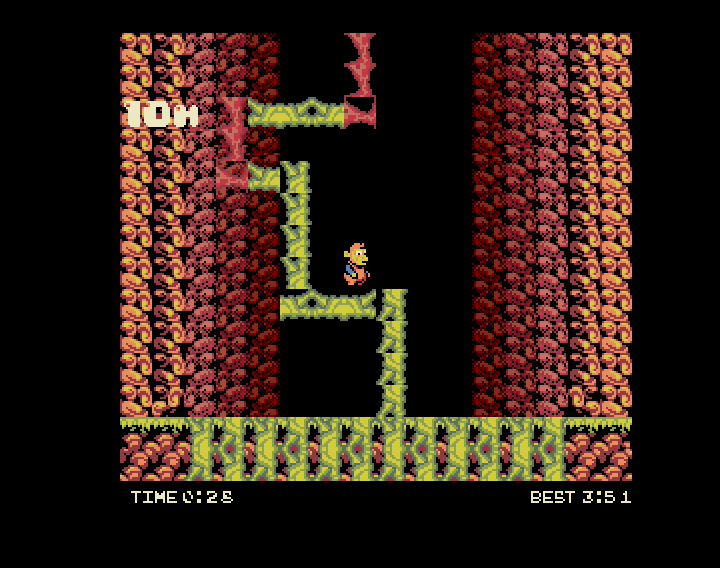

Jack in the Pit, by earok, involves you being knocked from a cloud into a deep pit, so you have to grow a beanstalk all the way back up while various elements try to rip it down from underneath you. The game was apparently created in only 48 hours but it's an impressive piece of work that looks and plays better than many games that have more protracted development times. It's not entirely clear how it fits the theme aside from being broadly fantasy, but at least it's fun.

******
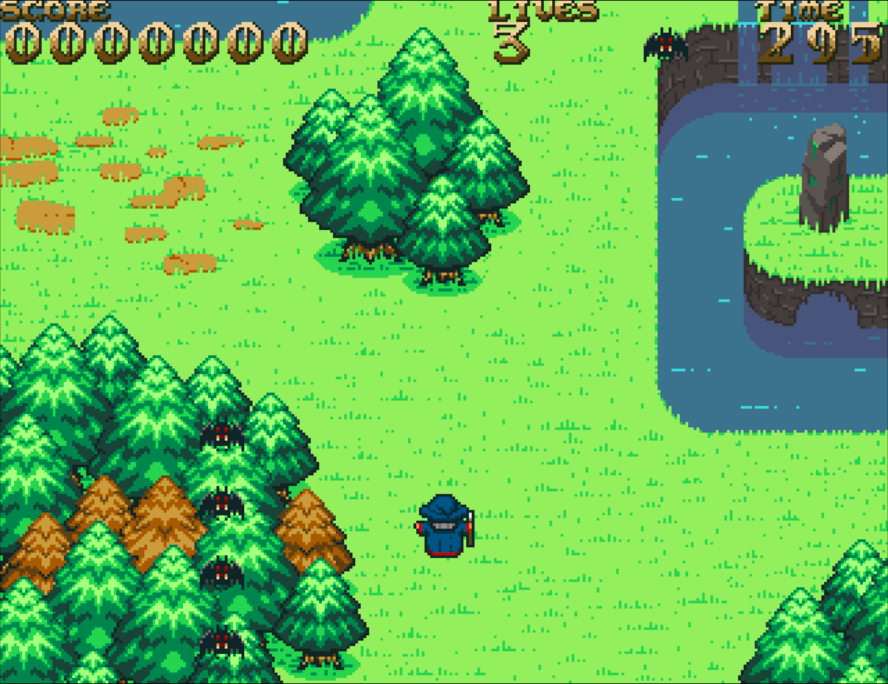
Caravandalf, by Peter and Gordon Mackay, is a caravan shooter (trying to get as high a score as possible within a time limit) in which you control a wizard (Gandalf the Grey?) as he soars through the air blasting enemies. It could definitely use some music, but it's a fast-paced bit of fun for what it is.

******
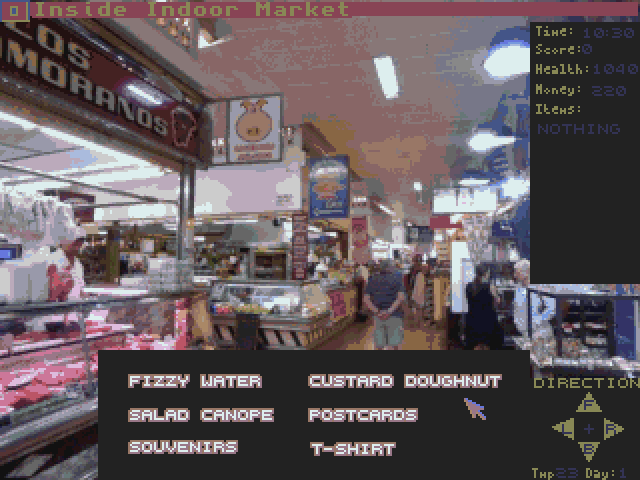

Holiday, by lifeschool22, is a "photo RPG" that tasks you with surviving a vacation to Spain in 2018. You have to find items like sunscreen to help you survive the oppressive heat. What does this have to do with sword and sorcery? *shrug* Game jams!

******


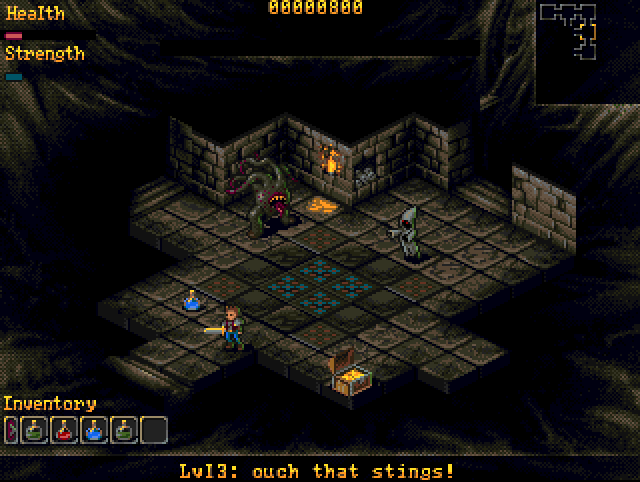
Roguecraft, by Badgerpunch Games, is an Amiga expansion of Rogue 64, a Rogue-like C64 game the creators did a couple of years ago. It's the usual Rogue-like game in that you explore a randomized dungeon, most likely getting killed repeatedly as you learn how the game works and what potions do, but this one has a lot of style. 

Not counting Rastan, which at least has the advantage of a classic arcade game providing a blueprint, this is the most impressive overall submission. The impressive graphics are reminiscent of HeroQuest and it generally seems like a fully finished game. It will be interesting to see how the judging goes, but the best of the lot would seem to be between this and Rastan.


Friday, June 16, 2023

Venture (1981)


Venture can probably lay claim to being the very first instance of dungeon-crawling in an arcade game. At a distance, it might appear to be a fantasy-themed variation of Berzerk, with its overhead view of combat and happy-faced character, but it's slightly different.

The player takes control of the crossbow-armed Winky, the aforementioned happy-face character, sort of a heroic version of Berzerk's Evil Otto. You start out in a dungeon, the halls of which are patrolled by fearsome and invincible monsters. Avoiding the monsters, you duck into individual rooms, at which point the game zooms into a more detailed view of the room. Each room includes a certain type of monster - such as our old friends the skeletons, snakes, spiders, etc. - and a treasure to be claimed. Unlike the monsters in the halls, Winky can use his crossbow to vanquish the denizens of the treasure rooms, but he has to be quick because if he takes too long the monsters from outside will invade the room and chase after Winky. If you can claim the treasure and escape the room, the game will fill its outline in the broader view, marking it as complete, and the process repeats until the entire floor has been cleared, all the treasures collected, and then Winky descends to the next, more difficult, level of the dungeon. Not unlike Gauntlet - you're killing monsters, taking their stuff, and exploring deeper and deeper - but without the multiplayer aspect.

The game was designed by Exidy co-founder Howell Ivy, not a household name today but his list of credits is nothing to sneeze at. Among his other games were Death Race, an unofficial Death Race 2000 adaptation that was the first game to ignite a moral panic, Circus, Mouse Trap, and Pepper II. The graphics in Venture are a bit Space Invaders-like in how they balance abstraction, menace, and an odd cuteness, and the game has well-rendered, high-tempo music that wasn't yet a common feature in 1981 games. Winky might be a far cry from Conan and his various clones and offshoots, but he was probably about as good as 1981 gaming could manage.

The game is exceptionally difficult because of the combination of its controls and enemy AI. Instead of being a smoothly maneuvering, agile character, the controls for Winky are unusually sticky in that pushing the joystick in a direction will cause him to first aim his crossbow and then move a moment later, but the enemies aren't bound similarly. They flit about rapidly like water bugs and will deliberately evade shots from the crossbow, and in the event they can be pinned down for a killing shot, their corpses will remain deadly until they decompose and vanish after a couple of valuable seconds. Not only do you have to kill them, you have to make sure they don't die in a spot where they'll block your path and slow you down. Despite its level of challenge, the game is addictive because of its pacing and the dopamine hit that washes over you after you've cleared a room and maybe even an entire floor, and the discovery of new types of treasure.


Tuesday, April 18, 2023

Masters of the Universe: The Power of He-Man (1983)


Mattel debuted their Masters of the Universe toyline in 1981 and it might be the closest thing to a sword-and-sorcery or sword-and-planet toy franchise to date. As it's known now, thanks mostly to the 1983 Filmation cartoon, the main hero, He-Man, has a secret identity as mild-mannered Prince Adam, son of the king and queen of Eternia. Adam transforms into the super-powerful He-Man by raising his magical sword and yelling "By the power of Grayskull!" 

When the toys first debuted, things were a little different. The mythology of the characters was mostly conveyed through mini-comics included with each action figure, with Don Glut writing and Alfredo Alcala drawing. According to these comics, He-Man was the strongest member of a primitive spear-wielding tribe and after setting out on a mission to share his talents with the world in battling evil he came across a goddess being attacked by a huge, shaggy creature. His reward for helping the goddess was to be given various weapons and magical harnesses that endowed him with superhuman strength or the ability to project force fields. Shortly afterward, He-Man would battle Skeletor and develop friendships with characters like Man at Arms and the "warrior-goddess" Teela. Later comics by Gary Cohn and Mark Texeira modified things slightly, such as splitting Teela into two separate characters, a Sorceress and a warrior woman, and having He-Man hang around a castle in the court of the king and queen who would evolve into his parents on the cartoon.

It's often been reported that the toyline had some degree of influence from Conan and Frazetta's book covers. Aside from He-Man himself, Skeletor's skull-faced visage is similar to Robert E. Howard villains like Thulsa Doom, and there's a certain Stygian vibe to Teela/the Sorceress and her snake-themed garb and cobra-headed staff. This era of He-Man would seem to be the main basis for the first He-Man videogame on Mattel's own Intellivision, although the game is understandably simple and doesn't incorporate much lore one way or another.

There are two stages. In the first He-Man must pilot the Wind Raider airship 30 miles to Castle Grayskull, dodging or shooting meteorites and bombing Skeletor on the ground before running out of fuel. The second stage features He-Man charging Skeletor across fields while Skeletor tries to hurl him backward with balls of lightning. He-Man has only a limited time to make it across three screens of this, including the inside of Castle Grayskull, but he can extend time by grabbing power swords that occasionally float across the screen, and he can use the force fields his harness allows to block Skeletor's spells. At the end of each screen, He-Man and Skeletor will engage in a swordfight that  of course He-Man wins, and after defeating Skeletor in the castle the game begins again with the difficulty ratched up.

The graphics are reasonably good for the time, with a particularly nice view of Castle Grayskull, although the characters are tiny and wouldn't be recognizable as the characters from the toys to one not already familiar. It also has a decent rendition of theme music from the cartoon that was soon to debut at the time.

It doesn't really capture much of the concept of He-Man/MOTU aside from the general He-Man vs. Skeletor aspect and the fact that the characters engage in swordfights the player can't control is disappointing. Perhaps the programmers ran out of memory for an extra stage, but then again, the creators of the Atari 2600's Superman game did a pretty remarkable job of including all of the essential parts of Superman's lore in an even smaller, more primitive game (Clark Kent working at the Daily Planet/Lex Luthor rampaging around/changing into costume in a phone booth/kissing Lois Lane/avoiding kryptonite/saving the day and dropping the crooks in jail/changing back to Kent and finishing the day at the Planet). It could have been worse but it also could have been better.


Thursday, December 15, 2022

Forbidden Forest (1983)


Forbidden Forest was the first game designed by Paul Norman, who was kind of a big deal in 8-bit computer gaming - also creating the C64 version of Aztec Challenge, Beyond Forbidden Forest, and Super Huey - before fading out in the 90s, like many of his distinguished peers. 

Forbidden Forest at the core is essentially a Space Invaders descendant but with a heavy dark fantasy mood. Many C64 players remember it for being a tooth-gnashing horror experience (some even call it an ancestor of the survival horror genre) as much as a shooting game. Norman was asked by his bosses to make a simple bow-and-arrow game, but as a movie fan he decided to entertain himself by designing something more stimulating. Although the graphics are blocky in that early C64 way, they create an effective impression of a distinctly British setting full of overgrown shrubbery, gnarled trees and rotting stumps, and cryptic altars. It feels like a place that might have once been full of druids. As Norman told Retro Gamer magazine, "[T]he brain does the work for the audience. Put enough simple things together, working towards the same effect, and it can look like you know what you're doing!" There's a simple parallax scrolling trick to give a sense of depth, and as the moon passes through the sky, the lighting shifts from the gray of early evening to a black, starry night. Very impressive stuff for the time. 
 
The player controls an archer who's stuck in the Forbidden Forest for the night and has to battle through waves of nightmarish creatures before facing the dark lord of the forest, the Demogorgon. The archer is planted at the bottom center of the screen and pushing the joystick to the left or right will adjust the angle of his aim (up or down also adjusts the vertical angle), or if held long enough will cause the archer to start running horizontally through the forest, which is important because he's faster than the enemies and they'll disappear if they're run off the screen. One push of the button will notch an arrow and another press releases the arrow. The archer can't move until the arrow hits its target or vanishes from sight. Conserving ammunition is also a concern because the archer only has five quivers with 10 arrows each. The guy isn't anything like modern depictions of archers, like the cinematic version of Legolas, who can accurately shoot arrows at all ranges like a machine gun while flipping all over the place. His actions are slow and deliberate and he's highly vulnerable to anything that gets too close to be shot.

The game is brutally difficult! Setting it to the easiest setting will replenish the quivers and require fewer monsters to be slain per wave, but the monsters themselves remain consistent through all four difficulty levels. They're very fast and will annihilate the archer if a shot misses or if the player makes the split-second mistake of attempting a shot instead of running like hell. Advancing through the game will require real skill and practice no matter what.

Norman drew from classic movies and folklore for the creatures. The player will face giant spiders, dragons, giant frogs, giant (everything is big) venom-spitting serpents, and cloaked phantoms. Giant bees were swiped from Ray Harryhausen's adaptation of Mysterious Island, and the undead skeletons were (yet again) taken from Jason and the Argonauts. The demogorgon himself, who can only be seen when lightning flashes and must be slain within a brief time limit, is heavily inspired by the demon in Night/Curse of the Demon. 


Death means the player gets to watch the archer be brutalized by whatever killed him in a gory, befitting manner. The spiders devour the archer from head to toe, with blood spurting out of the carcass the whole way. The frogs leap down and crush the archer as surely as if he'd been splattered by a boulder. The skeletons stab the archer in a frenzy, blood once again spraying everywhere. The snake's venom melts the archer. Successfully making it through a wave results in the archer dancing a happy jig. Defeating the phantom is especially memorable as the thing loudly shrieks as it slowly fades from sight.

Forbidden Forest is a case of a young programmer going well beyond the bare minimum expected from him and creating something memorable. It's atmospheric, intense, and very challenging. It isn't a cutsie-poo fantasy like so many other games (not that there's anything wrong with that), but it's got an Old World grit to it with its vulnerable protagonist simply trying to survive a night in a single creepy setting.

Suggested reading: The Black Stone by Robert E. Howard


SKALD: Against the Black Priory (2024)

  SKALD: Against the Black Priory is a Kickstarted RPG by Anders Laurindsen that hearkens back to classic PC RPGs, particularly those for t...