Thursday, August 1, 2024

SKALD: Against the Black Priory (2024)


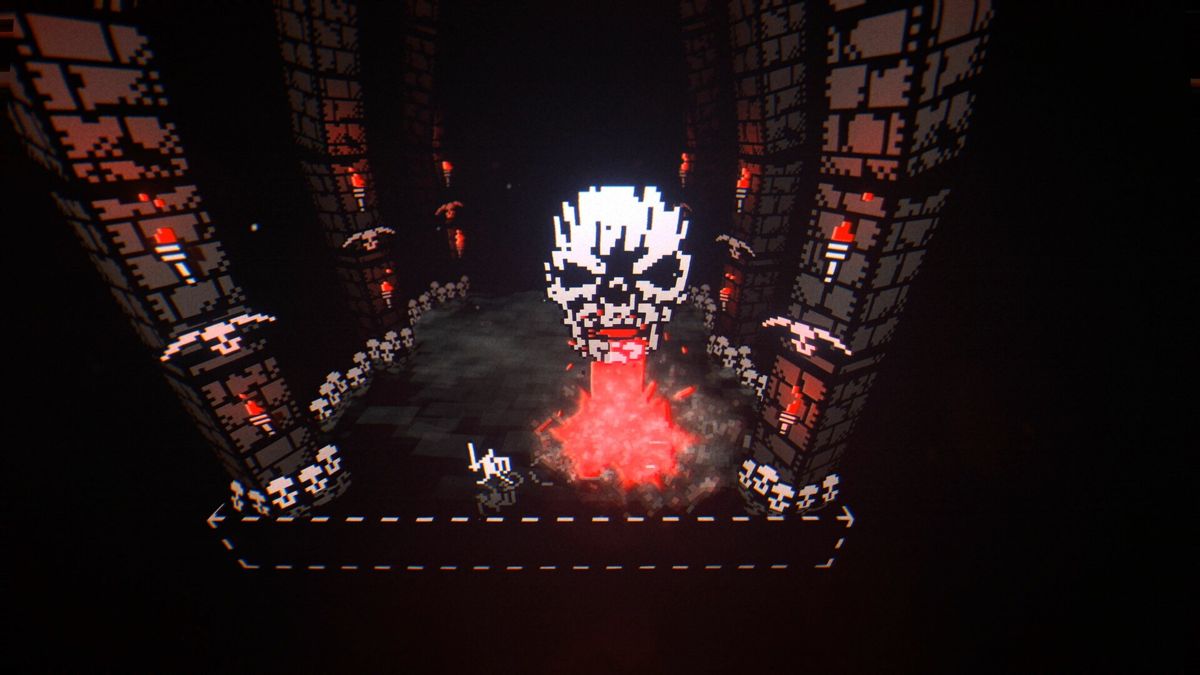
SKALD: Against the Black Priory is a Kickstarted RPG by Anders Laurindsen that hearkens back to classic PC RPGs, particularly those for the Commodore 64, but adds in a much darker mood that leans heavily on Lovecraftian horror. 
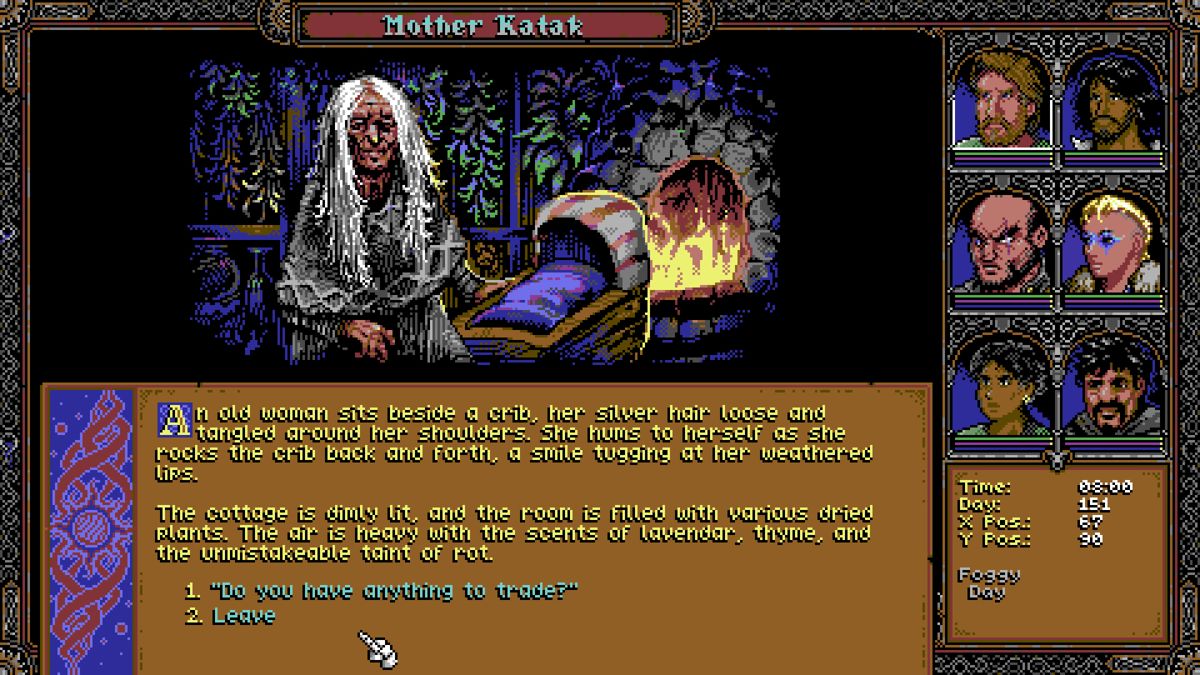

The game has a strong story focus. You create your own hero, but once you set out the game will generally progress in the same way, with only minor differences depending on how you resolve subplots and which skill checks you pass or fail. The opening sees you on a ship sailing to "the Outer Isles" when suddenly the boat is attacked by a leviathan of the deep. The game then flashes back to a calm scene of you being summoned to a lord's court, where you're given a mission to find the lord's daughter, a magically-touched woman, who happens to have been a childhood friend of yours, who has vanished on the trip to the Outer Isles. The game then flashes forward to the present of you waking up on a beach. You set about your mission, finding equipment and companions to help you along the way.

The party members are pre-generated characters such as Kat the thief, but you can also hire mercenaries and these you can customize to your liking. The party members will occasionally contribute to the story, offering exposition or simply their opinions on what's happening, but thankfully this is no blockbuster RPG in which people engage you in lengthy conversations for the purpose of starting a romance or requiring you to be a psychiatrist and helping them with their particular hang-ups. The writing is bent on furthering the game's dark atmosphere but still relatively restrained, without huge reams of text dumped on the player. The only place it really falls down is in providing worldbuilding details (e.g., magic system stuff) that feel awkwardly inserted and are arguably extraneous. Laurindsen is also clearly a fan of the movie Aliens and doesn't mind throwing a reference in the dialogue here and there.
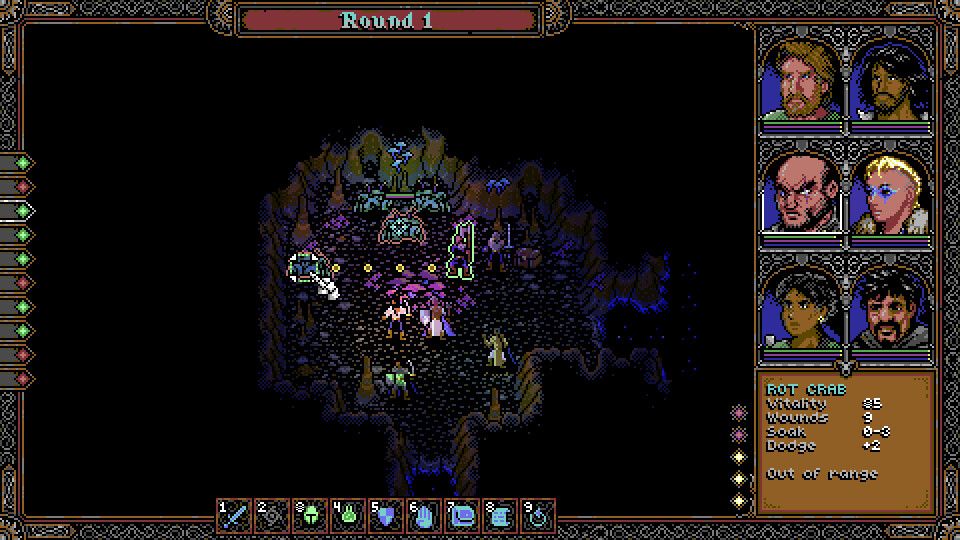

Beyond the tentacle monster ripping your ship in half at the opening, shortly after washing up on the beach you'll be exploring caves full of giant man-eating crabs - you can tell they eat men because the gory remains are all over the place. You learn that the major town on the island literally went crazy one night as good citizens began slaughtering their neighbors and formed a cult of human sacrifice. Refugees who managed to escape are dying from a grotesque disease that causes writhing things to grow in their bellies. Even a mid-game episode involving a trip to an idyllic town, where you run fetch quests to help happy residents prepare for their yearly festival, devolves into a Robert W. Chambers-influenced nightmare. With the leviathan still patrolling the deep waters around the islands, the characters have no option to simply leave. The game feels like a tight corridor you're being herded down and the sense of doom gets thicker the closer you get to the end. The ending isn't very happy.
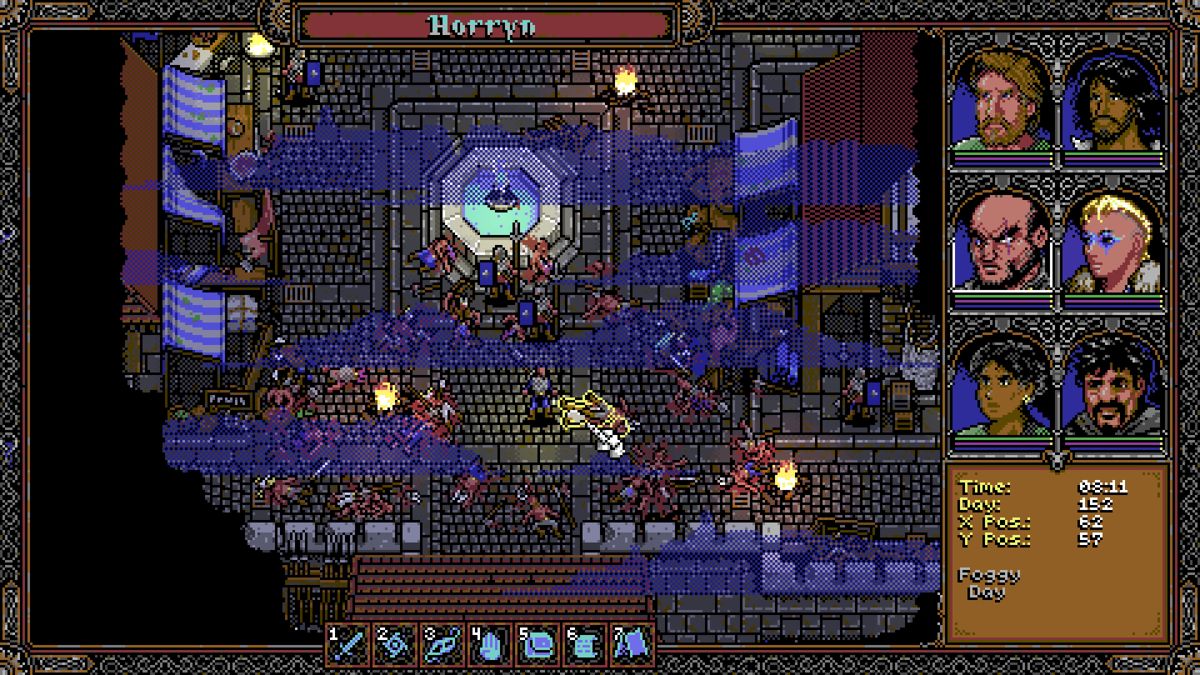

It's a fun game to play, though. The restrained completion time is always welcome compared to the bloat of so many modern RPGs, and the nasty tone is unlike most modern RPGs, which often can't resist self-aware humor or nonsensical worldbuilding. Such a local-level story, based on simply finding a missing person, is particularly rare in video games, as even most sword-and-sorcery-influenced games still incorporate dark lords or battles for the fate of the world, trying to make the low and high sides of the fantasy genre play nice with each other. The game feels like playing a very horror-heavy Dungeons & Dragons module, and Laurindsen's experience as a DM for his own table-top games comes through.

The combat system is a bit rigid at first (no diagonal melee attacks), but it's easy to get to grips with it, and the C64-like graphics lend a sense of grit and darkness to the game, the only major downside being that they're so detailed that it's easy to miss important things unless you hold the shift key to highlight interactive objects.


Tuesday, June 4, 2024

Sword of Kadash (1985)


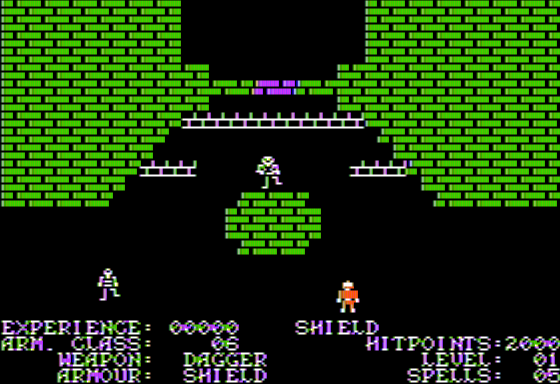
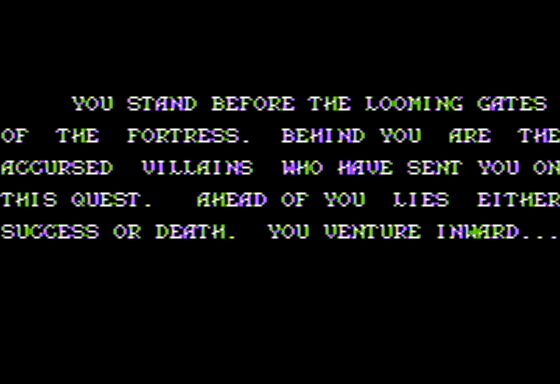
Sword of Kadash is an early action RPG, created by Chris Cole and one of the very first releases from Dynamix. Dynamix was behind many classic games such as Project: Firestart, MechWarrior, Stellar 7, the Aces war simulation series, Red Baron, and Rise of the Dragon, among numerous others. Almost none of their games are fantasy-themed, however, so Dynamix likely won't be coming up again here.

Like many PC games of the time, it has an arcade sensibility, similar to something like Berzerk, but with just a bit extra to hopefully interest players beyond recognizing algorithms and honing reflexes. The player controls the hero from a top-down view, attempting to navigate a huge maze one screen at a time. The player can pick up different weapons but despite whatever the weapons are identified as, the combat always takes the form of firing arrows across the screen at enemies. Among the threats you face are various types of wildlife, the undead, orcs, and a liche, among others.


The maze is always the same, but it's full of devious traps beyond the creatures inhabiting it, so progress is best made by mapping or memorizing the layout and noting how the traps work and which items are safe to pick up, so the player can gradually work out the most efficient path through. It's a tough but engrossing game.

The story explained in the manual is that your character is a merchant traveling to Persia to do business, but your guide sneaks off with all your merchandise and provisions, leaving you to die in the desert. Fortunately (?) a band of brigands appears and takes you captive. The leader forces you to enter the Fortress of the Dragon to recover the fabled Sword of Kadash or die trying. You're sent in with "a dagger, a shield, and your natural charm." Assuming you actually succeed, your now hardened hero emerges with the sword with the intent on turning it against the brigands instead of peacefully handing it over.


Cole told the CRPG Addict that he envisioned the game as having more a high fantasy theme, but that the publishers forced the Middle Eastern/historical fantasy theme on him late in development. It's possible a high fantasy theme may have improved sales - this was the mid-80s, when things were shifting toward epics - but for the purposes of this blog, the game's final theme is actually much more in line with classic sword-and-sorcery. A lone adventurer exploring a haunted fortress in the middle of the Persian desert and dealing with brigands sounds like the kind of premise Robert E. Howard could have used for a yarn featuring Conan, El Borak, or maybe Cormac Fitzgeoffrey. 


[Apologies for very slow upload pace in recent months. Real life concerns have been incessant, but there's no lack of things to talk about.]

Sunday, April 21, 2024

Lionheart (1993)


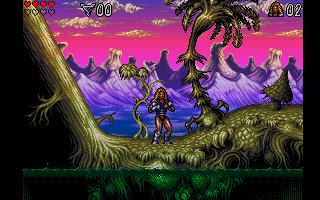
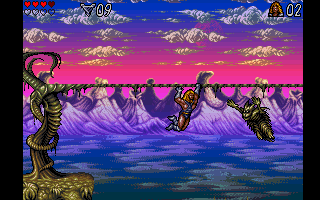
Lionheart for the Amiga might be described as being like Thundercats except not lame. The story of the game is that Valdyn, a half-man/half-cat swordsman nicknamed Lionheart, is sent on a quest to retrieve the Cat People's priceless Lionheart jewel, which has been stolen by the evil wizard Norka. As an extra incentive, Valdyn's woman was turned to stone by Norka, so he needs to find a cure for her, too. Shortly after beginning his quest on the back of a flying dragon, however, Valydn is shot down by Norka's airship and crash lands in a forest far from his objective, so now he has to fight all the way across the land, through forests, swamps, volcanic lands, and the city and fortress.

The game was created by a team at German publisher Thalion and it's one of the great visual feasts of its era as Henk Nieborg really knocked himself out with the pixel art, pushing the Amiga as far as it could be pushed for 2D graphics. As graduates of the demoscene, Thalion was known for having beautiful games and Lionheart is arguably its masterpiece. Every single element of the game is lushly rendered, from the multi-hued skies to the verdant plantlife, and the parallax background scrolling. There are effects used for the opening and closing cutscenes that are never re-used in the gameplay. And the sound is exceptional for the Amiga, with simultaneous music and sound effects, something Commodore machines often traded off on because of the limited sound channels available. Valdyn himself is very smoothly animated and has numerous poses that also lead to their own specific animations; e.g., step to the edge of a platform and he'll make a show of maintaining his balance. Slide down a steep surface and Valdyn will unveil a new sword-swinging animation specific to that situation. It's the kind of character-based design that was highly valued in the 16-bit era, when every company was hoping a game character would show personality and break out as a popular mascot. 


The game doesn't just look great, it plays well, too. Although there's a strong Rastan influence on the game, it plays a bit differently in that Valdyn has to stand still while attacking. Hold the button down and push forward and Valdyn will perform a straight swing of his sword, push up and he'll do an overhead strike, push backward and he'll do a spinning reverse attack. Kneel down, hold the button and push forward and he'll do a low kick. It takes a short while to get used to it but it's not a bad system when you settle down with it, and the game isn't so blisteringly paced that it rushes at you before you've had a chance to practice. Jumping is generally easy to control with the possible exception in some instances of gaps that need a fast running start before Valdyn can clear them.


Like a lot of games of the time, levels are full of collectibles for extra lives, attack power-ups, and health refills. Also be sure to find the hidden level to get the magical amulet that unlocks the best ending for the game.

If there's a major flaw in the game, it's that the game is just really long for a game of its genre. Levels play out three or four times as long as those in similar action games, and the game is quite difficult, so memorizing and executing the right path through the game is even more exhausting than usual. It can be done, the game is mostly fair in how it's designed, but there are times when it crosses the line from feeling thrilling to "Huh, this is going on a bit, isn't it?"

The Amiga library is in an awkward place in retrospect. The system was well ahead of its time, delivering 16-bit graphics and sound in 1985, but most of its games were designed for a single-button controller that rapidly went out of date, so players used to advancements in console gaming in particular tend to deride most Amiga efforts at competing with Nintendo and Sega games. Lionheart stands as an example that in the right hands the Amiga was well up to the task of competing.

Although there were no sequels to Lionheart made - Thalion didn't last much longer - Valdyn did reappear in Thalion's classic RPG, Ambermoon, as a recruitable party member. And in recent times, Lionheart was ported to Windows in a freely available version.


Tuesday, March 26, 2024

Unexpected Conan: Fallout 2 Restoration Project


Fallout is obviously not sword-and-sorcery, but if you install Fallout 2's Restoration Project mod, you might get to meet a character who bears a striking resemblance to a famous pulp hero. 

Among the content that was cut from the original release of the game but restored by the mod is a primitive tribe living on the California coastline in Fallout's post-nuclear setting. The hero of Fallout 2, the Chosen One, can meet a member of this tribe named Sulik while exploring the settlement of Klamath. Sulik is a "tribal" who comes from the Umbra Tribe and after recruiting him as a companion, you can travel to their small village. After arriving, you can meet the tribe's head warrior, a fellow named Krom.

The game's description of Krom: "This sun-bronzed giant looks as if his corded muscles were carved out of granite. Beneath a mane of black hair, his smoldering blue eyes pierce into you." Krom goes on to ask you about who you are and what your purpose is. Krom is well-spoken and supportive of your quest to find the Garden of Eden Creation Kit to save your village, although he scoffs at the concept of the GECK itself in favor of man toiling against the earth with his own natural gifts. He also makes it clear that he's well-travelled and the village is just a temporary home for him before he decides to move on and see what else the world holds for him. You can continue to interact with him while staying with the tribe and he'll put you to work on solving some simple tasks the village could help with.

So Krom is an expy of Conan himself, transplanted cleanly into Fallout's world. It goes to show in a very minor way that despite the differences, post-apocalyptic fiction and S&S are cousins of sorts, both genres about people battling strange forces and hostile environments as much to just survive as to vanquish some great evil.

Thursday, March 7, 2024

Kingdom Come: Deliverance (2018)


No sorcery in this one, just sword, but a lot of classic S&S does have a strong historical element. And even as history-minded as this game is, it does brush up against a sense of weirdness in a couple of spots. 
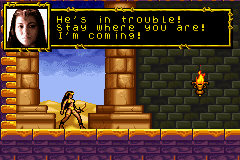
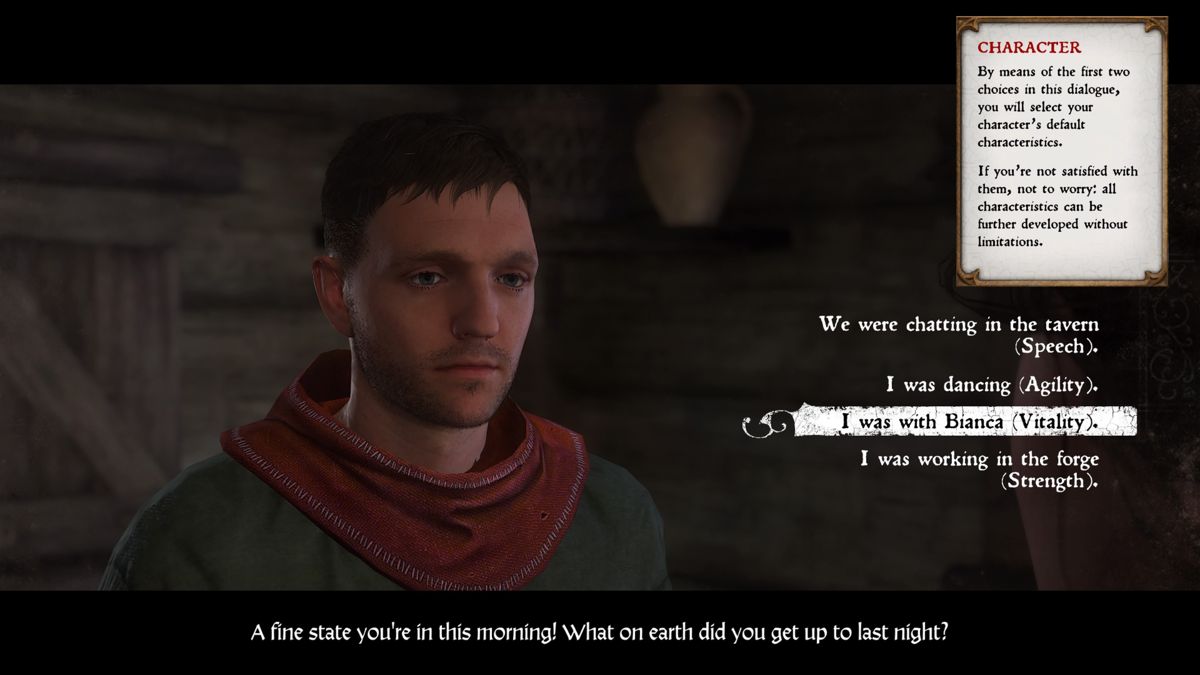
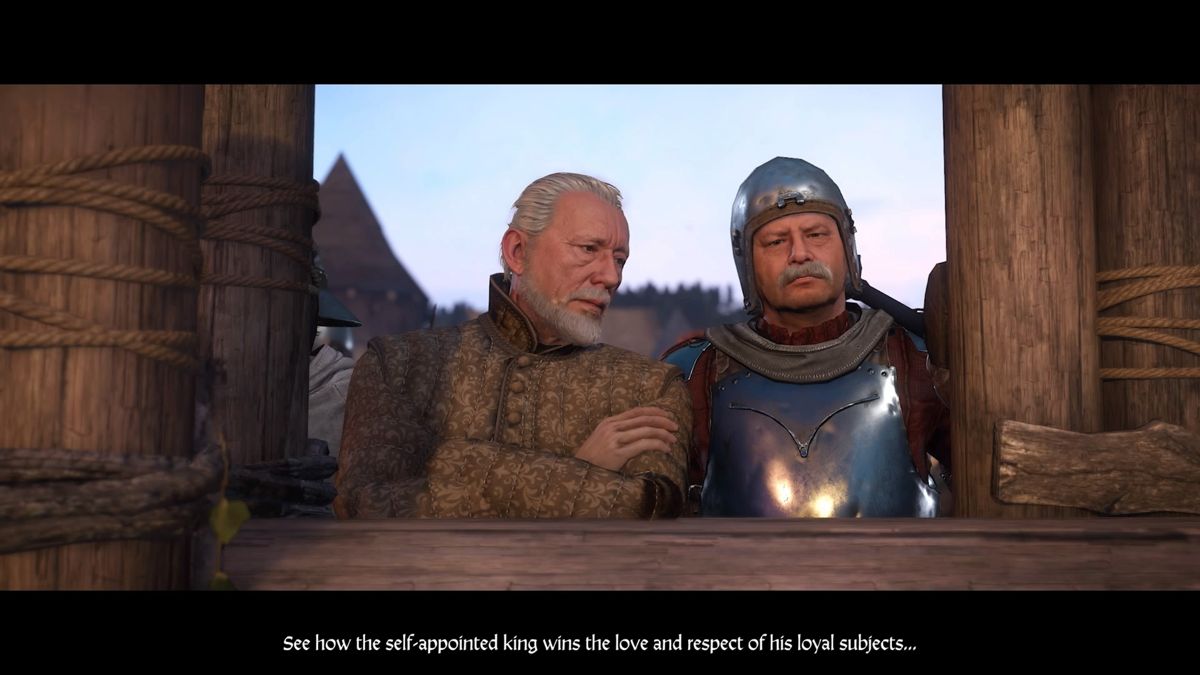
Kingdom Come: Deliverance was Kickstarted in 2014, released in 2018. The player takes control of Henry of Skalitz, the son of a blacksmith living in a Bohemian village in 1403. The king, Wenceslaus IV, is a bit of a disappointment compared to his father, Charles IV, who presided over a golden age for the country. In response to Wenceslaus's frivolous ways, his half-brother Sigismund leads an invasion of the country to presumably sort things out. What this means for humble citizens like Henry is that his village, a valuable silver-mining center, is sacked by Cuman mercenaries who take liberties with the locals in the process, including killing Henry's parents. Just before the invasion, Henry's father had forged an exceptional sword for the local lord, Sir Divish, and in the early portion of the game the sword is stolen by the villains, so Henry's quest becomes to recover the sword while taking revenge for his parents and village. Henry will become a knight in Sir Divish's service and will travel across a region that includes the towns of Sasau and Rattay.
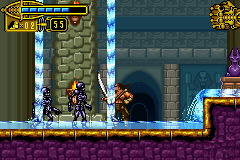

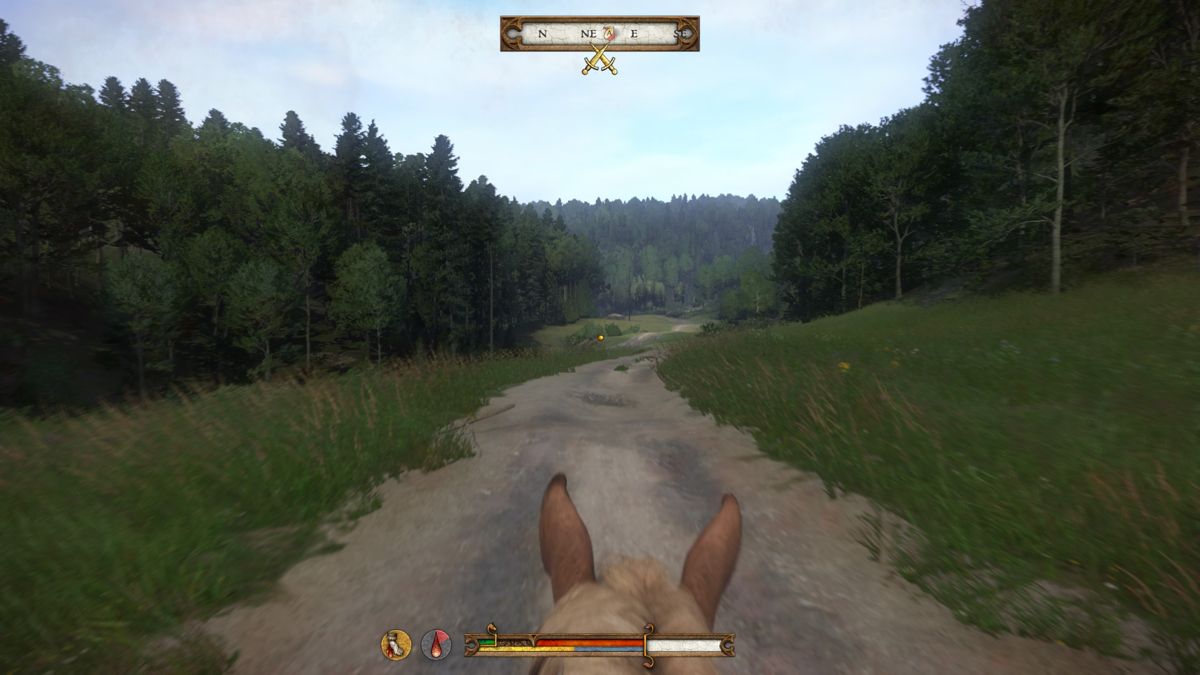
The game is a first-person RPG, built on the CryEngine, with very good graphics that emphasize realism over art direction and mood. Henry has basic needs for sleep and sustenance that have to be monitored, although they aren't too difficult to maintain. Injuries have to be looked after. Not bathing or taking care of your clothes and armor will draw insults from other characters. The fighting system involves having to practice to level up strength and skills so Henry will have more endurance and ability to parry, strike, and counter attacks. The combat system is interesting but disappointingly falls down in major battles where Henry is part of larger forces clashing. It simply becomes a mess of men flailing at each other and the most effective technique is probably to just run behind the enemy shield wall and start backstabbing people while your fellows keep them occupied in front. Not exactly the blood and thunder one would hope for in such situations.

KCD had to be crowdfunded because historical games, especially ones in as obscure a setting as medieval Bohemia that require a hefty budget, terrify game publishers that would greatly prefer to stick to tried-and-true settings like Tolkienesque/D&D-flavored fantasy or space marine-centric sci-fi. As much as possible, KCD is based on real places and events, peppers its story with several actual historical figures, and generally tries to present its setting with as much accuracy as a video game could reasonably allow. A writer like Harold Lamb might have found it interesting. Accessing the game menus will allow the player to read brief encyclopedia entries on medieval society, enough that playing the game will give players an elementary-level foundation of Bohemian history. The game also is generally even-handed in how it depicts its setting, eschewing Monty Python-like images of cruel nobles mercilessly beating idiotic peasants covered in mud and excrement. Instead there's a range of personalities shown, with nuanced examples of people all along the social strata. Some lords are entitled brats but others are serious-minded and dedicated to their duties on behalf of subjects, while peasants might be hardworking, lazy, or opportunistic depending on their minds and circumstances.


The story is linear but the player is free to define Henry however they like. He can be a selfless do-gooder or a complete psychopath or likely somewhere in between. He can specialize in fighting (and particular weapons) or have a silver tongue or be a stealthy type. The game is open enough to different playstyles that there are usually multiple valid ways to overcome situations. Come across a bandit camp and don't think you're strong enough to simply walk in and massacre everyone? Perhaps try waiting until midnight and then sneak into the camp so you can take out watchmen silently in the dark and then murder the others in their beds. Or slip poison into their food and let it do its work.

Even at his strongest, Henry isn't a cartoon hero. Travel on the roads can be very tense, especially in the earlygoing, as Henry can run into highwaymen, stray bands of Cuman raiders, or be baited into traps by people claiming to be in distress. Henry's odds of winning a fight drop significantly with each extra man added on the other side - one-on-one isn't too bad; one-on-two is doable; against three, four, or especially five, though, and he might be in real peril and simply trying to escape or even surrendering might be the best play.


As mentioned above, the game does touch briefly on more fantastic aspects in two notable sections. First, there's a sidequest that can only be completed if Henry is able to access a cabinet of forbidden books in the Sasau monastery's library. The particular book he needs is Lovecraft's Necronomicon, although somewhat disappointingly, the presentation of the book is a bit drier than might be anticipated. Nothing about its authorship by Abdul Alhazred, and even looking over its pages makes it seem like nothing more than just another book, albeit slightly more esoteric than some. But at least it's something, and the lighter touch in how it's presented is probably more in the spirit of classic S&S than the overkill most games go for.

The other episode is a somewhat more standard one in which Henry is tasked with uncovering witchcraft in one of the villages. His investigations will take him to a secluded woodland spot where some of the women are trying to commune with Satan by using psychedelic drugs, and, after confronting them, when they smear the drug on Henry's face he starts hallucinating, seeing men with the heads of beasts. 

KCD ends on a bit of a cliffhanger, but the sequel has yet to appear despite the game turning out to be an unexpectedly big hit. Considering how actual history went and the allegiances of the main characters in this game, it doesn't look good for Henry and his friends having a triumphant ending, but perhaps he will slip through the cracks and land on his feet somehow.


Saturday, March 2, 2024

COVER ART: Kid Niki: Radical Ninja (1987)


A bit of an odd choice this time but an interesting contrast in how games are marketed in different regions. Kid Niki the game is a cute action-platformer with a goofy sense of humor. For the North American cover, the company went with this more realistic and fiece image of the hero facing down his enemies with his sword already running with blood, with the damsel in distress at the center looking like a swipe from Frazetta's Egyptian Queen. Not an uncommon occurence in the marketing of 8-bit video games, as we saw with Deadly Towers.

The original Japanese cover for comparison:


Friday, February 16, 2024

Volgarr the Viking (2013)


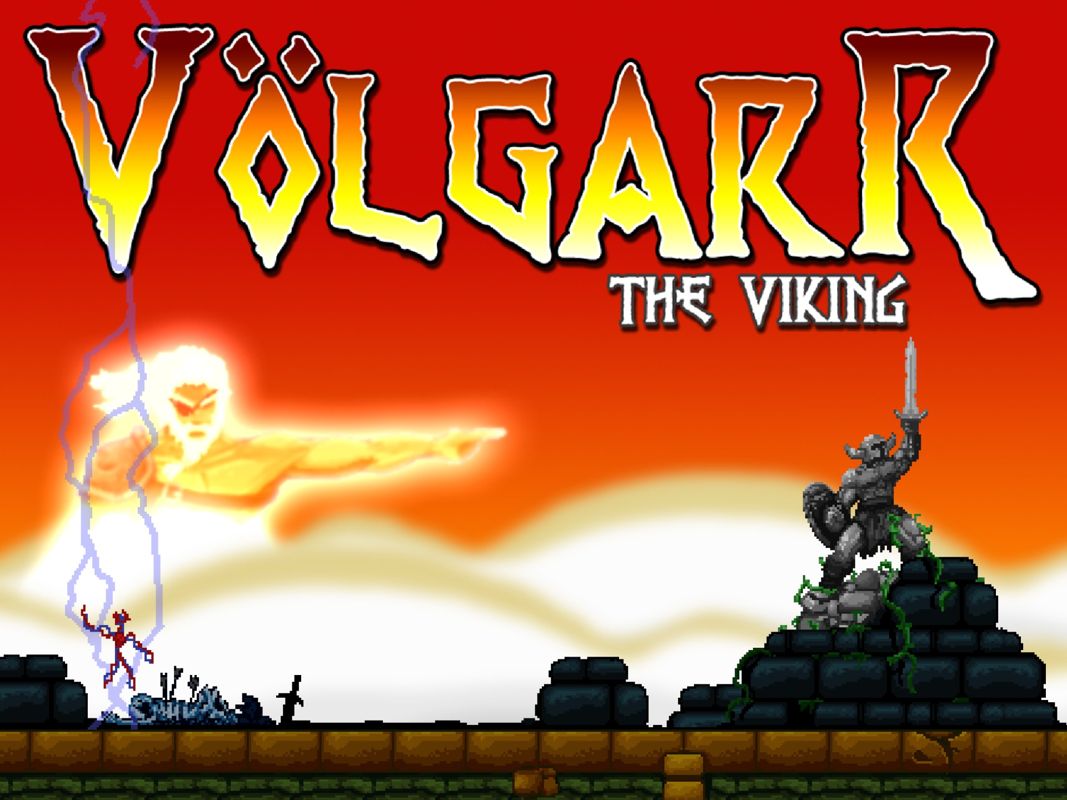
Volgarr the Viking was one of the old Kickstarter success stories, a throwback to Rastan intended to be particularly challenging and gameplay-heavy. "A game with no real challenge is like a cheeseburger with no meat...We're here to put the meat back in the cheeseburger!" the creators, Crazy Viking Studios, said, and they meant it. Volgarr the Viking is a tough game that demands practice and memorization of the best ways to overcome difficult parts.

Being a viking, Volgarr is resurrected by Odin and sent out to fight whatever happens to be in front of him. That's about the extent of the story, although there are multiple endings based on how you play and the endings reveal certain things, such as how Fafnir the Dwarf was transformed into a dragon. The creators weren't kidding when they talked about a "time when games were about the game, not about the cutscenes or cinematic presentation."


The pixel art isn't a lush knockout on the level of Henk Nieborg's work or the Metal Slug games, but it's solid enough and the graphics are very clear, with characters easy to distinguish from backgrounds at all times, which matters in a challenging gameplay-first game. Despite the Norse theme of the game, Volgarr will cut his way through a variety of Lovecraftian fishmen and lizardmen and other giant bugs and sea creatures.


The music is deliberately non-retro and features stirring compositions by Kochun Hu that stand up well to anything short of Basil Pouledoris's Conan the Barbarian score. There are many sword-and-sorcery B-movies that wish they had music as good as this game does.

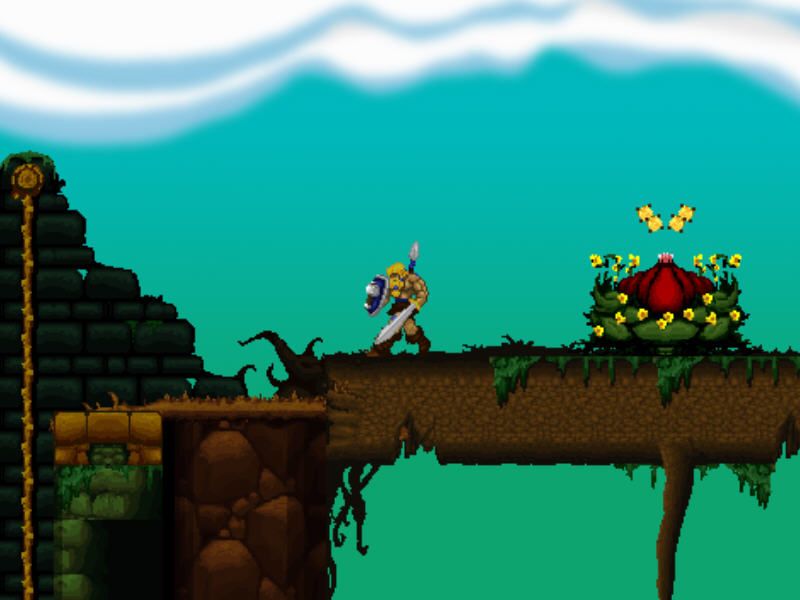
To get into the details of how it plays, Volgarr can swing his sword and also throw spears that when thrown into walls also serve as platforms for him to jump on to reach high places. He can move while attacking with the sword but must stop in place to throw a spear. He can also double-jump in midair and stab downward while falling. Similar to Rastan but with a few extra wrinkles thrown in and making progress mostly means knowing which sequence of moves to make in particular situations. Volgarr also has various layers of protection. Get hit once and he'll lose his helmet, get hit again and he'll die. His shield can block attacks but it will break unless a reinforced version of the shield is picked up.

Unlike a lot of modern games, Volgarr doesn't feature liberal use of checkpoints or saving, so if someone plans to get good at the game, they'll do best to carve out some decent time for the game and be willing to die and retry many times until they master just a single level, never mind the whole game. And then even more so if someone wants to get the best possible ending.


Sunday, January 21, 2024

Sword of Ianna (2017)


Sword of Ianna is a sequel/demake of Blade of Darkness created by the Spanish Retroworks. The premise is that the player controls Jarkum, a descendant of the barbarian Tukaram from Blade of Darkness, who is called by the goddess Ianna to retrieve her sword and defeat another great evil.

What it shares in common with its inspiration is a similar difficulty level in that it tries to replicate the perilous, thin-margined combat of Blade of Darkness in a 2D platformer. Simple enemies can be dispatched quickly but if you don't respect them they can also inflict a lot of punishment on you and leave you handicapped going forward if you can't secure enough healing items. There's also a lot of running, jumping, and climbing involved as Jarkum has to navigate environments inspired by the original game, solving simple puzzles such as finding levers to open gates while avoiding traps. The combat uses the old method of pushing the action button to draw your sword, then holding the button and pushing a joystick direction to execute certain attacks. When not in combat, you can run and climb up or down ledges. The game does feature frequent checkpoints, so dying doesn't cost much of a penalty in terms of time lost. Like many modern games, even the more difficult ones still want you to succeed and progress all the way through to the end.

The game was released for the MSX, ZX Spectrum, and Amstrad CPC computers, the three most popular PCs in Spain in the 80s and represents each system quite well, although the MSX version is probably the most well-rounded of the three. If a game like it had been released back then, it would have been heralded as a classic, with well-drawn graphics featuring large, well-animated characters and moody environments - orc fortresses, musty tombs, and temples of evil based on the original Blade of Darkness settings. The enemies from Blade of Darkness, such as the orcs, dual-sword-wielding skeletons, and golems, also make returns in 2D form. And it has a memorable soundtrack that emphasizes a sense of danger and mystery. One doesn't need to have played Blade of Darkness to get Sword of Ianna, but it adds a little extra layer of appreciation to what the developers present.


Sunday, December 31, 2023

COVER ART: Doc the Destroyer (1987)


Not clear who the artist who did this is. Doc the Destroyer is an adventure/RPG hybrid that was supposed to be the first of a line of Doc the Destroyer games but the series plan didn't come to fruition.


Friday, December 15, 2023

Primal Light (2020)


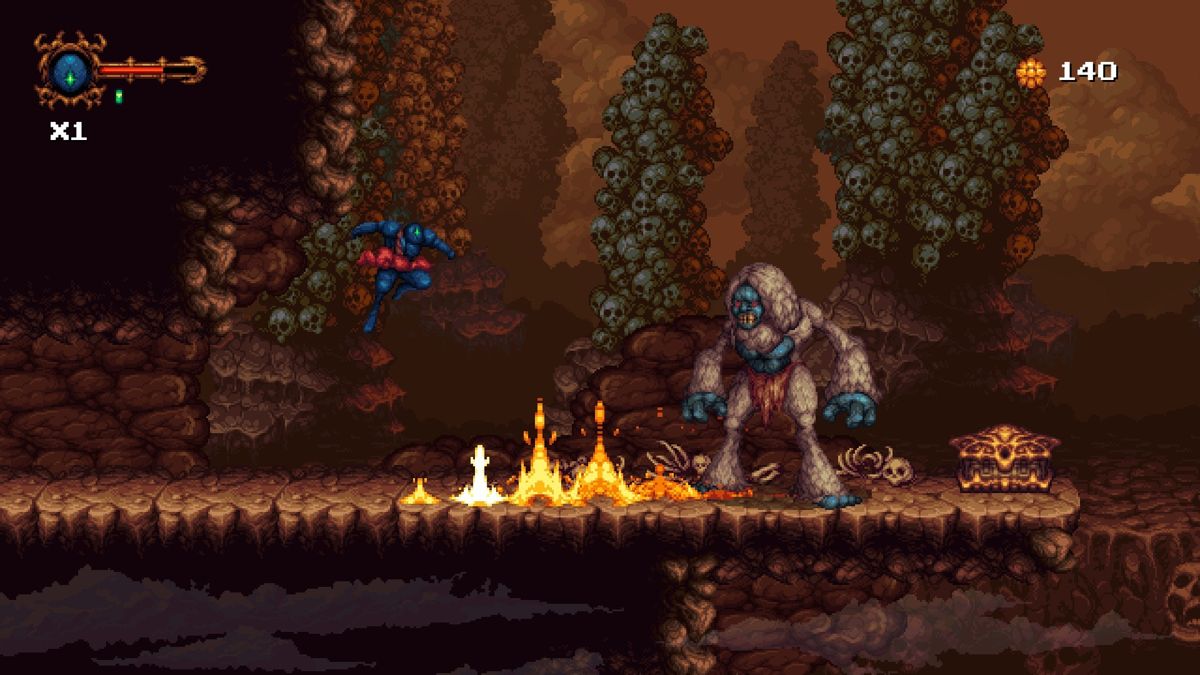
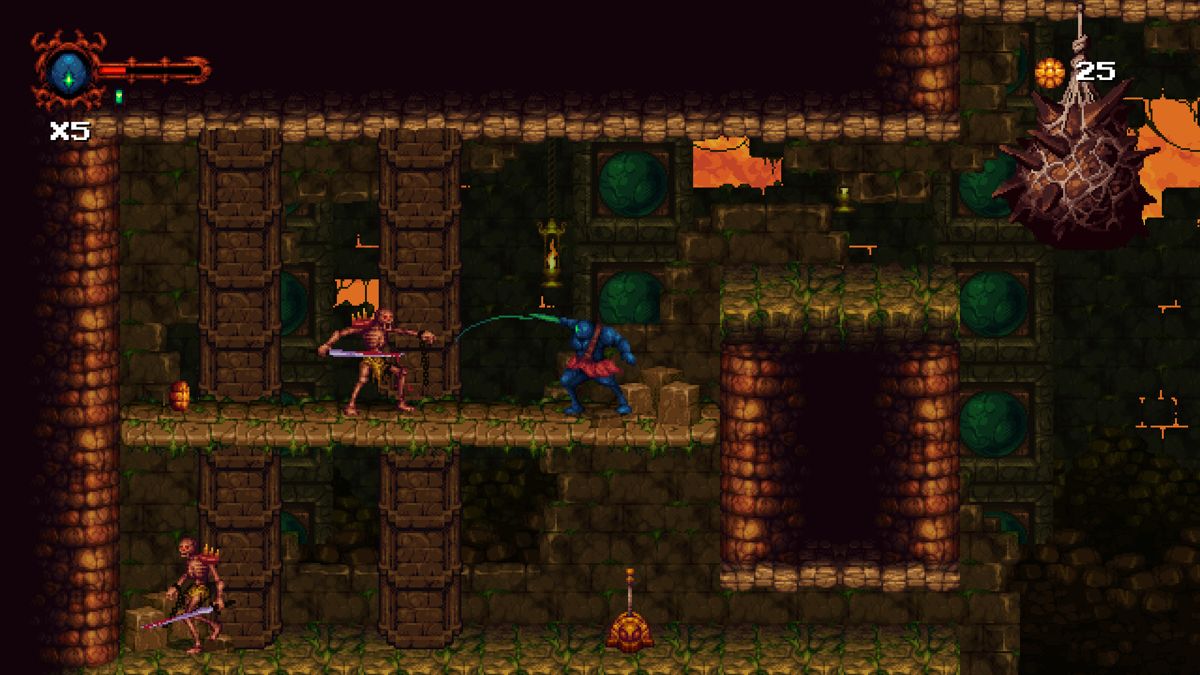
In Primal Light, you control "Krog, a mysterious blue creature in a red loincloth, as he traverses a labyrinth of ladders, levers, traps, and monsters." The game was created by Fat Gem, a studio that appears to be comprised of two people, Jeff Nixon and Shane Sicienski. Krog specifically is a humanoid who seems to have a carapace-like skin and glowing green cross where a person's face would be. The use of a non-human protagonist is a bit reminiscent of some of the protagonists seen in the stories of Schuyler Hernstrom and other writers that like to go for a more exotic, off-Earth feel in their characters and settings.


There's barely any story in Primal Light. Krog, like many before him, comes home to find his village devastated and the few survivors implore him to go forth and destroy the "dark god" responsible. So Krog heads out, runs and jumps through 10 levels with difficult boss enemies at the end of each, and then comes home to a simple congratulatory image if he succeeds. It's not a game to be played by people who look to video games for their stories. 

It is a game that can be enjoyed by people who like to be challenged, because even on easy mode Primal Light is quite difficult. Like the "Nintendo hard" games of the past, much of the challenge comes from enemies being placed in such a way as to knock Krog off course during jumps, sending him falling to an instant death. The level bosses can also be tough, with fast-moving and complicated patterns that have very tight margins for evading harm. The game does allow Krog to replenish some health a limited number of times per life, and currency picked up throughout levels can be used to buy extra lives. The game is also generous with the number of lives you start with and in allowing continues. The game will occasionally have a fork in the path through a level, with the alternate route featuring a challenge section ending with a power-up that can give Krog an extra edge in the game, but at minimum Krog will learn several techniques like double-jumping and mid-air dashing that will make him more mobile but also will be needed to overcome platforming sequences. That said, Krog's only attack throughout the game is to slash with his sword.


The game has some really pretty high-resolution pixel art and nice music, and it controls well enough that you usually will blame yourself for failing more than the game. It would have been nice if Krog had the ability to look up or especially down to cut down on the number of blind jumps that occasionally crop up. Although you can usually make a good guess as to where the floor is going to be, the ability to confirm it would be even better. Overall, it's a good game, worth checking if you're into this type of rush'n'attack and platforming challenge, and its grim, alien setting sets it apart from many games.


Tuesday, December 5, 2023

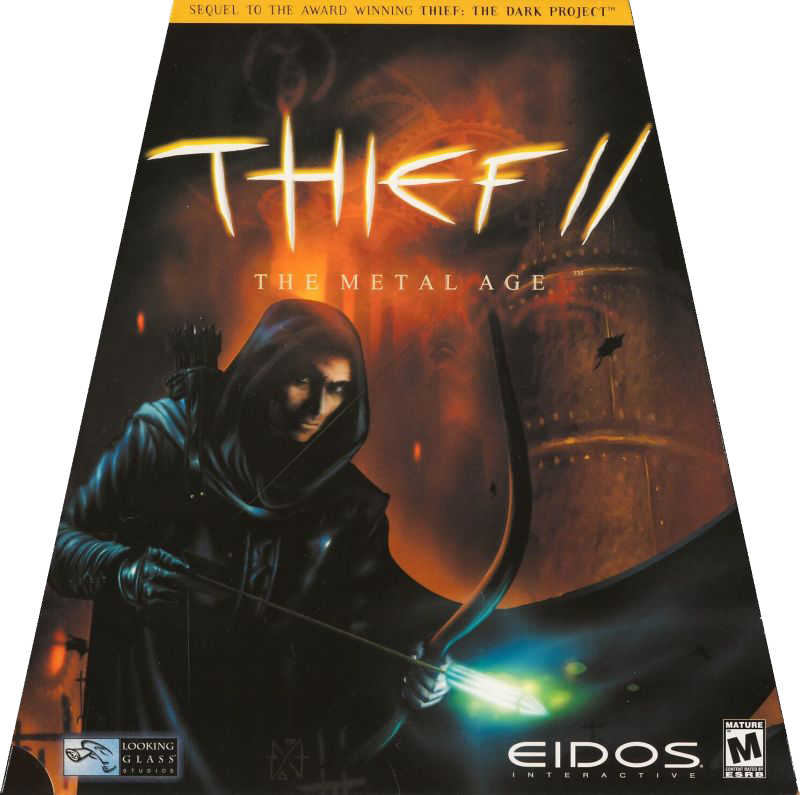
Thief II: The Metal Age (2000)


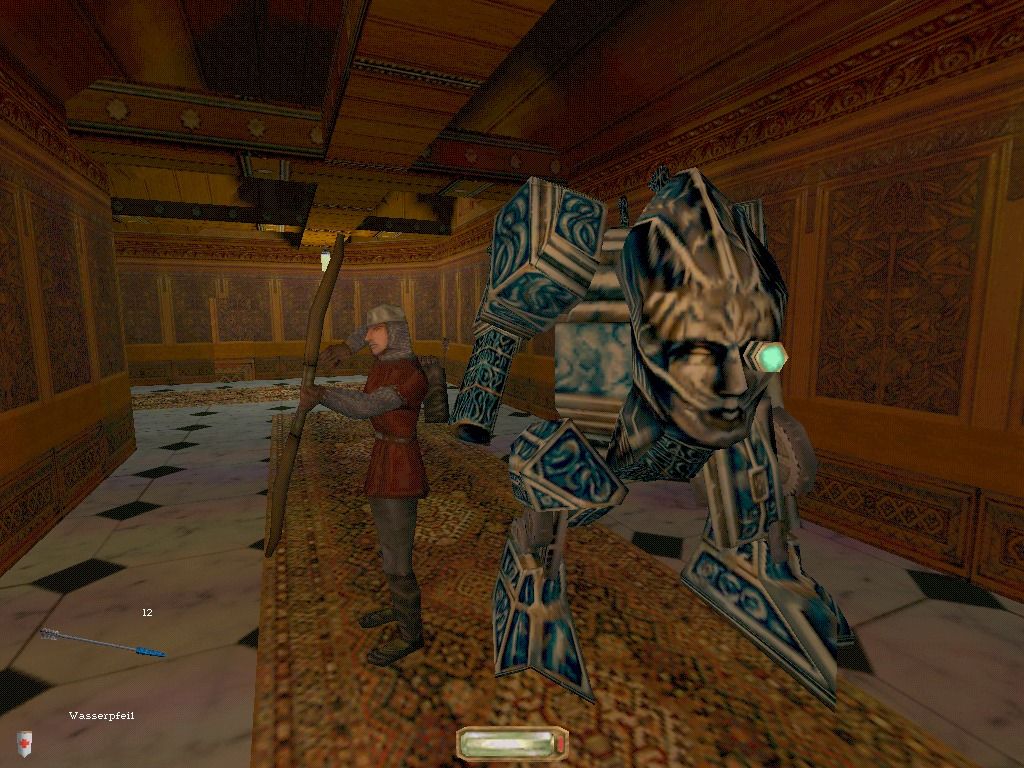
With Thief: The Dark Project turning out to be an unexpected success, Looking Glass Studio didn't take too long to produce a sequel. The first game featured Garrett battling Chaos-worshipping pagans who wanted nature to run amok over the world, so the sequel, The Metal Age, goes for a contrast. At some point a Hammerite splinter faction called the Machinists, lead by the mysterious Karras, ascended and began upgrading the technology level of the City. It's now full of steampunk surveillance cameras and even security robots that look like ED-209 from Robocop given a baroque chassis. 

It's not much of a spoiler to reveal that Karras, with his Droopy Dog accent, is a madman who's been working with the city police to abduct criminals and undesirables and transform them into automatons that the city's nobility can use to as cheap labor to replace their human servants, but Karras has an additional plot to unleash a weapon that will annihilate organic life entirely. Much like the first game, Garrett starts out simply doing his usual work of burglarizing mansions, but he will gradually be pulled unwillingly into conflict with the Machinists and have to infiltrate their cathedrals, factories, and bases to uncover and stop Karras's schemes.

The game largely plays the same as the original, with keeping to the shadows as much as possible and making as little noise as possible the keys to success. Garrett has some extra tricks, such as using the steampunk eye he got as a replacement for the one plucked out in the prior game as a link with scout spheres he can toss to scope out areas without exposing himself. The designers listened to player feedback from the original game and emphasized stealth gameplay above all else, largely avoiding the  first game's occasional pushes toward faster action that were included because they were uncertain players would tolerate a game with so little combat. Thief II's levels are sprawling and complex and mission objectives sometimes evolve as new areas are explored. Garrett will often have to criss-cross large buildings to find important objects or operate switches that will unlock areas he needs to enter, such as a level in which he has to rob the vault of a huge, highly secure bank by getting into its basement to deactivate the vault door's massive bolt lock. In keeping with Looking Glass's design philosophy, players are allowed to approach levels however they like, with most areas having multiple points of entry, and playing on expert difficulty is encouraged because doing so exposes the player to more of the game, requiring that they simply accomplish more objectives instead of superficially making enemies tougher.

A downside of the game's greater focus on stealth and the creation of steampunk antagonists is that the game does lose a bit of the sword and sorcery flavor of the original game. Although the undead aren't entirely absent, their appearances are sparse and quickly pass, and monsters like the burricks and elementals are entirely absent. The unceasing use of Machinist enemies gives the game a slightly drier atmosphere. In the celebrated Life of the Party level, Garrett can briefly invade a necromancer's tower in the middle of the city. If the player is foolish enough to read the Book of Ash (the Thief universe equivalent of the Necronomicon) on the wizard's altar, the player will find himself beset by a pair of ghouls. A later level finds Garrett stuck in pagan territory, where he has to tangle with humanoid enemies and possibly even living trees. These moments of horror are very welcome in giving a break from the robots and Machinist patrols.

Thief II maintains the moody style of cutscenes and the game is still exceptionally well-written compared to most video games. 

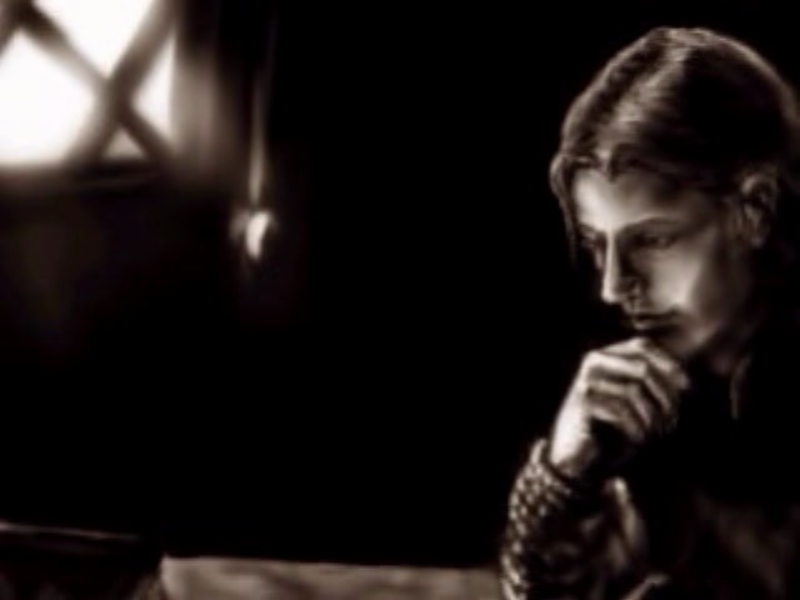
Garrett is as cynical as ever, although he does get a bit unusually emotional at the climax, perhaps the only note that's questionable. Garrett is a very refreshing game character in how he feels vulnerable and how no matter how big the story gets, his adventures always come down to how well he can sneak in and out of a particular structure. Although the games tell a broader story, any level has the feeling of a single short story featuring this protagonist who merely wants to perform his trade to make enough money to keep his rent paid. As well-loved as these original two games are, they've given rise to a rich scene of fan-created missions that can be freely downloaded, many of them well-designed variations of raiding ancient tombs or opulent mansions.


Thursday, November 16, 2023

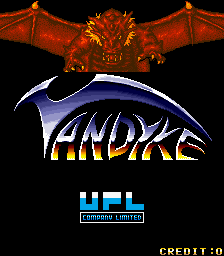
Vandyke (1990)


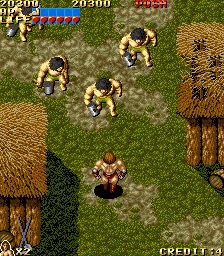
Vandyke is an overhead, vertically scrolling arcade game released by Japanese studio UPL (Universal Play Land). You control the typical muscular barbarian-type hero as he slices through hordes of monstrous enemies. You start out swinging a sword but can power-up by picking up alternate weapons such as a very long flail, bombs, or boomerang-like throwing stars. The game is very accessible, with easy to pick up controls (attack and jump), appealing graphics and music, and a fast pace.

You start out fighting enemies like giant scorpions, toads, and cavemen. The first boss is a mutant elephant with a snake-like man for a trunk. Level 2 introduces the undead skeletons and giant bats, with a medusa-like boss. So far, so normal.


Level 3 is when things start getting a little offbeat. Immediately after starting, the player is beset by what appear to be sashaying, giggling leather daddies with clawed gauntlets on their right hands. Combined with other odd enemies like the men trapped inside rolling disks and the way the hero (it's not clear if his name is truly Vandyke or why the game is called Vandyke at all) strikes bodybuilder poses whenever he grabs a health power-up, it becomes apparent that the game is something of a send-up. It doesn't go into all-out parody, but it's clearly not taking itself very seriously, either.


Beyond that, there's not much to say about Vandyke. It's a fun play but gets quite challenging by the end, and the reward for completing it is a simple screen of the hero looking content, not much more than a simple "Thanks for playing!" message. UPL and the particular creators' output was eclectic, but they didn't do any similarly themed games before or after Vandyke.


Sunday, November 12, 2023

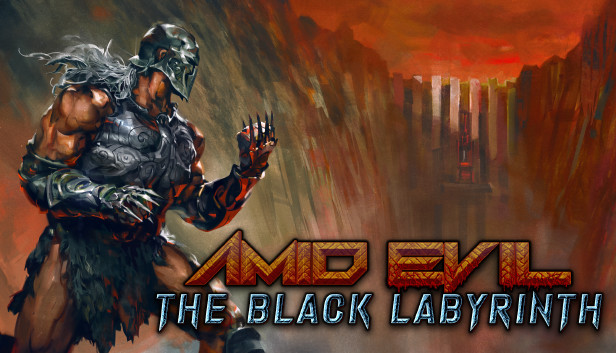
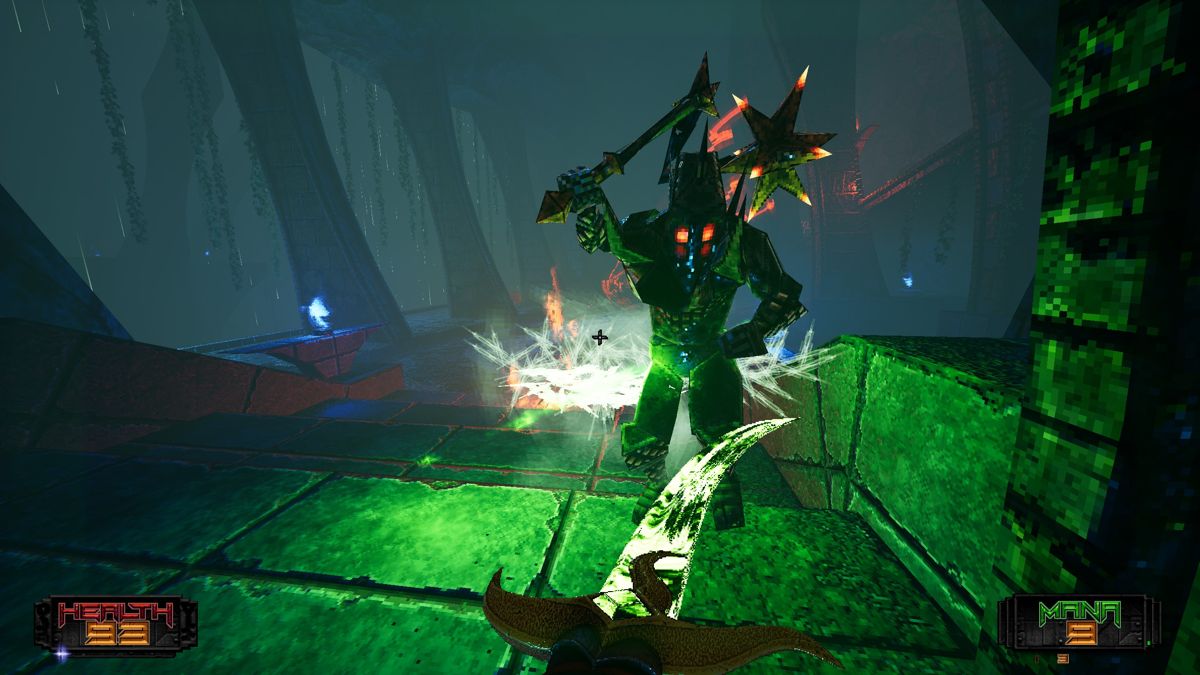
Amid Evil: The Black Labyrinth (2023)


When Amid Evil begins, it establishes that you're the champion of the gods because you conquered the Black Labyrinth and seized the mystical axe at its end for yourself. So when Indefatigable wanted to do an expansion of the game, it only made sense to do a prequel in which you get to see what the Black Labyrinth is like for yourself.


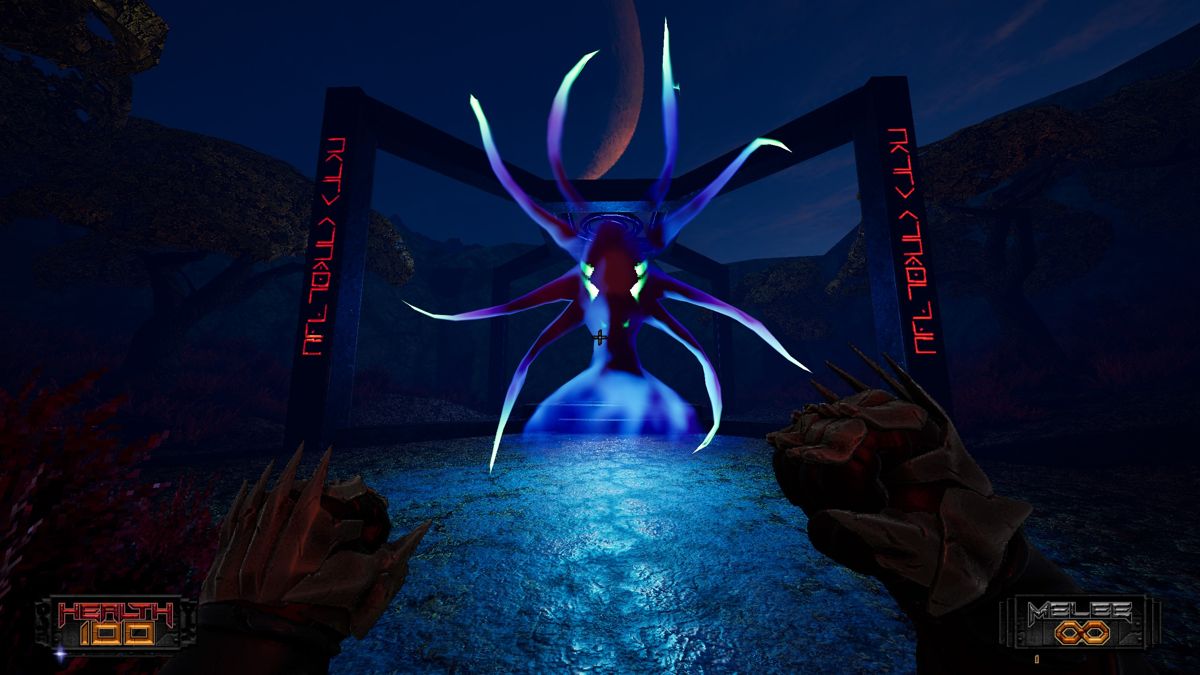
Since you obviously don't have the axe yet, the game replaces the no-ammo melee option with a pair of spiked gauntlets that are actually pretty fun to use. Punching enemies into mush just doesn't get old, especially when you activate the alt-fire mode and the punches turn from mere flurries into such a hyperactive torrent that it becomes hard to see what you're attacking. The other new weapon addition is the Voidsplitter, a scythe that fills in for the Aeturnum of the base game. If you complete the expansion, the game gives the option of going forward with the main campaign with the new weapons, in addition to the main campaign's array.

Beyond the weapons, the expansion is more of the same, which is good because the game is good. In keeping with how the original game was designed, the expansion has its own set of new enemies, such as archers, flail-wielding armored men, and elemental spirits. 


The final boss is quite a challenge, perhaps more than any from the base game. Otherwise, the Black Labyrinth maintains the same sense of rich color. Despite the concept of being caught in a labyrinth, which might suggest tight corridors, the expansion instead goes for massively spacious rooms, some of which can shift similar to old Build engine games, and even some outdoor spaces in which you could get punished for trying to escape by making a break for the horizon. It's not a very long set of levels and is definitely worth a play for those who enjoyed the original.


Sunday, October 29, 2023

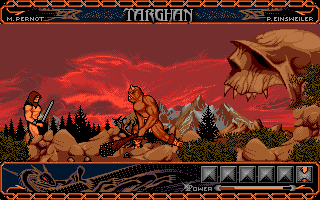
Targhan (1989)


Targhan was the creation of Silmarils, a French studio with a knack for visually striking games with lush pixel art. The game's manual includes some backstory about where the hero, Targhan, comes from, stating that he comes from a village called Edengarfin and that he had grown up to be a great chief of his tribe, but that he left because a legend of an "Evil One" with a great secret kept him restless. The game covers Targhan's quest to defeat this evil wizard. 


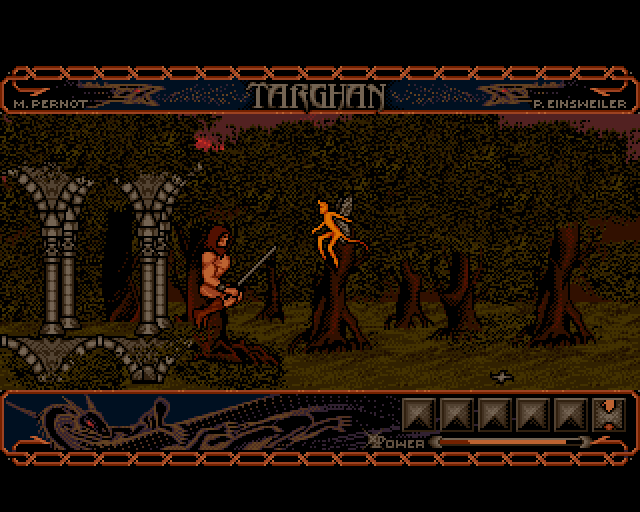
Targhan has the classic sword-and-sorcery hero's uniform: a great, chiseled physique; a long, thick mane of hair; short trunks with a belt; boots; metal wrist bands; a sword; and that's it. He can pick up a maximum of five sub-items like shurikens to use for distance attacks, healing potions, and necessary quest items like keys. He wanders through verdant European forests with deer trotting through the background, to crumbling ruins, to imposing castles. Most of the enemies are humanoids, sometimes rat-headed men and sometimes just men in scary-looking armor. Somewhat at odds with the S&S vibe is that you'll sometimes come up against elf woman archers and in one section you apparently invade a village of dwarves nestled among treetops, killing every guard that gets in your way. It seems the elves and dwarves are as bad as everyone else in this land. 

Targhan resembles sideways hack-and-slash games like Rastan but in motion it's quite different. The animation is a bit stiff and the controls seem perhaps influenced by Barbarian's style of holding the fire button while moving the joystick to perform combat moves. When Targhan goes into combat against a humanoid opponent, the fighting is definitely more Barbarian-style, with the opponents hammering at each other until one falls, so it's important to master the timing needed to connect with your swings and hit the enemy before he hits you. Perhaps the creators envisioned a system of thrilling swordfights with impressive attacks and counterattacks, but in practice the most effective technique is generally to just hold the button down and never stop swinging straight ahead. The enemy will try to close in get hit, bounce back, and repeat until dead. For flying enemies like bats, just wait until they descend to attack and then nail them with one swing.

Assuming one gets sufficiently comfortable with the fighting and jumping, the game really becomes a puzzle/adventure game, about knowing which way to go first and which objects to gain to unlock deeper parts of the game. Occasionally Targhan will find scrolls with bits of text that provide hints, but also you just have to work it out through trial and error. For instance, one of the first things necessary is to explore an underground cave system, but obviously you can't see in the dark. The solution is to go back to the surface and wander until you see a small yellow pixie-like creature approaching you. Instead of killing it (which is possible), allow the creature to approach, where it becomes apparent that it's friendly and it begins to follow you. When you return to the caves, it transforms into a floating light source that allows you to navigate the caves without any issue. Like classic adventure games like King's Quest, it's probably helpful to try to map the game out and figure out where all important objects are and the most efficient path to collecting and using them. Then you just have to survive all the fights and vanquish the wizard to get an anticlimactic ending.


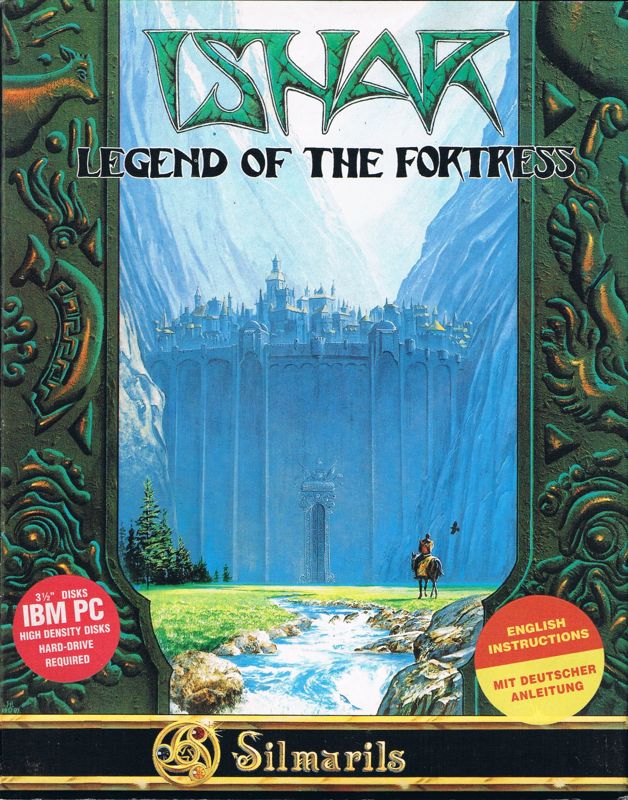
Targhan's no hidden gem but it's not a bad game to play as long as one is patient and willing to put up with its shortcomings for the sake of exploring its little fantasy world for a while. Although it didn't spawn any direct sequels, it wasn't the end of Targhan as a video game hero as Silmarils brought him back a couple of years later as a recruitable companion in its RPG, Ishar: Legend of the Fortress. He's classed as a barbarian in that game and is a tough fighter.


Wednesday, October 11, 2023

Monday, October 2, 2023

The Scorpion King: Sword of Osiris (2002)


Scorpion King: Sword of Osiris was released to tie-in with...The Scorpion King movie that spun off from Stephen Sommers's Mummy films. Often this means death for video games, but Sword of Osiris had the good fortune of being developed by WayForward Technologies, which around the time of the game's release had begun to distinguish itself by creating games that hearkened back to the glories of 16-bit console gaming in an era where 3D game design was still finding itself.

The game is meant as a sequel to the film and begins with the player controlling Kelly Hu's character, Cassandra, who is lured to a temple only to find that the villains, the wizard Menthu and his partner Isis, have tricked her into thinking they were keeping the Scorpion King Mathayus prisoner. 

It's one of those fake-out levels video games sometimes use, where the player controls a side character who's meant to be killed/lose the big boss fight at the end of the level. Menthu and Isis defeat Cassandra and kidnap her while the real Mathayus enters the temple to rescue her, so the player repeats the same level but in a slightly different way because Mathayus, being the Rock, plays differently than Cassandra. He can switch between a sword (strong but more limited range) or dual sickles (weaker but covering more area), and he can use the sword to walljump to get to higher platforms. Once completing the introductory level, the object of the game is laid out: Cassandra mentally contacts Mathayus and directs him to uncovering a magical gauntlet called the Hero's Gauntlet, which will help him find the Sword of Osiris, the only weapon that can destroy the Scorpion Stone, which the villains are planning to use to conquer the world. The Hero's Gauntlet, similar to Thanos's Infinity Gauntlet, has four notches in the knuckles that are unlocked after the Mathayus defeats the boss enemy for each level. Picking up fire jewels sometimes dropped by enemies powers up Mathayus's weapons, lighting them up with flame and dealing double damage with each attack but taking hits from enemies depowers them until more jewels are found.

Sword of Osiris isn't a particularly difficult game. Enemies tend to have easy patterns to recognize and adapt to and the game generally avoids the sort of dirty tricks that were common in 1980s and 90s games; e.g., blind jumps leading to instant death. The main thing to grasp in terms of overcoming it is knowing which weapon to use in which situations. It's also not a very long game, with only seven levels, but ultimate victory could be delayed in that gaining the Sword of Osiris, needed to defeat the final enemy and unlock the true ending, can only be done by locating six runes that lie within treasure rooms hidden in each level beyond the opening. Being thorough will allow the player to find the runes but it's easy to miss one or two before you know what to do and that means restarting the game and going back through earlier levels. The game does have a simple password feature to note progress, so it doesn't have to be completed all at once. 


WayForward's game are generally not very ambitious in terms of design, but they tend to be very competent and reliably fun meat-and-potatoes action games while sporting excellent pixel art and animation. Sword of Osiris was one of the first games that showed what the company could do - the next game it released after was Shantae, which is now known as a classic Gameboy Color title and the foundation of the company's signature franchise. Sword of Osiris is vibrantly colorful and adequately scratches an itch one might have for some classic side-scrolling hacking, slashing, and platforming. It's superior to any of Rastan's home ports, for one thing, and if it was released today with the license scrubbed off of it, it would probably be welcomed as a quality entrant in the retro game design scene. There's also an argument to be made that it might be better than its source material. The Scorpion King movie was serviceable but it didn't spark a sword-and-sorcery revival despite somehow spawning four more direct-to-video sequels. Sword of Osiris is probably more well-crafted as a game than The Scorpion King is as a movie, although neither is essential.


Tuesday, September 19, 2023

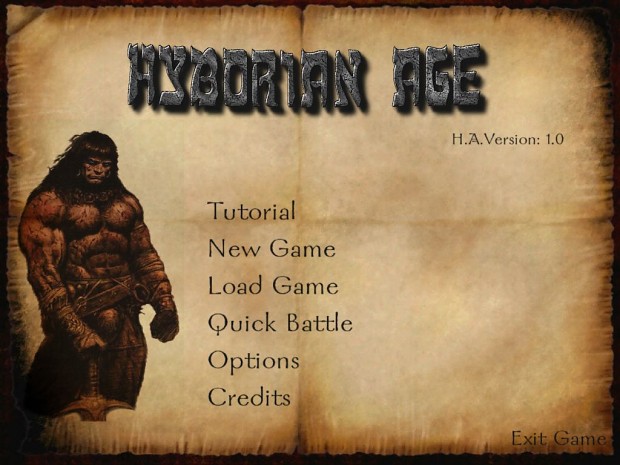
MODS: Mount & Blade: The Hyborian Age (2018)


In 2008 the Turkish developer TaleWorlds released Mount & Blade, a medieval combat sandbox game. The game is set in an alternate version of Europe and Asia Minor called Calradia. You create a character whose background and starting abilities you can set, but whatever you settle on the game will start you in the same place: as a lone adventurer who needs to learn how to fight better, take jobs to earn money, and use that money to gradually upgrade your equipment and hire mercenaries who can help you take even bigger jobs. You can pledge yourself as a vassal to one of the Calradian lords who are always fighting each other, be totally independent as a mercenary captain, or even just run around entirely on your own. You can even just be a dull trader of goods, stocking up cheaply from one town and hauling somewhere else where prices are high, if you don't feel like fighting. There is no ultimate object and you just make whatever fun and story you feel like making. It's similar to the classic Pirates! game by Sid Meier, except you're controlling a landbound horseman instead of a ship captain. One thing you can't do is, unlike Conan, you can't become so big that you seize a crown for yourself.

Like Pirates, it's a very compulsively playable game, one of those "Oh man, it's 3 a.m.!" games where you lose track of things because it's so easy to run just one more mission, visit one more town, fight one more battle, over and over. Although it's quite Howardian, it's not a sword and sorcery game because there isn't any sorcery in it...but it is a very moddable game and some fans have introduced fantasy elements on their own. There's a mod that allows you to fight the War of the Ring from Lord of the Rings, there are mods like Prophecy of Pendor that are set in original fantasy universes, and there's a mod called the Hyborian Age that attempts to rework the game's map and factions to resemble those found in Howard's Conan stories.


As it is, the Hyborian Age mod doesn't really change the game very much. It's still fundamentally the same game, but there's an option to make your new character a sorcerer/sorceress who begins with a spellbook and the ability to throw some fireballs. Otherwise, character progression is mostly similar.

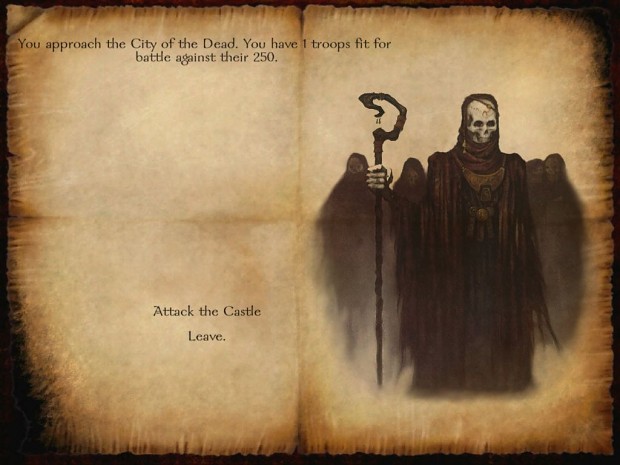
The map as said renames the areas to better match Howard's stories, with places like Cimmeria, Nemedia, and Shem represented, although one could quibble a bit with the arrangement; e.g., the game's version of Cimmeria is probably a bit too far north and snowy compared to how Howard described it. The most dramatic change might be that the southern regions are peppered with undead armies instead of regular bandits.


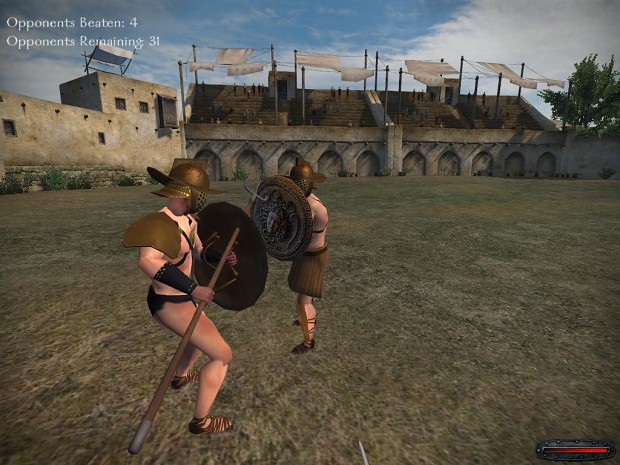
The arena/tournaments also use more of a classical gladiator vibe than the base game and there are some changes to how equipment looks. 


It's a nice bit of work and could serve players who really want some Conan flavor in an already relatively Howardian game, although not necessarily a must-play considering the age of the mod and the base game itself at this point, and there seem to be later attempts to do Hyborian Age-inspired mods for the Warband expansion and also Mount & Blade II: Bannerlord. Mount & Blade is a good game regardless of how it's modded and it got better as it was expanded on.

Friday, September 8, 2023

Bleak Sword DX (2023)


Bleak Sword was originally released on Apple Arcade in 2019, but got an expanded DX edition this year. It was intended by designer Luis Jiminez to do something like Dark Souls on a touchscreen, so it's all about brutal combat with a simple interface. You attack or dodge, with some basic variations, and defeating enemies requires you to study their patterns, make sure you're not in the way when they go for a big attack, and then let them have it while they're open. It's actually a pretty easy game, at least on the PC.

It has a striking presentation. The music is by Jim Guthrie, who was a big factor on Sword & Sworcery, which Jiminez cited as a major influence. The non-boss enemies are small and rendered in minimal pixel art graphics, but what leaps out about the graphics are the diorama-like arenas where the battles take place, some of which add environmental hazards like out of control mine carts.

The game definitely falls more in line with the modern grimdark style, especially the type popularized by Dark Souls. It's a grungy, seemingly hopeless world overrun with demons and slimy predators. Lots of undead and necromancy, with a hero who dutifully trudges through everything because it's really the only thing he can do. Just kill as much as he can until he hopefully ends whatever curse the king has foolishly unleashed. There's a sense of delirium that hangs over everything.


Supplemental viewing: Conquest

Thursday, August 24, 2023

COVER ART: Witchaven II: Blood Vengeance (1996)


Witchaven's sequel brought back Ken Kelly as cover artist, this time using his Field of Fury as the source.


SKALD: Against the Black Priory (2024)

  SKALD: Against the Black Priory is a Kickstarted RPG by Anders Laurindsen that hearkens back to classic PC RPGs, particularly those for t...